CEICData.com © 2018 Copyright All Rights Reserved
.png?width=160&name=ceic-logo-Vector%20logo%20no%20tagline%20(002).png)

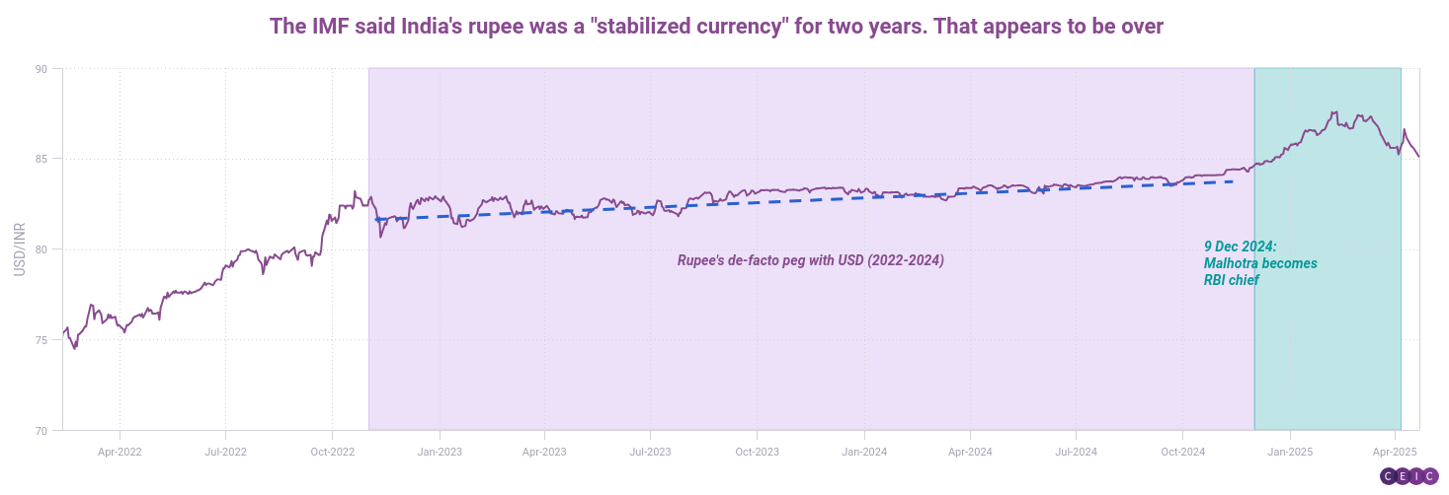
India's central bankers have long been known for watching the exchange rate closely and intervening in the market as they see fit, but the post-Covid period saw so little movement that the International Monetary Fund dubbed the rupee a "stabilized" rather than "floating" currency; the flexible exchange rate regime had been in place for about three decades.
Malhotra said last month that "market forces" determine the currency's value, the RBI had not changed its approach, but that the central bank does move to "curb excessive volatility." (Indeed, the RBI intervened in the market recently, surprising some traders who had assumed Malhotra's regime would be even more hands-off.)
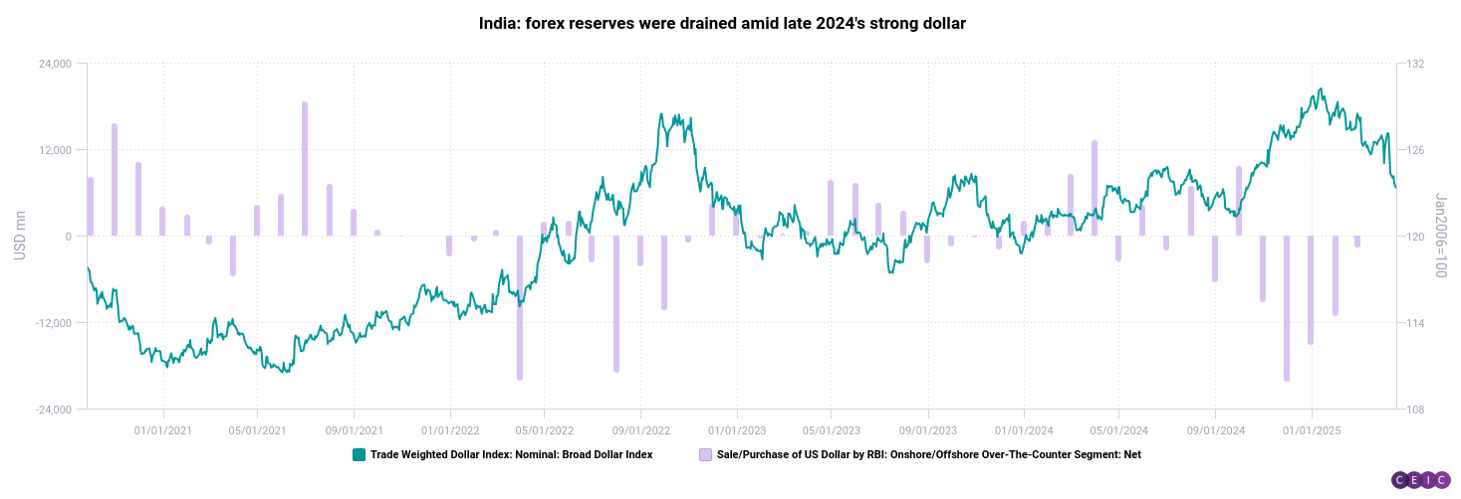
The recent shift in policy has been driven by several factors. The dollar has been rising against most global currencies since October - and especially since Donald Trump's re-election. Given that USD strength, the RBI appears to be allowing for a controlled depreciation of the rupee.
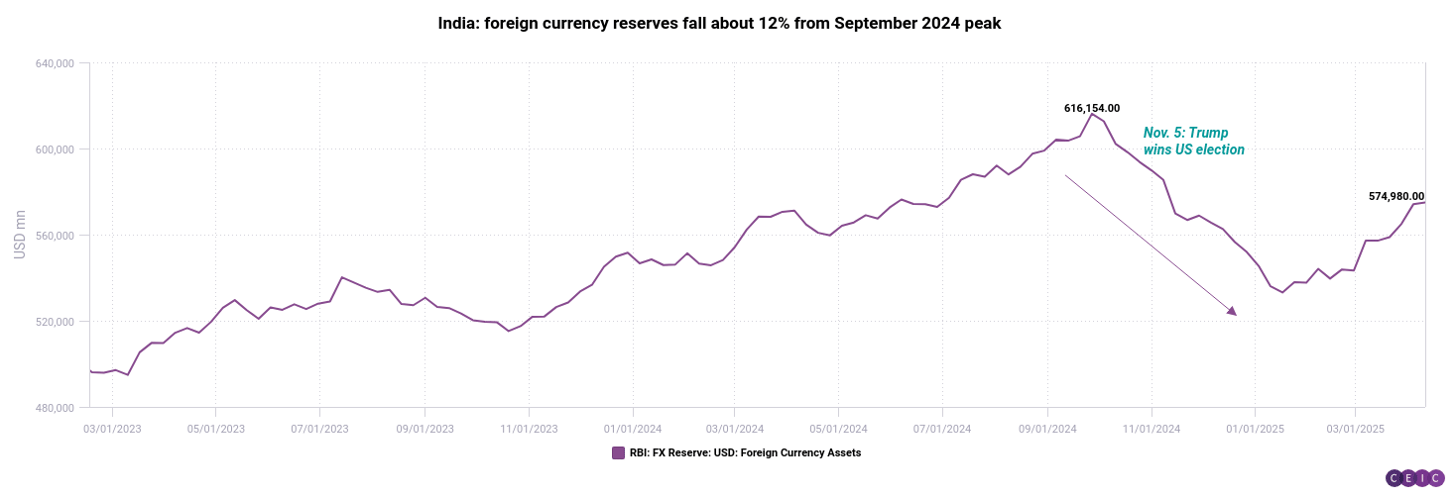
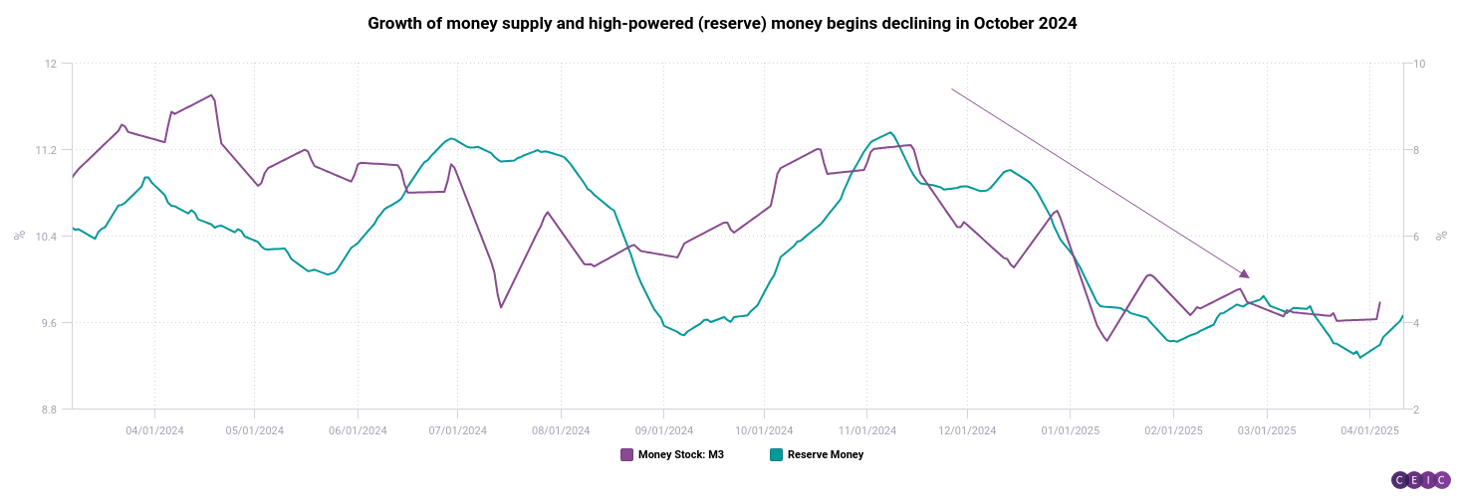
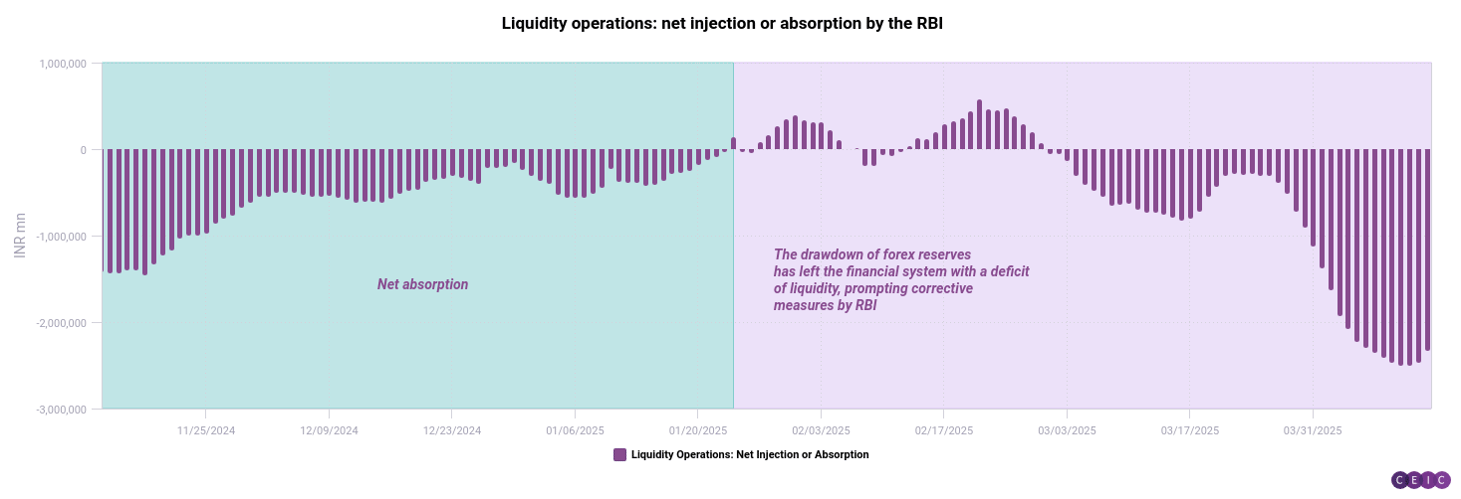
Its interventions to support the currency were expensive. The RBI sold dollars to banks in exchange for rupees, draining its reserves, as our subsequent charts show; that created a liquidity shortage in the domestic banking system - tightening financial conditions. Money-supply growth slowed. This dynamic has the potential to put upward pressure on long-term yields, prompting the RBI to inject liquidity into the system to prevent excessive tightening.
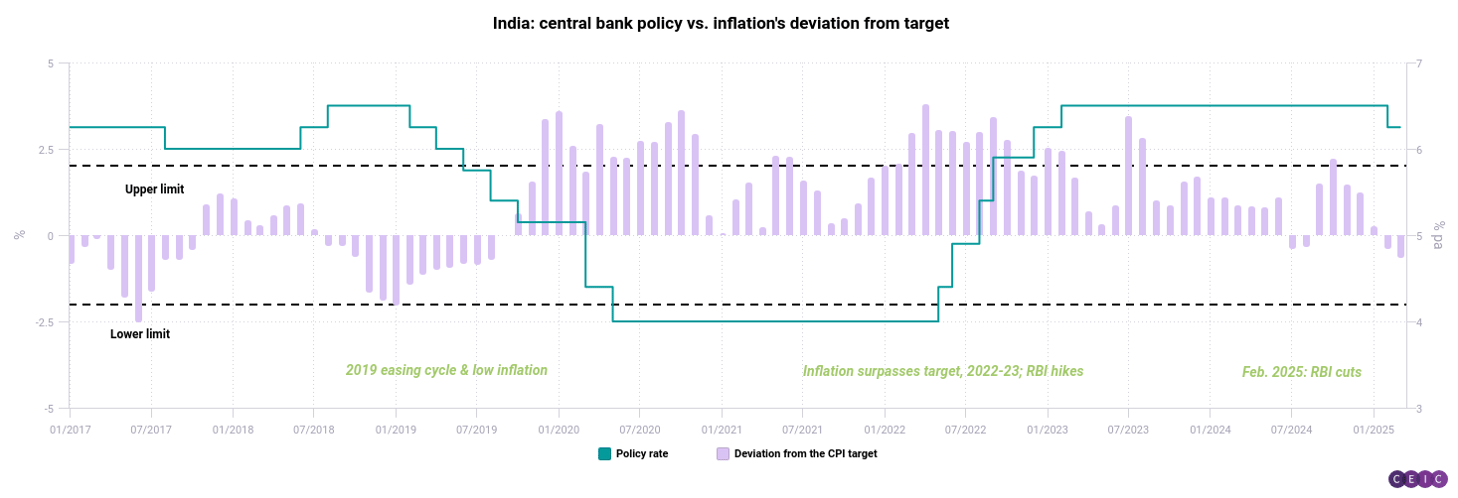
Malhotra's RBI has also shifted toward a more accommodative monetary policy stance. A 25-basis-point rate cut in February signaled this adjustment; further easing is expected to support economic growth.
*Net liquidity is calculated as Repo + Marginal Standing Facility (MSF) + Standing Liquidity Facilities (SLF) – Reverse Repo – Standing Deposit Facility (SDF).
If you are a CEIC user, access the story here.
If you are not a CEIC client, explore how we can assist you in generating alpha by registering for a trial of our product: https://hubs.la/Q02f5lQh0