CEICData.com © 2018 Copyright All Rights Reserved
.png?width=160&name=ceic-logo-Vector%20logo%20no%20tagline%20(002).png)

The Bank of Japan's surprise rate hike in late July had an outsized effect on global markets. It disrupted the carry trade – when investors borrow cheaply in Japanese yen to invest in assets, often riskier ones, yielding higher returns. It wasn't just the end of an ultra-low interest rate; for some time, you could also count on a steadily depreciating JPY, making it cheaper to for carry traders to repay those borrowings.
No longer: the currency snapped back sharply. Most observers focus on the USD/JPY pair, which has jumped back to about 145-150 yen per dollar from more than 160 in early July. But the yen surged against all major currencies.
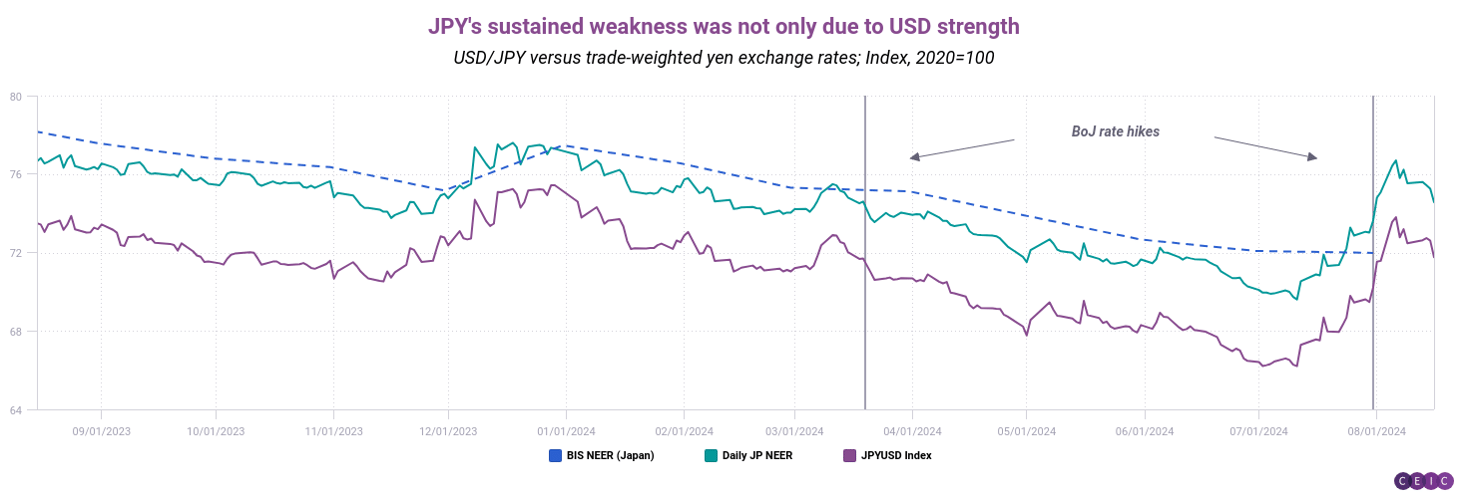
Our first chart examines the yen's trade-weighted exchange rate (also known as the nominal effective exchange rate, or NEER). This allows economists to strip away the effect of the outsized strength of the dollar in global currency markets, gaining a more holistic perspective on an economy's interdependence with major trading partners.
Our first chart compares USD/JPY to Japan's NEER as calculated in daily frequency by CEIC. We've also added NEER as calculated by the Bank for International Settlements; published only monthly, the BIS hadn't yet caught up to the recent market turmoil at the time of publication.
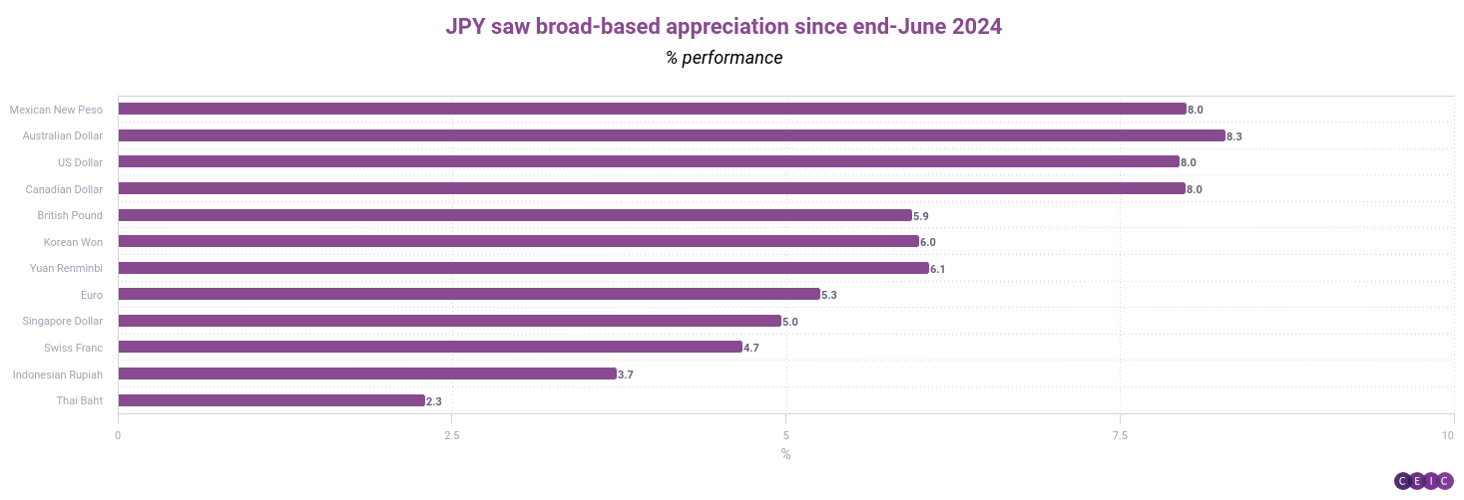
Our second chart breaks down recent yen performance against individual currencies. When we published this data story in mid-August, it was up by about 10% against the Mexican peso and had appreciated between 9% and 10% versus the US, Australian, and Canadian dollars.
Despite the recent strengthening, JPY is still historically cheap; it depreciated consistently during many years of negative interest rates. And year-to-date, the yen is still down against the currencies of most of Japan's major trading partners.
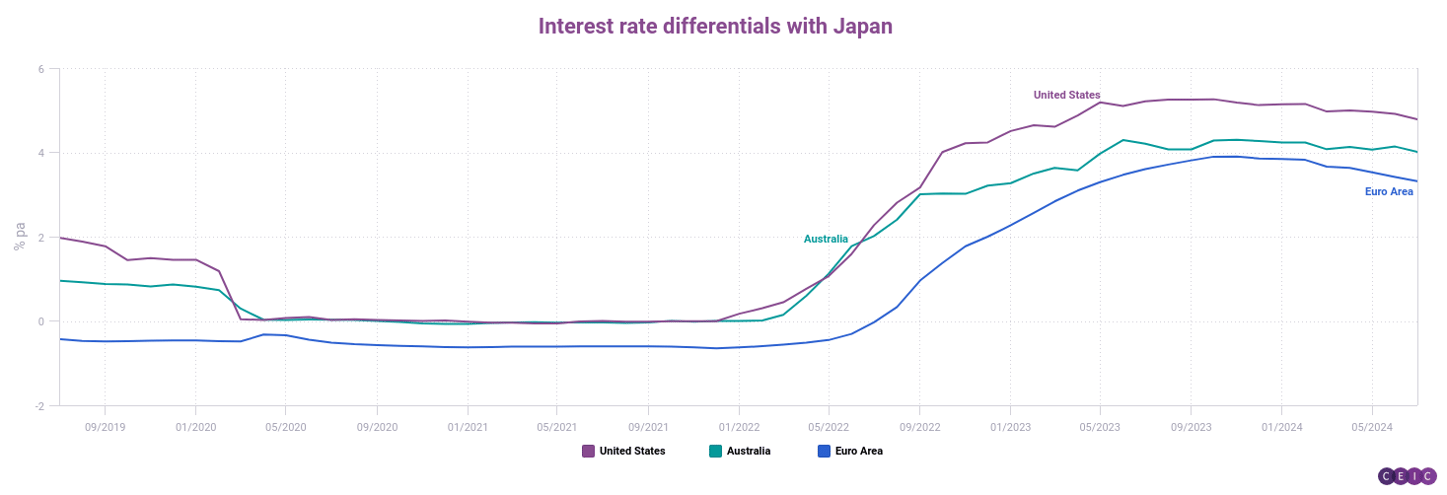
Our final chart tracks interest-rate differentials between Japan, the US and the euro area. Everyone had joined Japan in "ZIRP" or even negative rates during the pandemic; as inflation kicked in and central banks started tightening, the differentials rose steadily – though the spreads have started to narrow as Japan's hikes coincide with the start of a rate-cutting cycle elsewhere in developed markets.
If you are a CEIC user, access the story here.
If you are not a CEIC client, explore how we can assist you in generating alpha by registering for a trial of our product: https://hubs.la/Q02f5lQh0