CEICData.com © 2018 Copyright All Rights Reserved
.png?width=160&name=ceic-logo-Vector%20logo%20no%20tagline%20(002).png)

Thailand’s shrinking labor force (which contracted 0.9% in the fourth quarter of 2025) poses an increasing challenge to the country’s economy. Some promising post-pandemic trends have withered, and there are fewer younger workers seeking to join the employment market than there used to be.
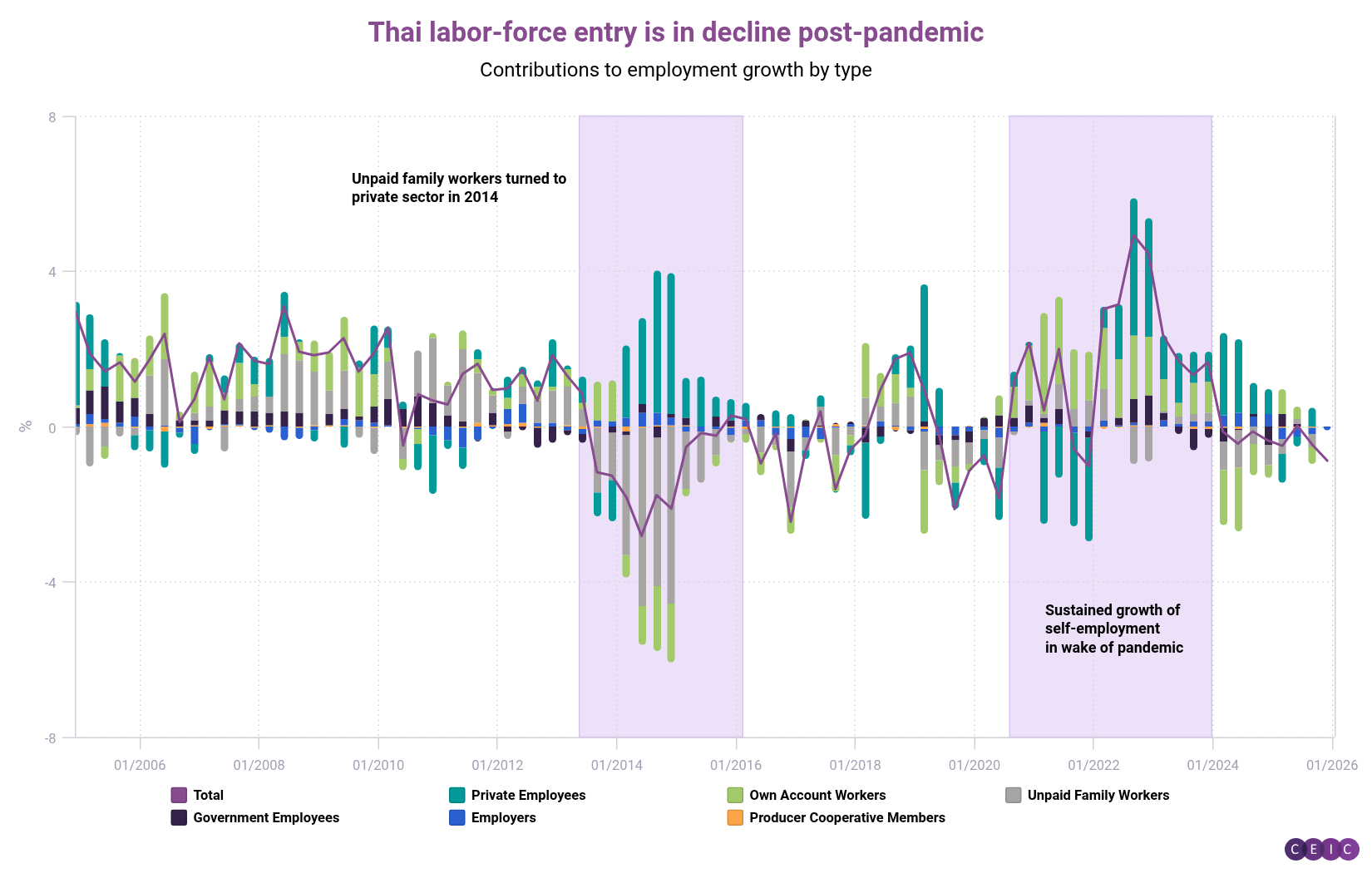
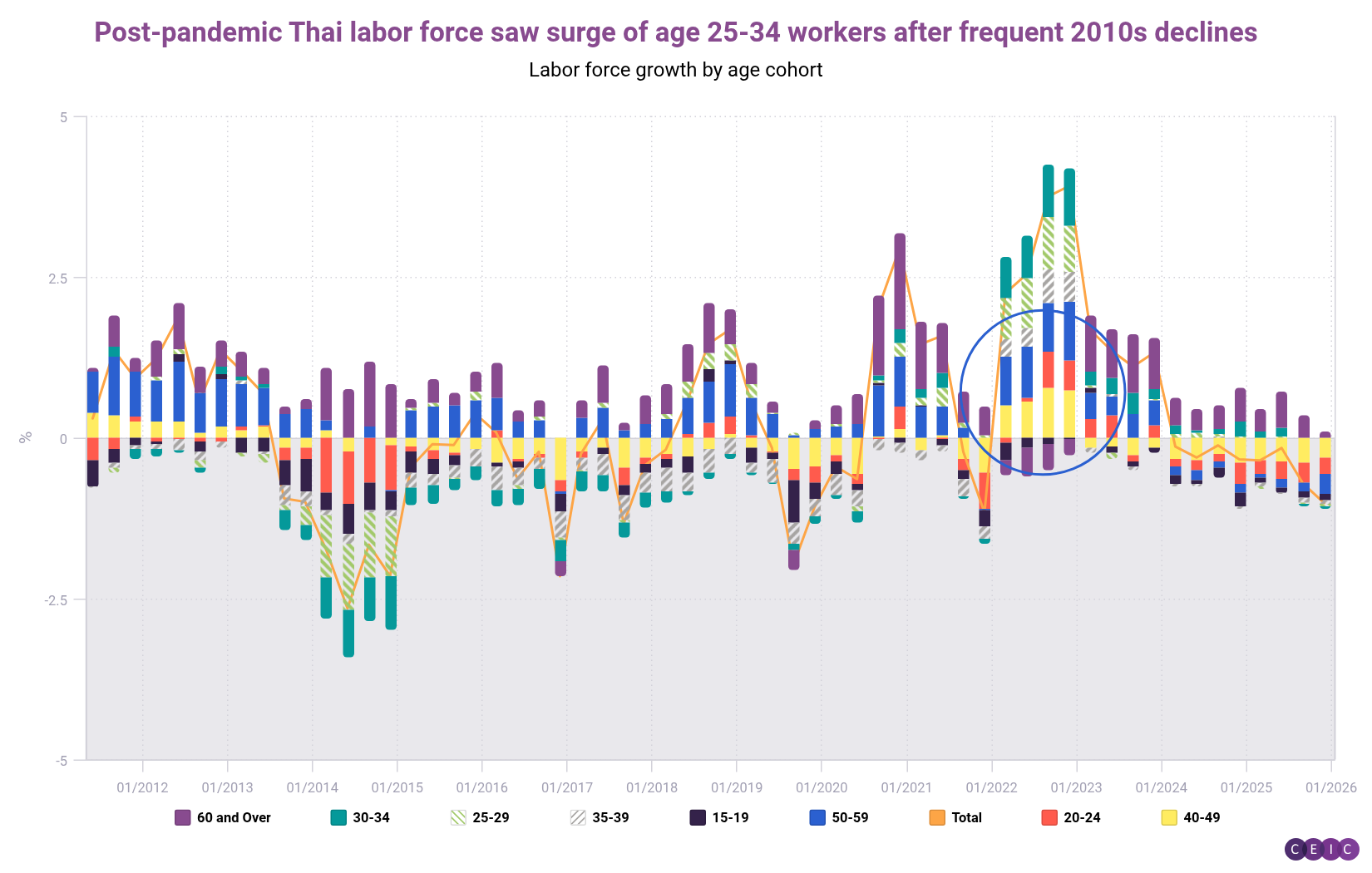
Following the Covid-19 disruptions, labor participation rates for Thais aged 25-35 surged -- likely due to self-employment, as our first chart suggests, and perhaps partly as a result of elevated household-debt burdens that drove people who wouldn't otherwise seek employment to do so.
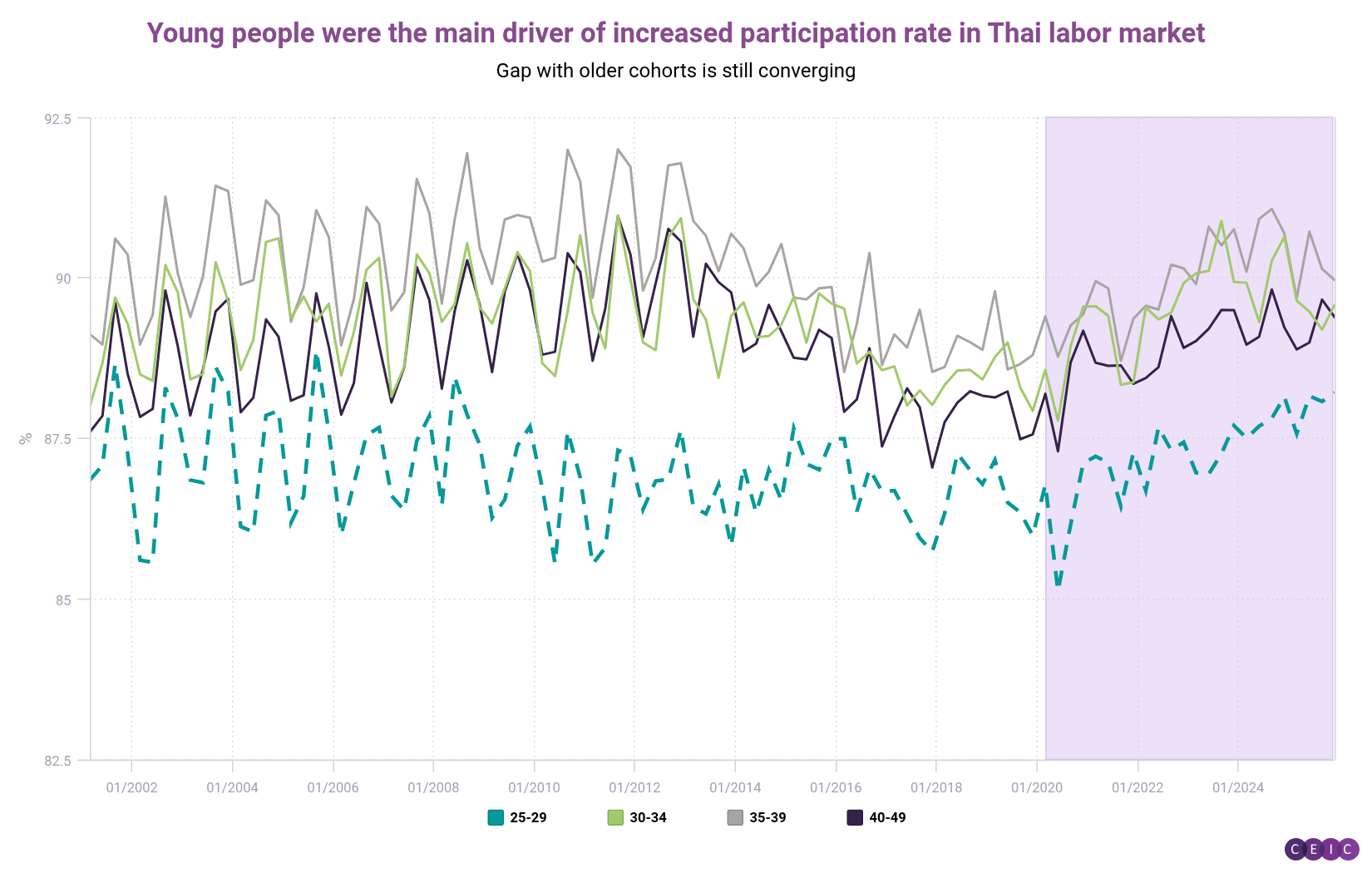
This marked a departure from a long-term structural decline in labor participation for that cohort, as our second chart shows. However, both trends have leveled off since 2024.
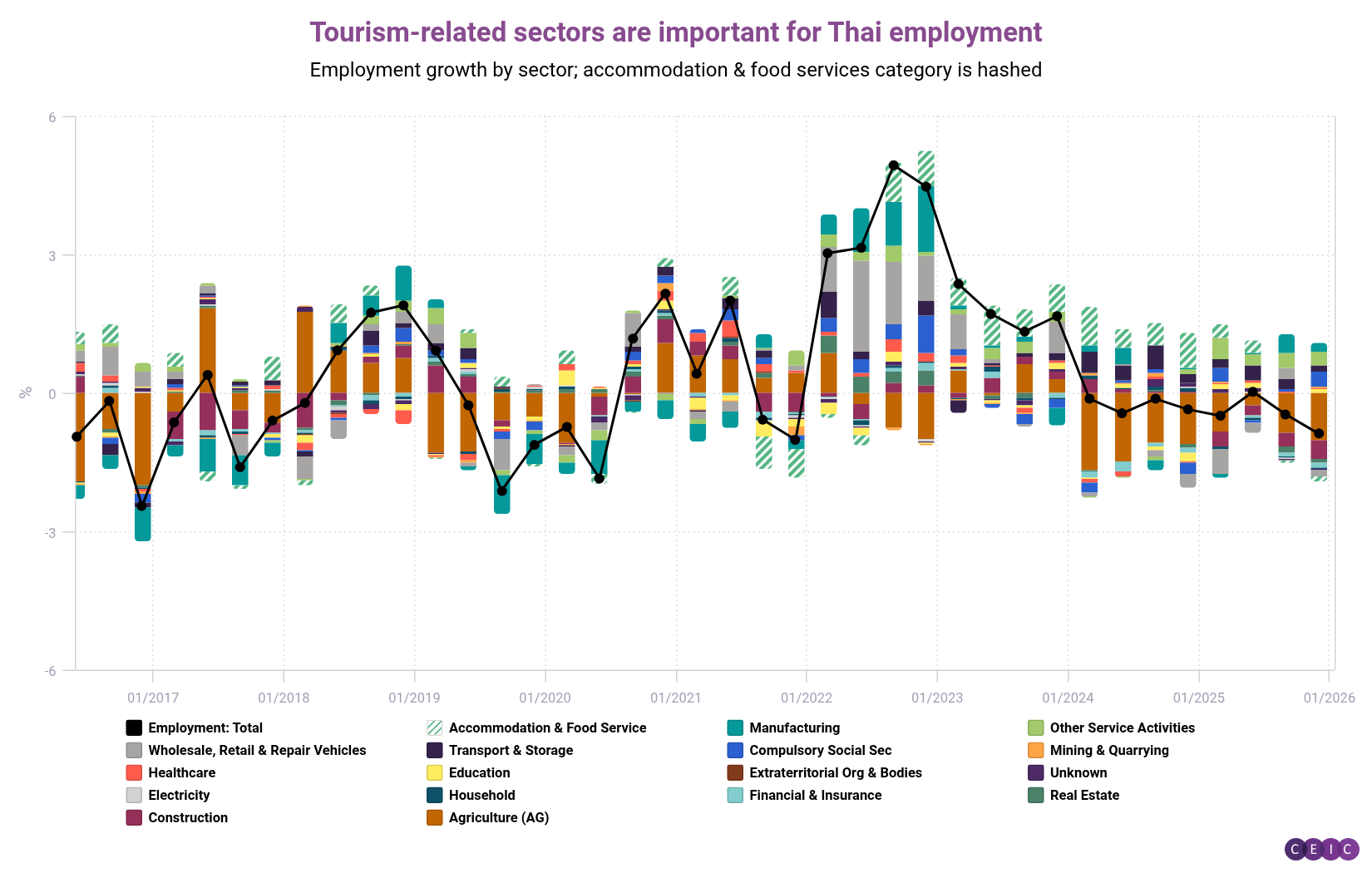
Though the key tourism sector hasn't returned to its pre-pandemic vigor, it had absorbed more workers through 2024, as our third chart shows. This trend, too, has leveled off.

Our subsequent charts segment the Thai labor force by educational level, age cohorts and informal versus formal employment.
With the World Bank projecting Thai GDP growth of only 1.6% in 2026, and with Donald Trump's new universal tariff making Thailand less attractive than other Asian exporting economies, investment and productivity improvements will have to drive any stronger economic revival.
If you are a CEIC user, access the story here.
If you are not a CEIC client, explore how we can assist you in generating alpha by registering for a trial of our product: https://hubs.la/Q02f5lQh0