CEICData.com © 2018 Copyright All Rights Reserved
.png?width=160&name=ceic-logo-Vector%20logo%20no%20tagline%20(002).png)

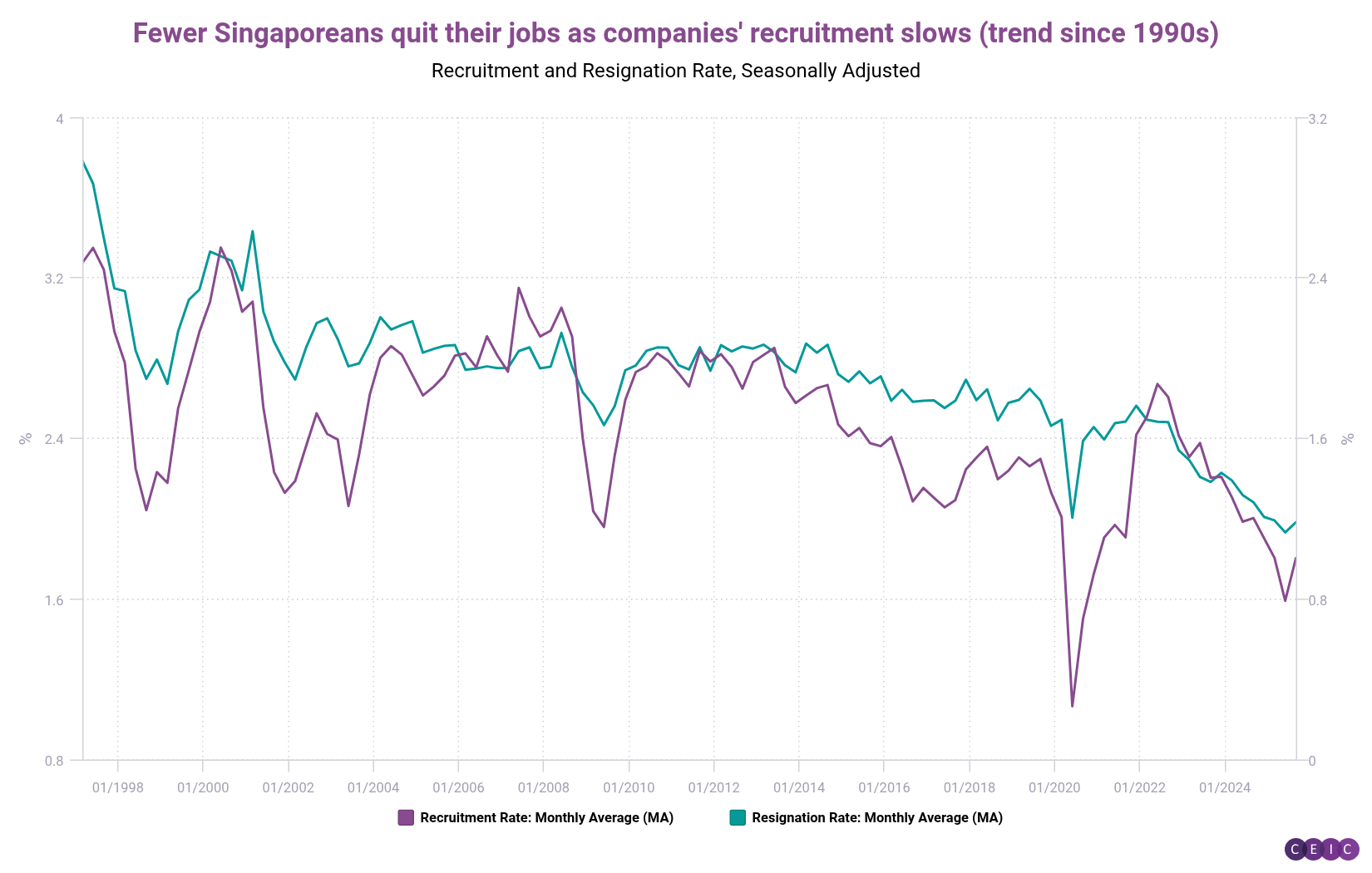
While Singapore's GDP growth has been strong and the unemployment rate is low, all is not ideal in the city-state's labor market. There is evidence that Singaporeans are hanging on to the jobs they have (more than usual), rather than seeking new opportunities -- a phenomenon known as "job hugging."
Singapore's recruitment rate* and resignation rate have both declined. Over the long term, these trends are correlated with consumer prices, as our chart shows: as employers raise salaries to compete for workers, the result shows up in a higher inflation rate. That isn't happening today.

Firms and workers alike are displaying greater caution, potentially reflecting post‑pandemic shifts in risk appetite. Observers have cited the rise of artificial intelligence as a concern for Singapore's services-driven economy. (According to an Economic Development Board review recently cited by Bloomberg, Singapore is pulling in more overseas investment but getting fewer jobs in return; recent investment commitments are expected to create 15,700 jobs over the next five years, the least since 2006.) Prime Minister Lawrence Wong last year said jobs for the island's citizens will be his top priority.
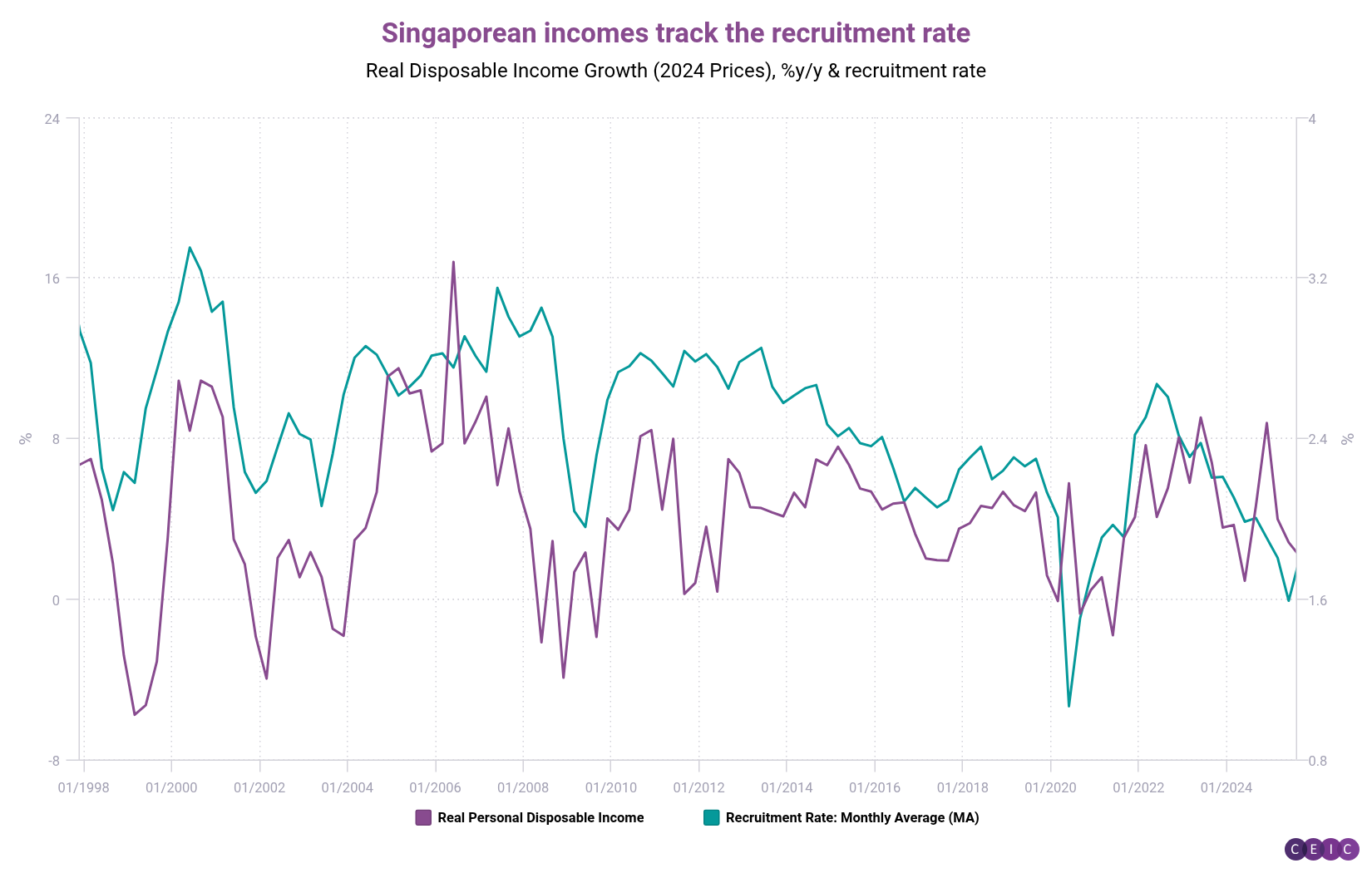
Historically, inflation, real personal disposable income and recruitment rates tend to move together, as our subsequent chart shows. The output gap may be widening again. At the same time, the cooling in national real disposable income — which usually mirrors recruitment trends—points to a potential softening in aggregate purchasing power. This could weigh on medium‑term momentum even though headline activity indicators remain resilient.
The labor market’s reduced churn may therefore reflect not only cyclical cooling but also structural behavioural change. With savings rates still elevated (and broadly rising for more than a decade), households appear more risk‑averse, preferring stability over mobility.
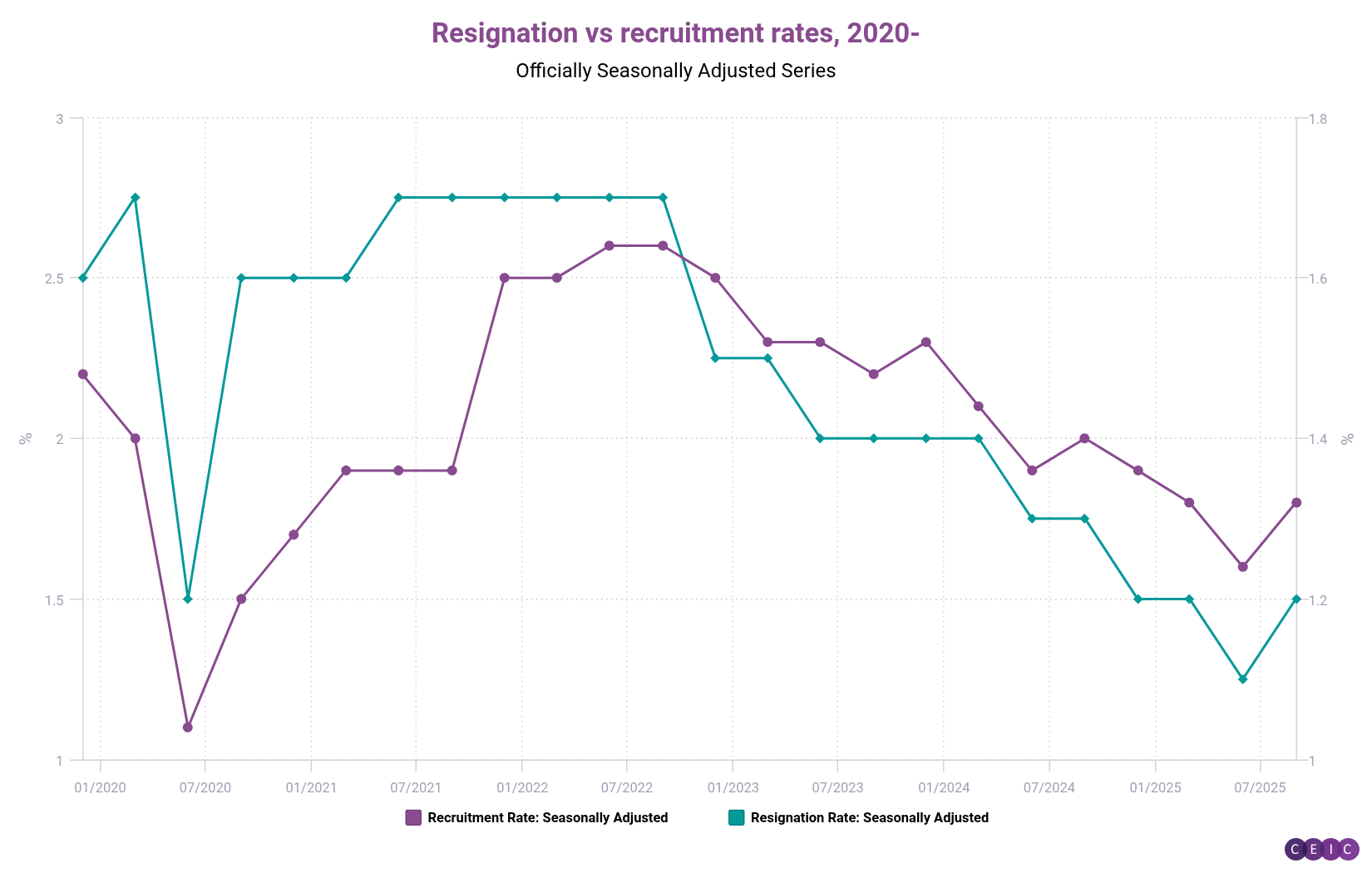
*The average monthly recruitment rate during a quarter is defined as the average number of persons recruited in a month during the quarter divided by the average number of employees in the establishment
If you are a CEIC user, access the story here.
If you are not a CEIC client, explore how we can assist you in generating alpha by registering for a trial of our product: https://hubs.la/Q02f5lQh0