CEICData.com © 2018 Copyright All Rights Reserved
.png?width=160&name=ceic-logo-Vector%20logo%20no%20tagline%20(002).png)

Our index is showing retail food price increases in the Manila region continued to slow from January through February. This occurred even as the period contained the Lunar New Year holiday, which sees a burst of festive spending on meals.
Our high-frequency indicator lets CEIC users get an edge ahead of the peaks and troughs of official CPI figures, which are released with a significant time lag. (February's official CPI data is scheduled for release on March 5.)
We create our index by taking the midpoint of retail price ranges for selected major agriculture and fishery commodities at markets in the National Capital Region (NCR).
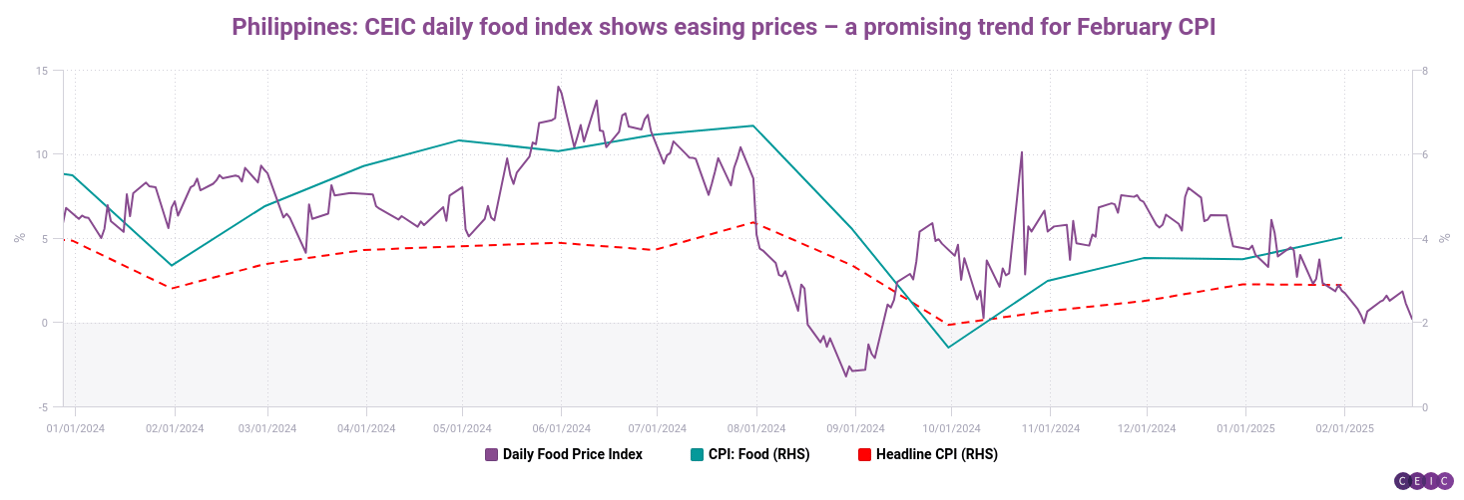
After disinflation and even deflation in mid-2024, food CPI had rebounded to a four-month high of 4% in January. CEIC's daily food price index was an early indicator for this trend, demonstrating a pick-up and the end of deflation as early as September. The moderation in mid-January might not have fully been reflected in food CPI due to reporting lags.
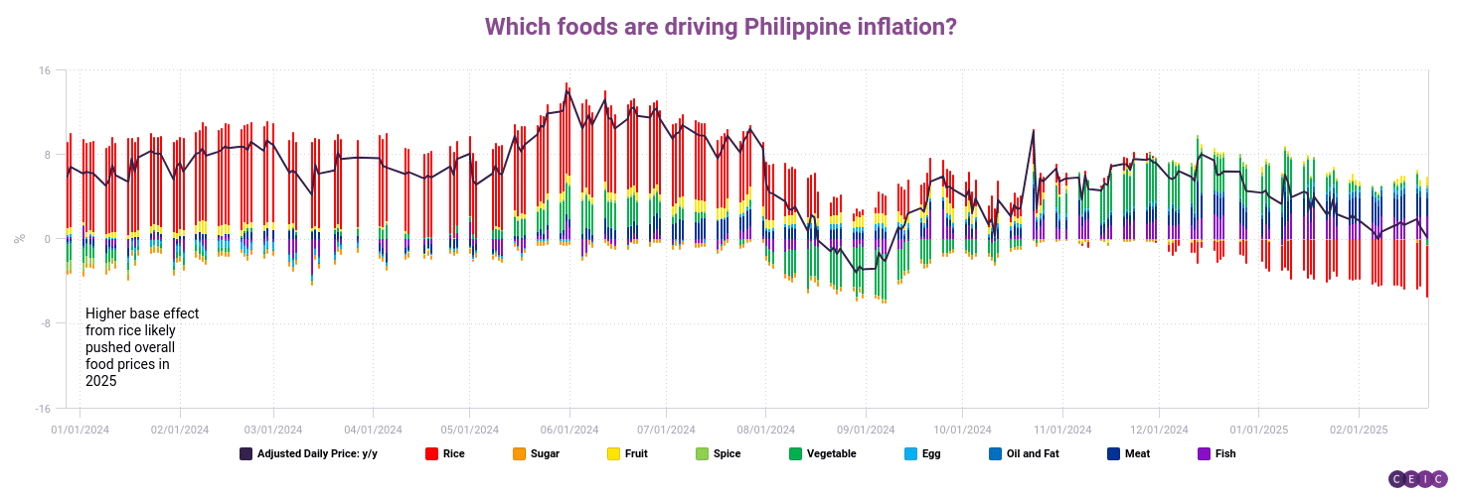
Our second chart breaks down the contribution of various food groups to the overall food price index. Rice, in red, figures prominently. The slower increase in food prices since October 2024 appears to be largely related to rice – which had high base effects from year-earlier trends. Fish and vegetable prices have largely sustained food inflation since October.
If you are a CEIC user, access the story here.
If you are not a CEIC client, explore how we can assist you in generating alpha by registering for a trial of our product: https://hubs.la/Q02f5lQh0