CEICData.com © 2018 Copyright All Rights Reserved
.png?width=160&name=ceic-logo-Vector%20logo%20no%20tagline%20(002).png)

Markets are digesting Donald Trump's pick to lead the Federal Reserve. Kevin Warsh will succeed Jerome Powell, whose cautious approach to loosening policy frequently resulted in Trump's criticism. Will Warsh live up to his past reputation as an inflation hawk, or are his current views more aligned with the president?
So far, markets have scaled back expectations for near‑term Fed rate cuts, according to futures tracked by the CME's FedWatch tool. (This continues the trend seen before Warsh's appointment.) The dollar has also strengthened. This could be an assessment that Warsh is unlikely to pursue ultra-loose policy, but it also reflects some surprising economic data.
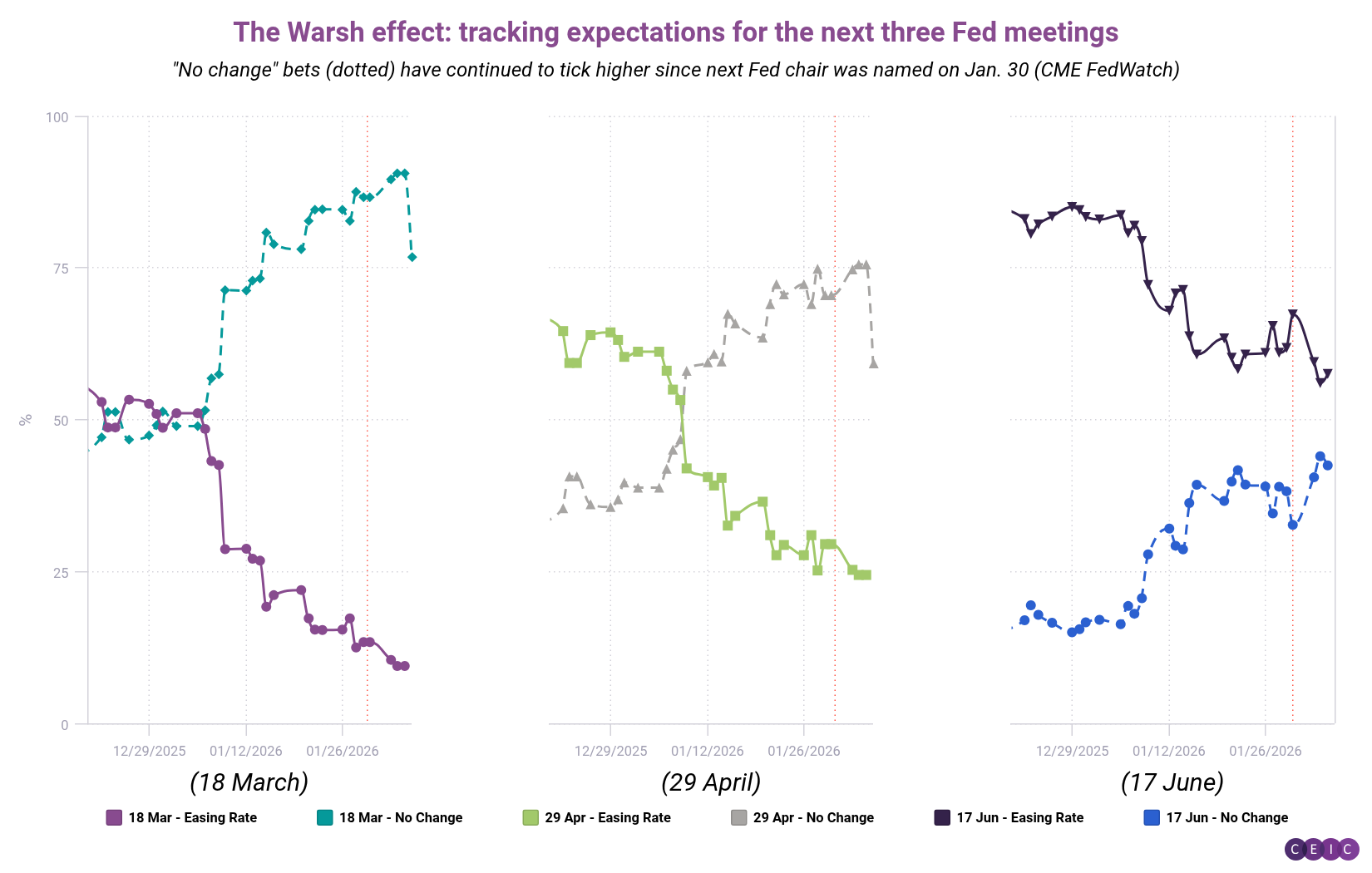
Early January figures showed inflation proving stickier than anticipated. Stronger labor market data contributed to the shift; in December, payrolls rose by 50,000 and unemployment fell to 4.4%. These releases pushed markets to conclude that policy rates may stay higher for longer.
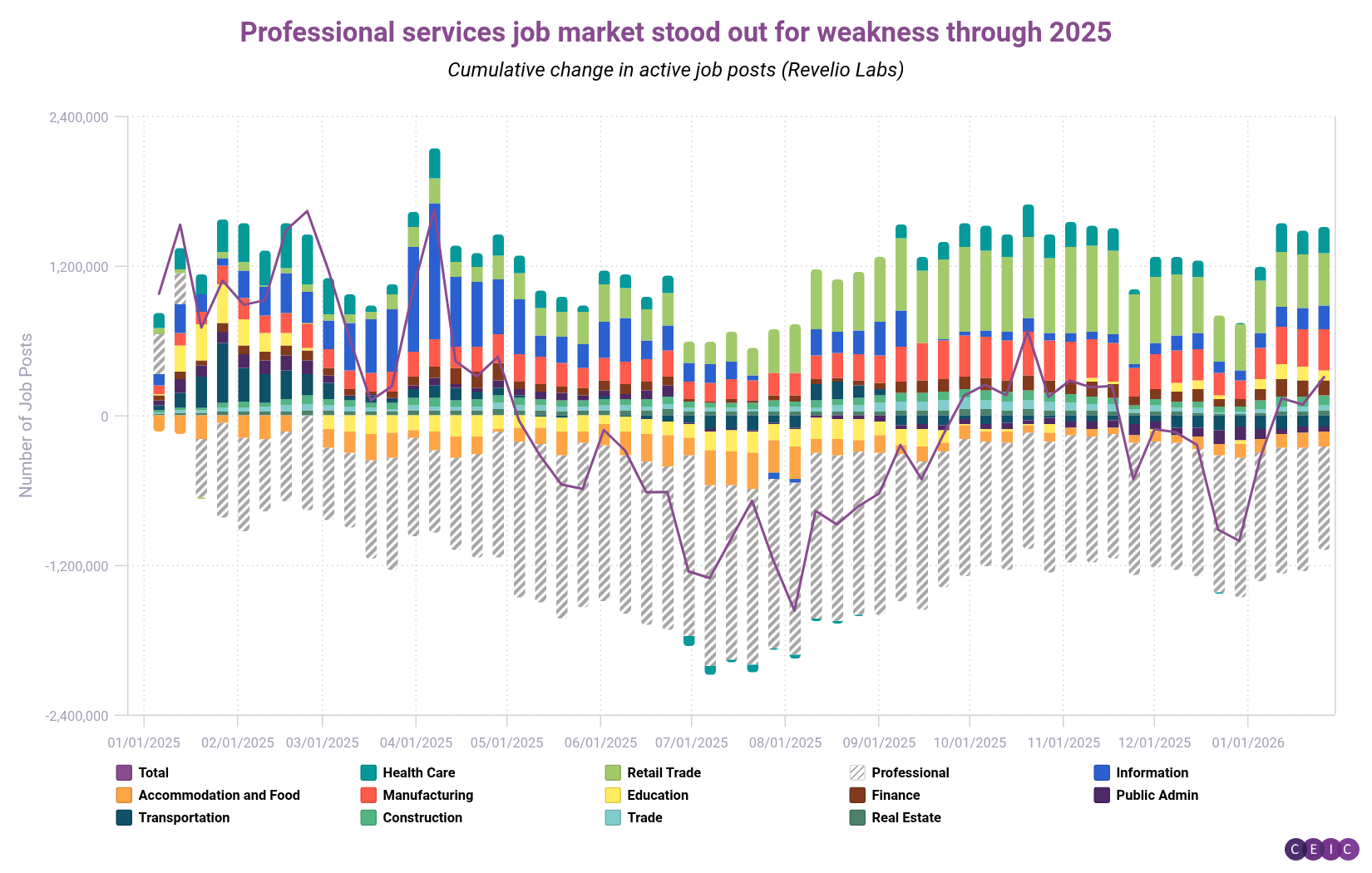
From a broader perspective, however, labor demand is cooling. High-frequency data from Revelio Labs shows that active job postings have declined by more than 70,000 since early 2025; the professional services category alone has seen job ads drop by 1 million.
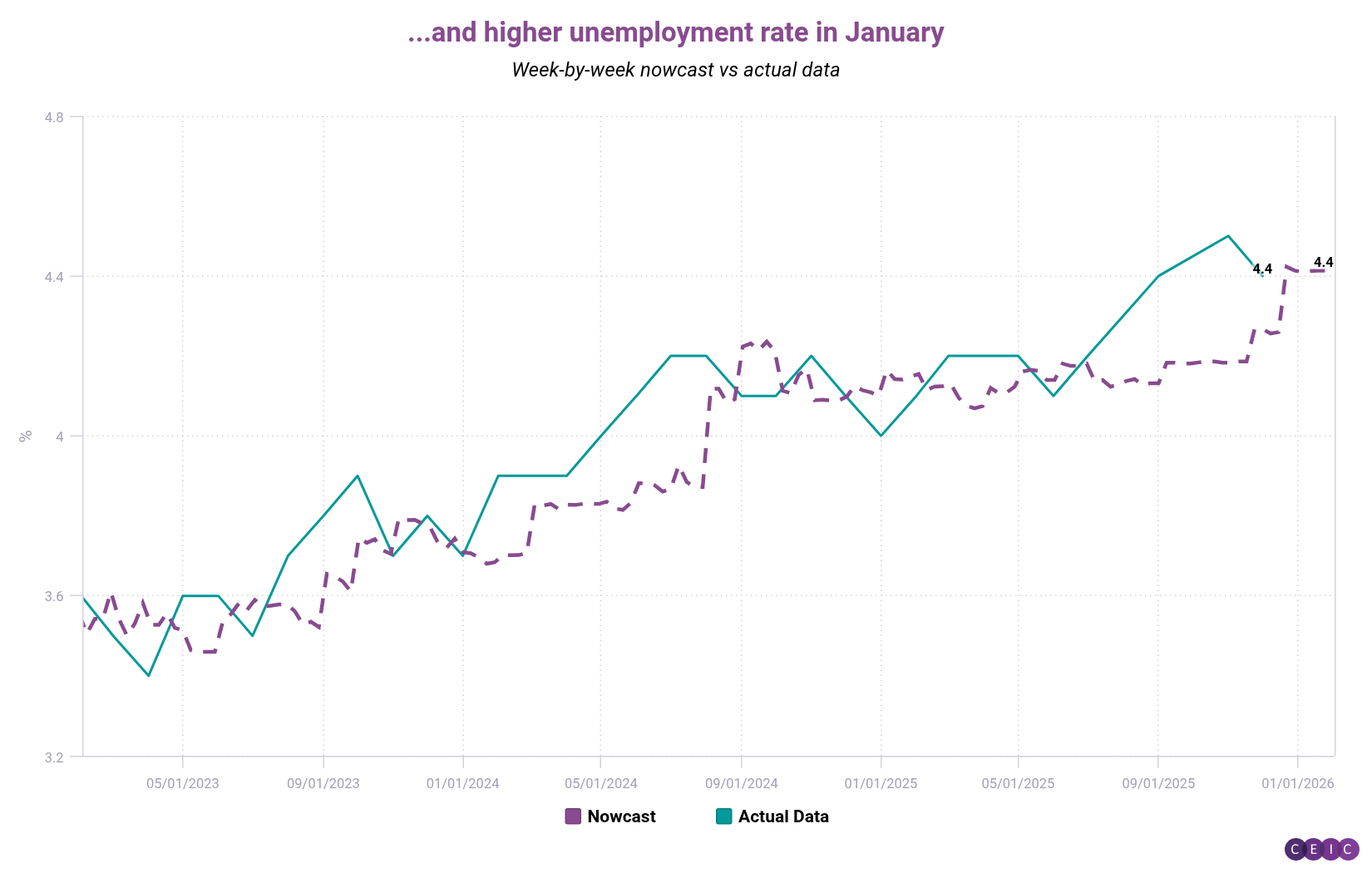
CEIC's proprietary nowcast suggests that January saw 94,000 new jobs added and a steady 4.4% unemployment rate -- soft enough data to build pressure on the Fed to ease, but not enough to shift near‑term expectations.

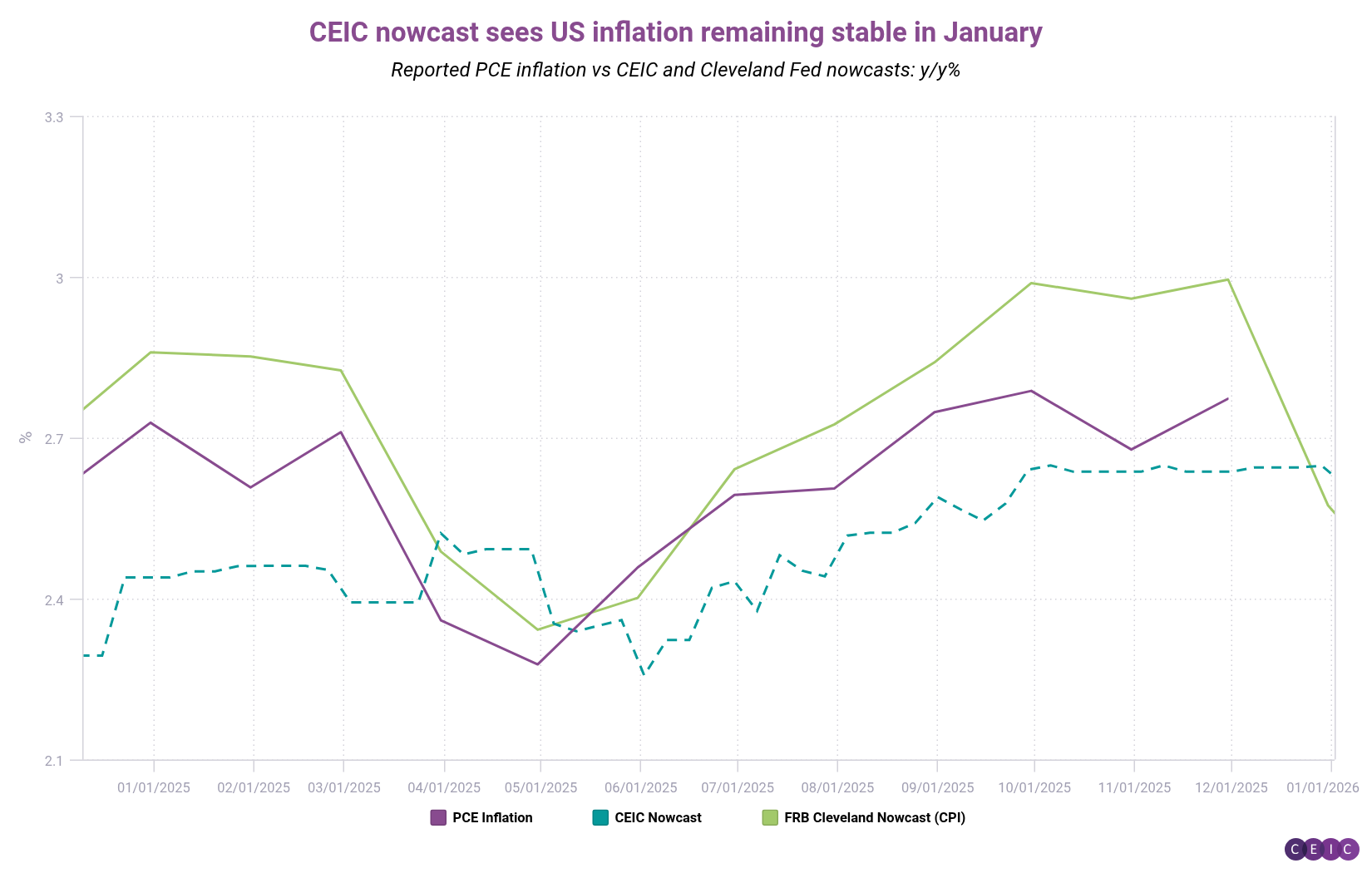
Our inflation nowcast, meanwhile, suggests that prices remained stable in January, reinforcing evidence of sticky underlying price pressures. Shelter and food costs remain well above target (partly reflecting tariff effects), making the timing of rate cuts more challenging.
Warsh's hawkish history includes a famous dissent against quantitative easing. But he has recently argued that AI‑driven productivity gains may have lowered the neutral rate, creating room for lower short‑term rates even as balance‑sheet tightening continues.
We conclude by charting how financial conditions remain loose despite QT, suggesting a future mix of lower policy rates alongside a smaller Fed balance sheet is possible.
If you are a CEIC user, access the story here.
If you are not a CEIC client, explore how we can assist you in generating alpha by registering for a trial of our product: https://hubs.la/Q02f5lQh0