CEICData.com © 2018 Copyright All Rights Reserved
.png?width=160&name=ceic-logo-Vector%20logo%20no%20tagline%20(002).png)

Late last year, the World Bank warned that Malaysia's retirement safety net was at risk -- an example of how some emerging markets are rapidly catching up to the demographic issues developed countries are struggling with. Some 20% of the population will be aged 65 and over by 2056, up from 14% in 2045.
Meanwhile, Malaysians haven't saved enough. We've charted savings levels by demographic cohort in the Employees Provident Fund, or EPF. Private-sector workers are required to contribute to the EPF, and can top up their mandatory contributions on a voluntary basis.
The EPF sets a "Basic Savings" target for retirement. This currently suggests that its members should have saved 240,000 ringgit (about USD 61,000) by age 55; that figure is set to be raised to at least MYR 390,000 by 2030. (The official retirement age in Malaysia is 60.)
As our chart shows, even the cohort that has saved the most in the system (age 50-54) falls far short of that threshold on a per capita basis. As of October 2024, only around 36% of active formal EPF members meet the benchmark for their respective age cohorts.
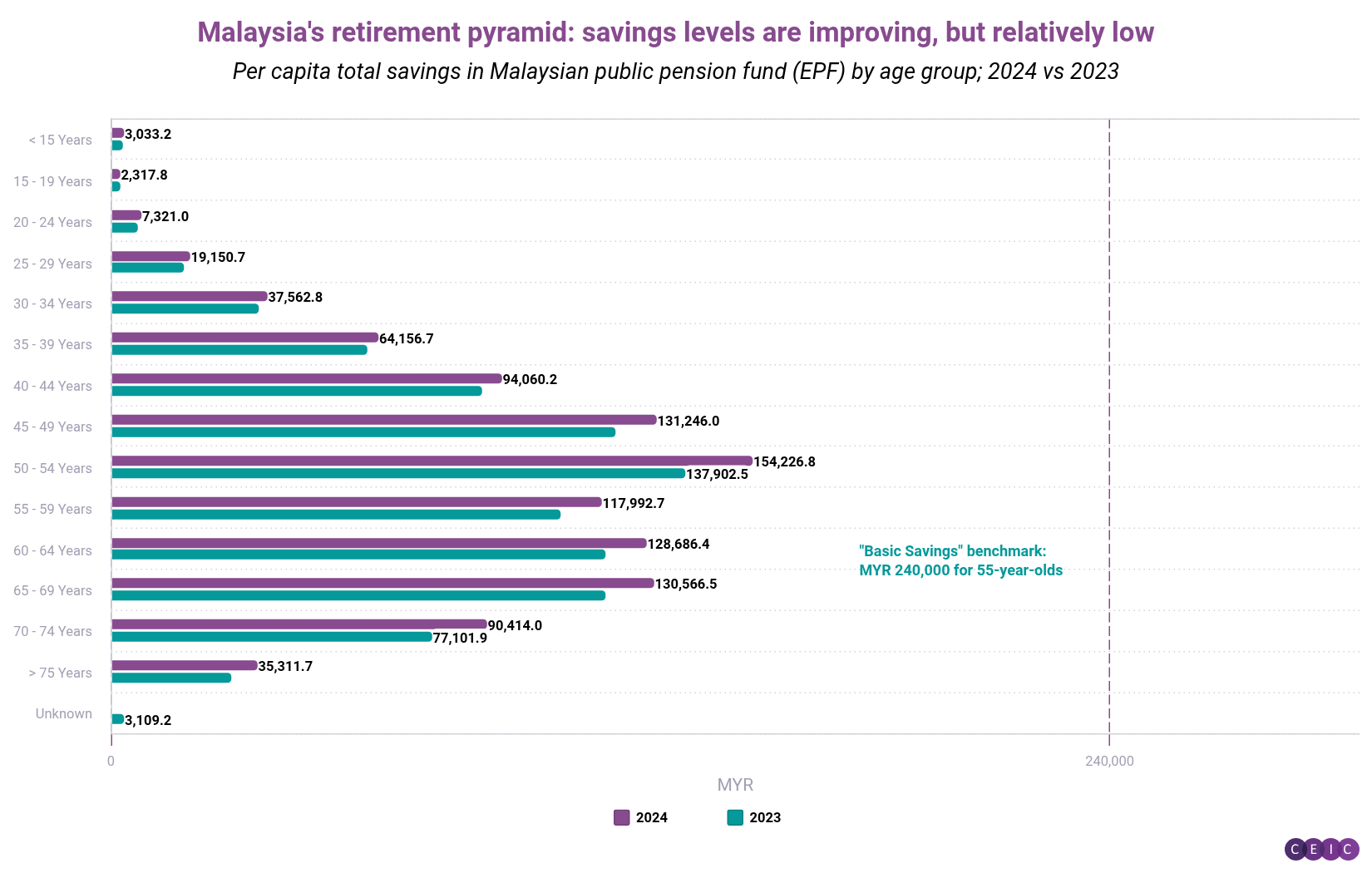
Comparing 2024 to 2023 figures shows uneven improvement among the age brackets. Without a meaningful improvement in contribution adequacy or investment outcomes, there is a significant risk that a large share of members won't come close to catching up with their benchmarks.
The EPF's data also allows us to create population pyramids for contributors. These reflect Malaysia's still-youthful demographics, with large cohorts under 35.
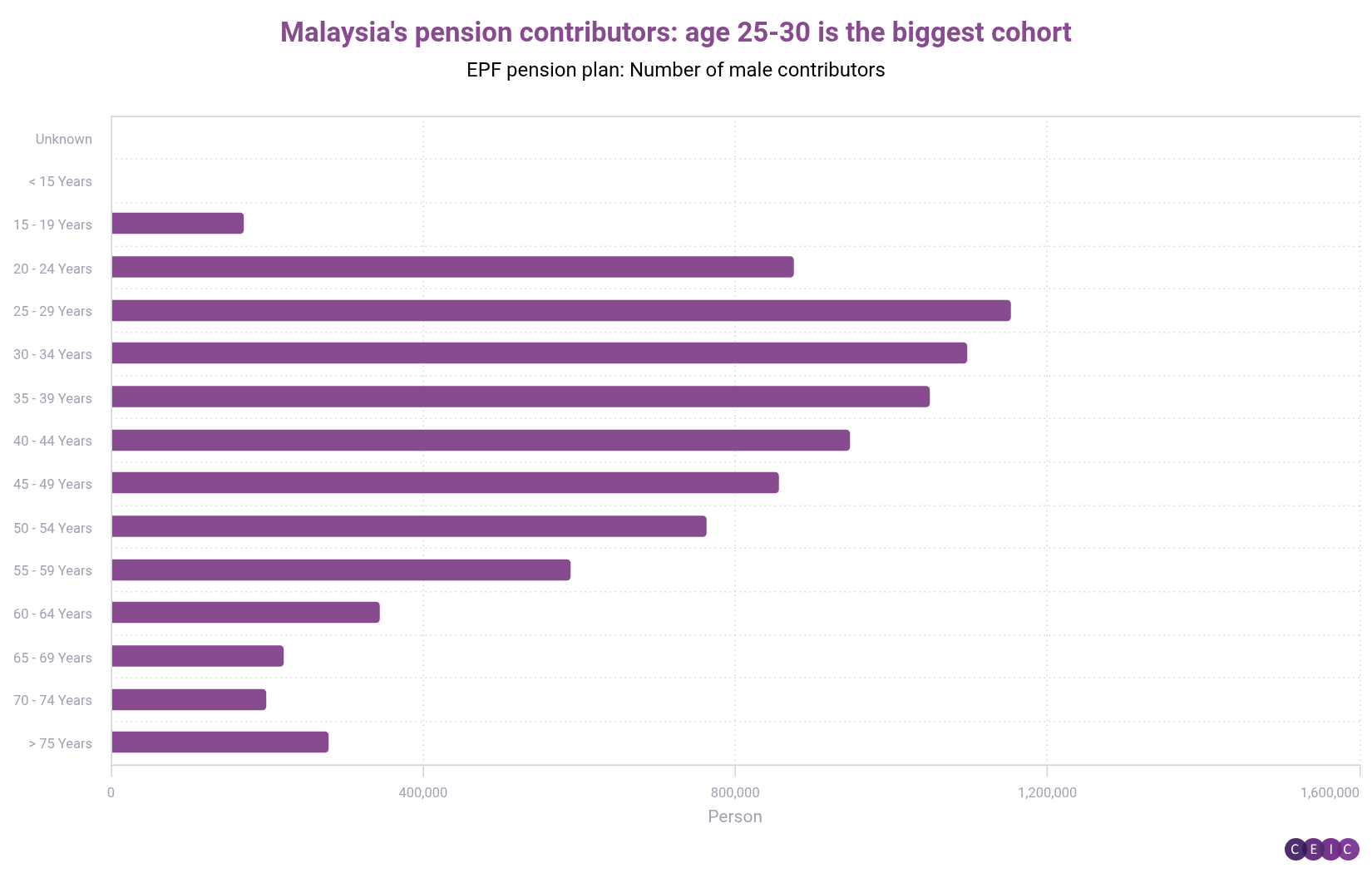
%20female.png?width=1650&height=1050&name=Malaysias%20pension%20contributors%20age%2025-30%20is%20the%20biggest%20cohort%20(1)%20female.png)
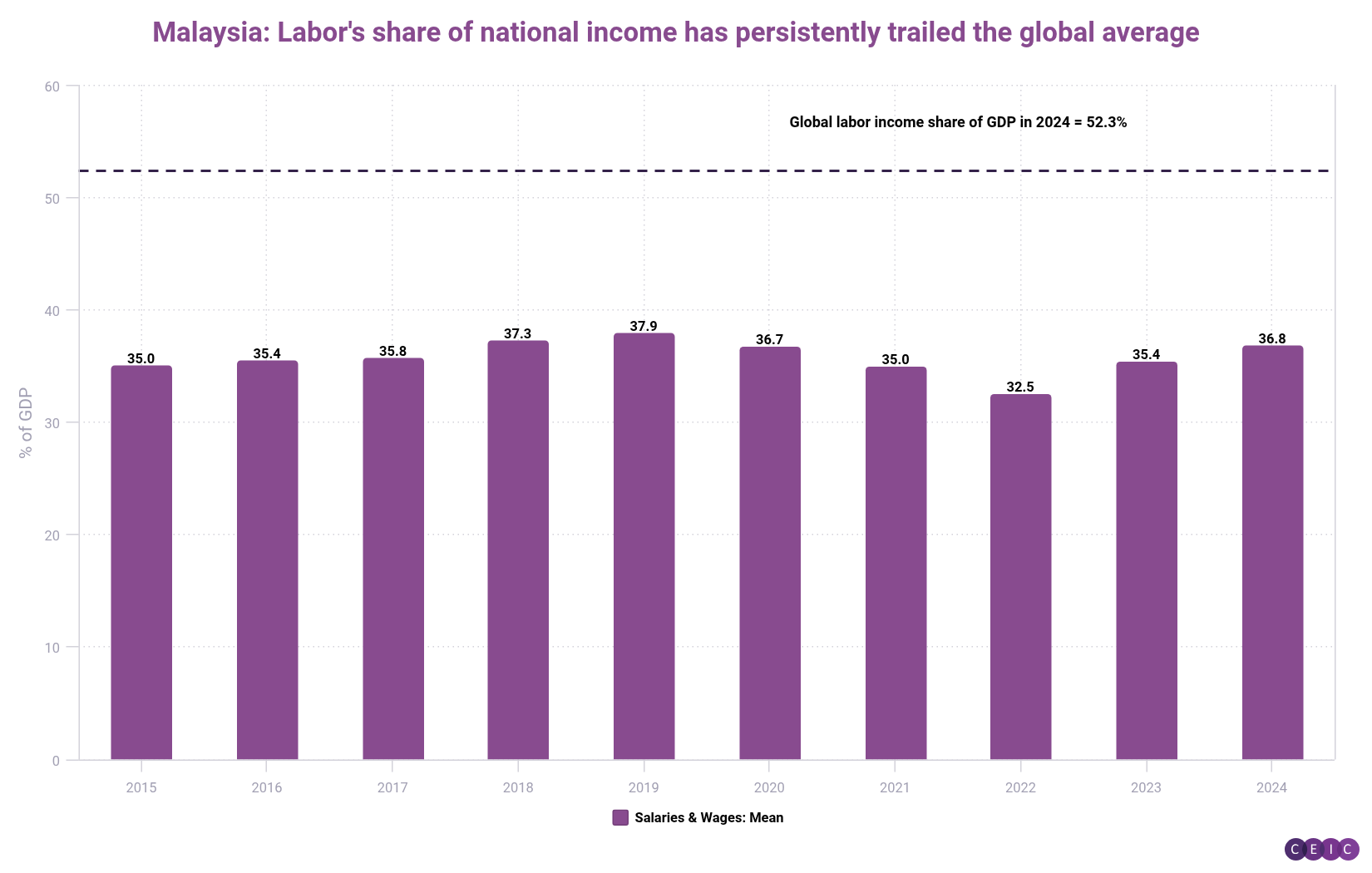
The inadequate savings situation stands at odds with Malaysia's relatively strong economy, which coexists with relatively weak incomes; as we have written previously, successful semiconductor and tourism sectors have not trickled down into broad-based wage growth. We conclude with a chart of labor's share of Malaysia's national income. It stands at roughly 37%, far below the global average above 50%.
If you are a CEIC user, access the story here.
If you are not a CEIC client, explore how we can assist you in generating alpha by registering for a trial of our product: https://hubs.la/Q02f5lQh0