CEICData.com © 2018 Copyright All Rights Reserved
.png?width=160&name=ceic-logo-Vector%20logo%20no%20tagline%20(002).png)

Indonesia's rupiah has been approaching historic lows. As observers cite persistent fiscal concerns for the currency's move, it's worth observing how a long-time relationship is breaking down.
As our chart shows, there was a close correlation between the USD/ISR exchange rate* and yields on benchmark Indonesian government bonds. Higher yields generally reflected a flight to safety away from Indonesian assets, and hence a weaker currency; lower yields reflected greater interest in Indonesian assets.
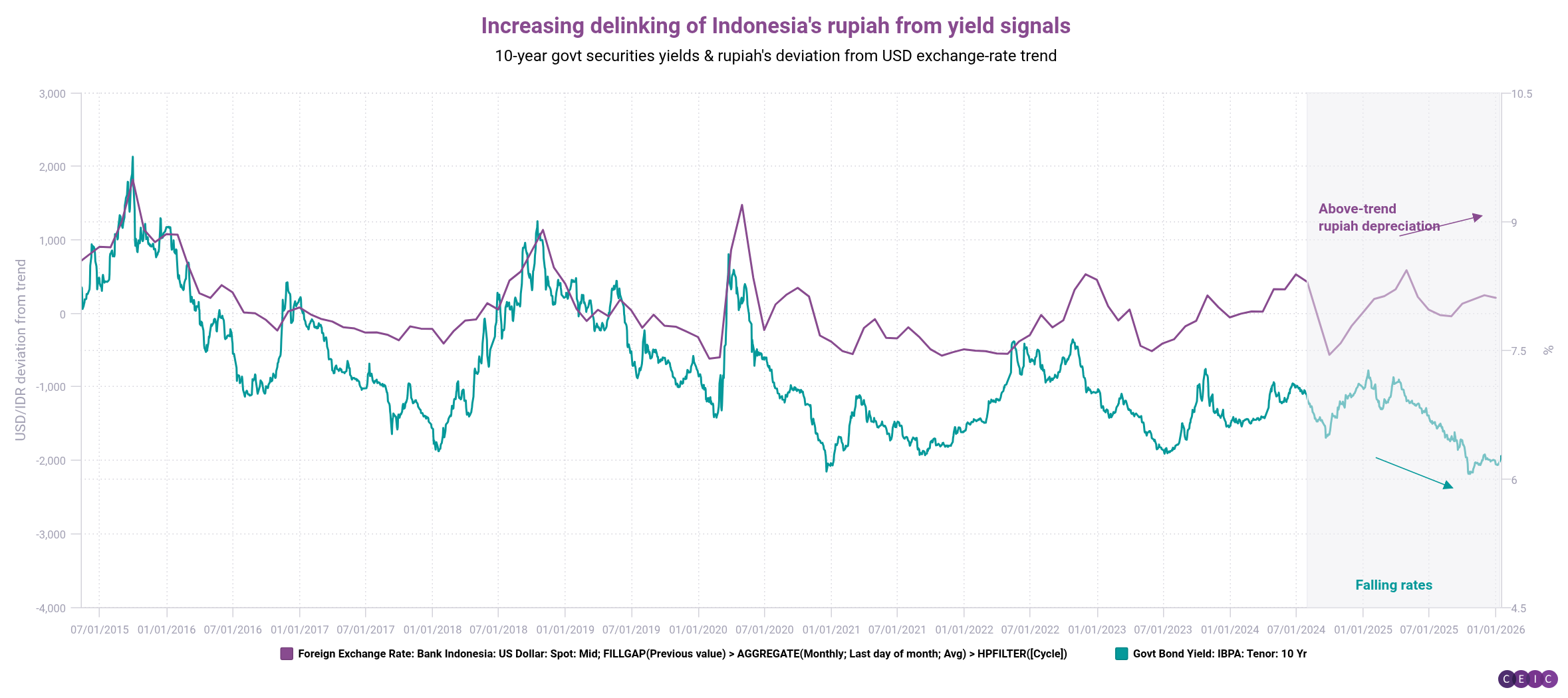
But now, the rupiah is weakening while yields are going down (driven by the central bank's easing stance and safe-haven demand from local banks awash in liquidity).
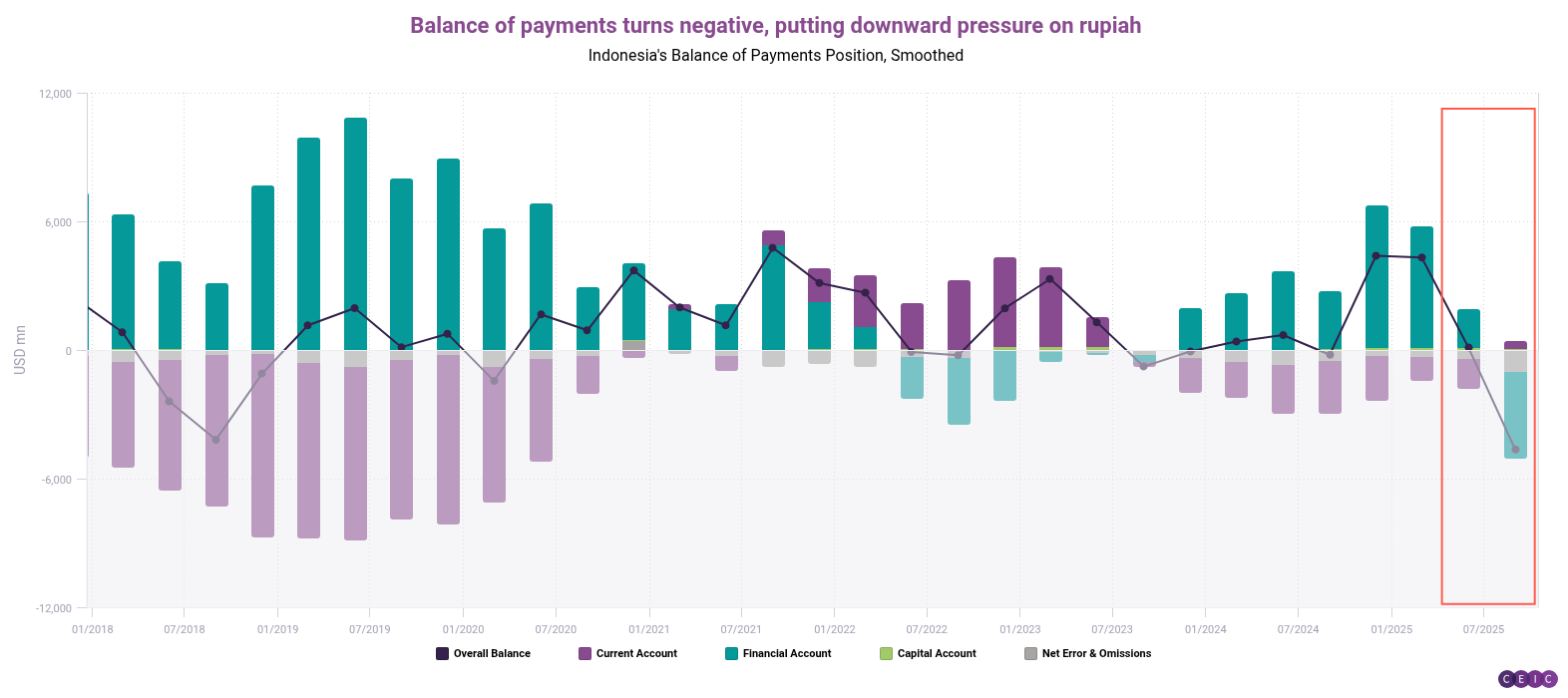
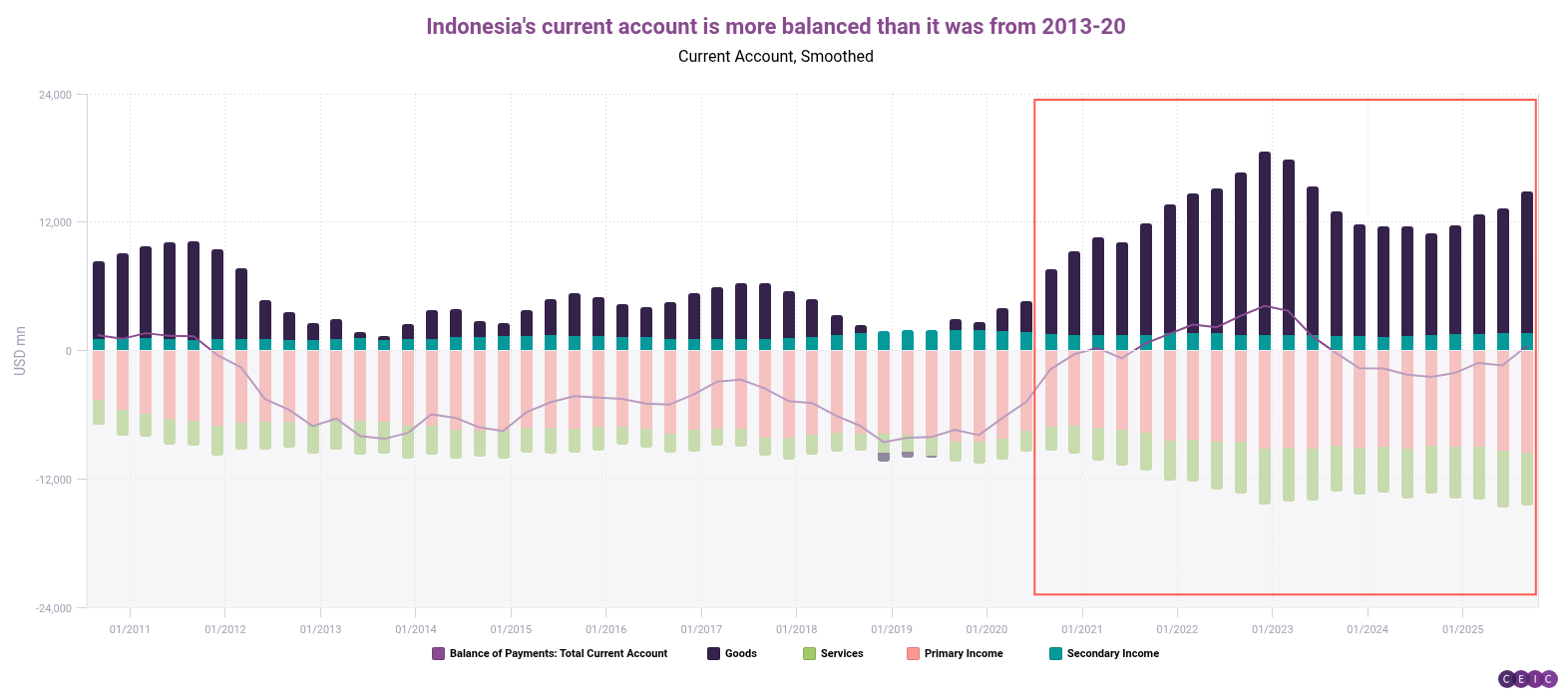
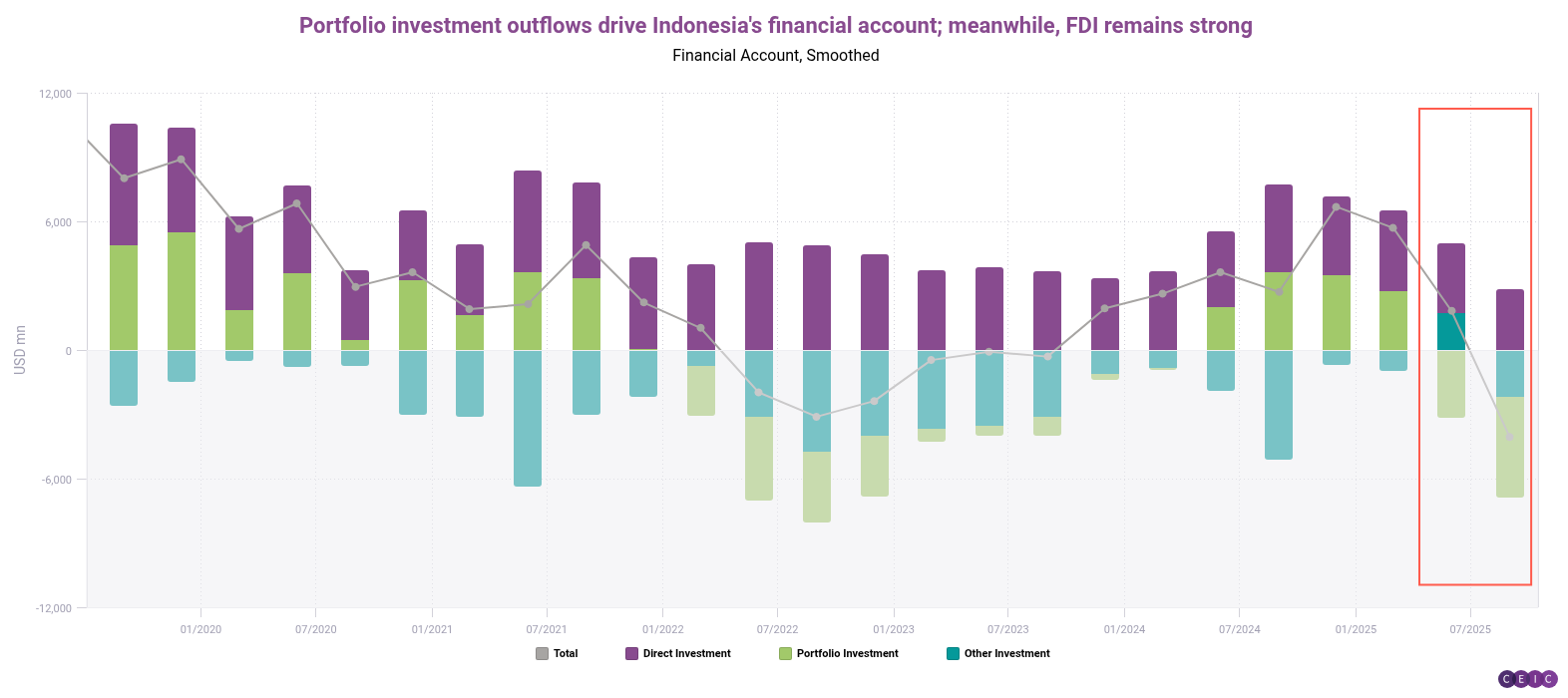
We can explain the currency part of this new phenomenon by examining the flows reflected in the country's balance-of-payments data. The overall balance has turned negative, mostly driven by portfolio investment outflows.
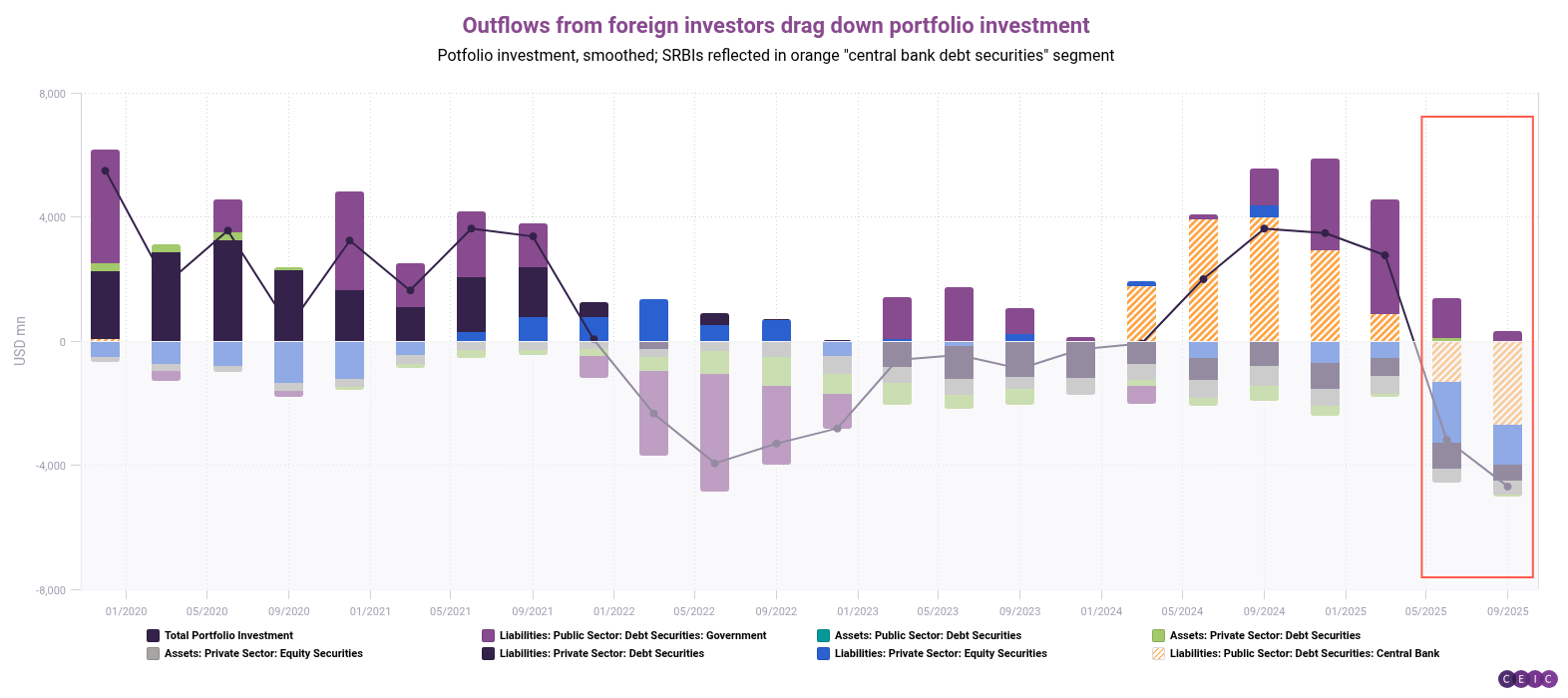
Foreigners are selling Indonesian equities and bonds. Meanwhile, domestic investors’ holdings abroad have remained relatively stable. That indicates that net capital outflows are dominated by foreign portfolio disinvestment rather than residents' asset purchases abroad.
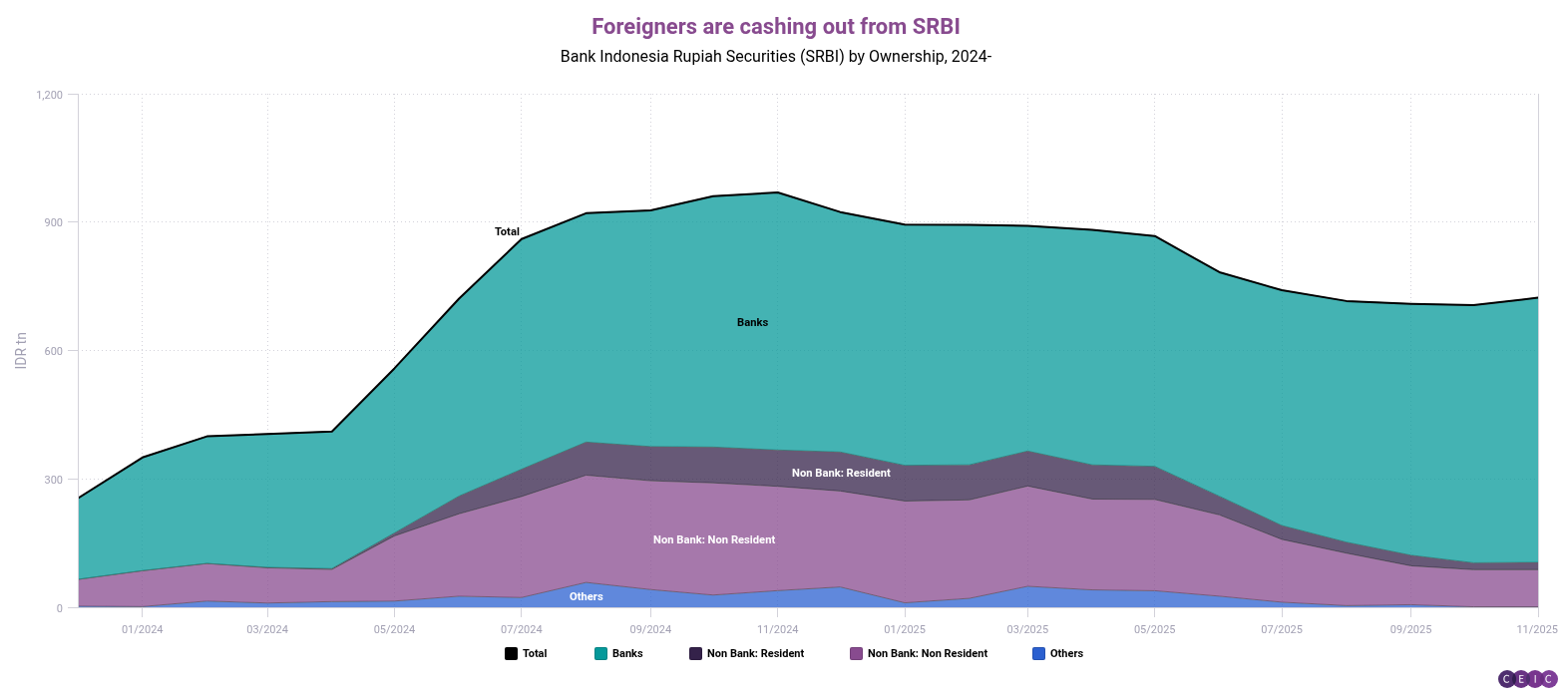
In particular, we can see that foreigners have been selling Bank Indonesia Rupiah Securities. (We recently discussed these debt instruments, known as SRBIs, in the context of Indonesia's stimulus package for state banks and President Prabowo's replacement of a hawkish finance minister.)
SRBIs were unveiled by the central bank two years ago; backed by government bonds (which helped make them initially attractive to yield-seeking investors), they are aimed at managing the yield curve and stabilizing the rupiah. As they are denominated in local currency, foreigners' sales can put downward pressure on the rupiah when the proceeds are converted to USD.
*We've used our HP filter to express USD/ISR as the deviation from trend. A higher value = depreciation in excess of recent trends; a lower value = appreciation in excess of the trend.
.png?width=1572&height=700&name=US%20dollar%20-%20Indonesian%20rupiah%20exchange%20rate%20since%202000%20spot%20rates%20and%20smoothed%20trend%20(1).png)
If you are a CEIC user, access the story here.
If you are not a CEIC client, explore how we can assist you in generating alpha by registering for a trial of our product: https://hubs.la/Q02f5lQh0