CEICData.com © 2018 Copyright All Rights Reserved
.png?width=160&name=ceic-logo-Vector%20logo%20no%20tagline%20(002).png)

CEIC users can get an early heads up for Indonesian inflation thanks to our proprietary food index -- which is pointing to a sharp slowdown after a late 2025 price surge. This has implications for monetary policy as the central bank balances concerns about a tumbling currency with its previous inclination to ease rates. (Bank Indonesia held its key rate at 4.75% this week, saying it would be prioritizing rupiah stability.)
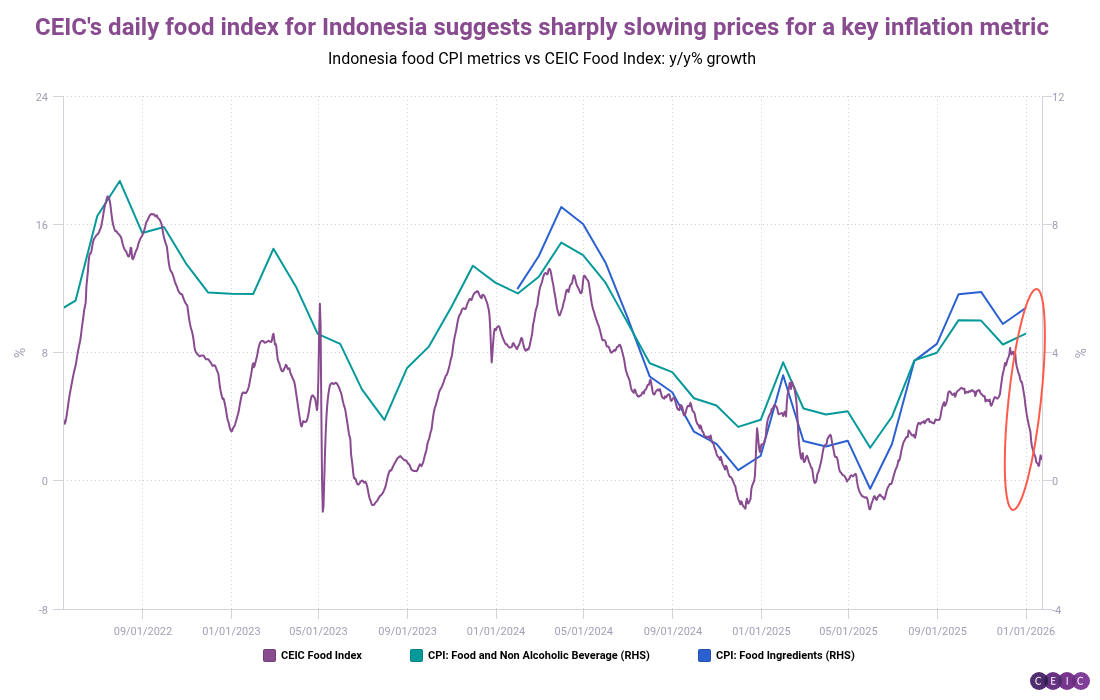
Food accounts for 23% of Indonesia's consumer price index (CPI); in December, Indonesia's food CPI jumped 4.6%, picking up from a 4.2% pace in November. As our second chart shows, this category has had an outsized impact on overall inflation -- accounting for half of the CPI's gains.
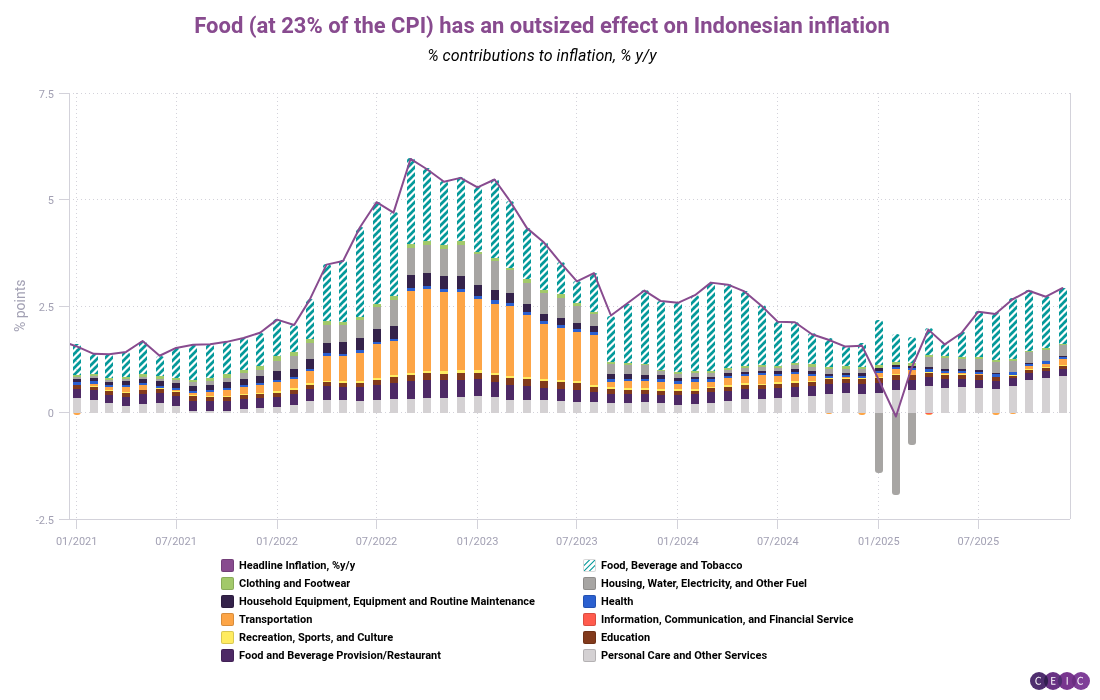
It's notable that Indonesia's core CPI has remained stable during several months of elevated food inflation -- indicating that higher grocery costs are not spilling over into the broader economy.
CEIC's food index* tracks local prices at both modern supermarkets and Indonesia's traditional markets. A particular deflationary trend was noticed in "aromatic vegetables," such as garlic and ginger; as our final chart shows, the downward trend in vegetable prices was most responsible for the move in our food index. The disinflationary trend could come to a halt, however, given nascent price increases for rice -- especially ahead of the Lunar New Year holiday.
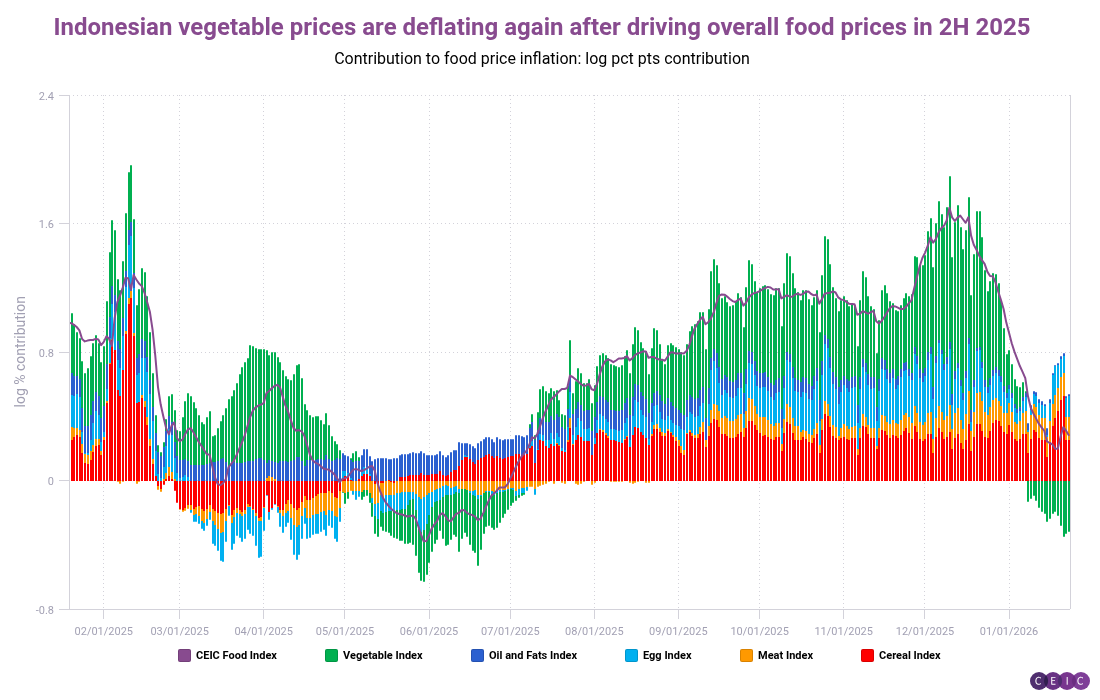
*The "Notes" tab contains more information on the index's construction.
If you are a CEIC user, access the story here.
If you are not a CEIC client, explore how we can assist you in generating alpha by registering for a trial of our product: https://hubs.la/Q02f5lQh0