CEICData.com © 2018 Copyright All Rights Reserved
.png?width=160&name=ceic-logo-Vector%20logo%20no%20tagline%20(002).png)

The EU managed to reach a historic trade deal last week even as Donald Trump threatened to tariff European countries. After 25 years of talks, Mercosur -- the five-nation South American bloc led by Brazil and Argentina -- signed a deal creating one of the largest free-trade areas in the world.
The deal could shore up a relationship that had been waning in recent years, as our first chart shows -- and take advantage of increasing US protectionism to redirect trade flows.
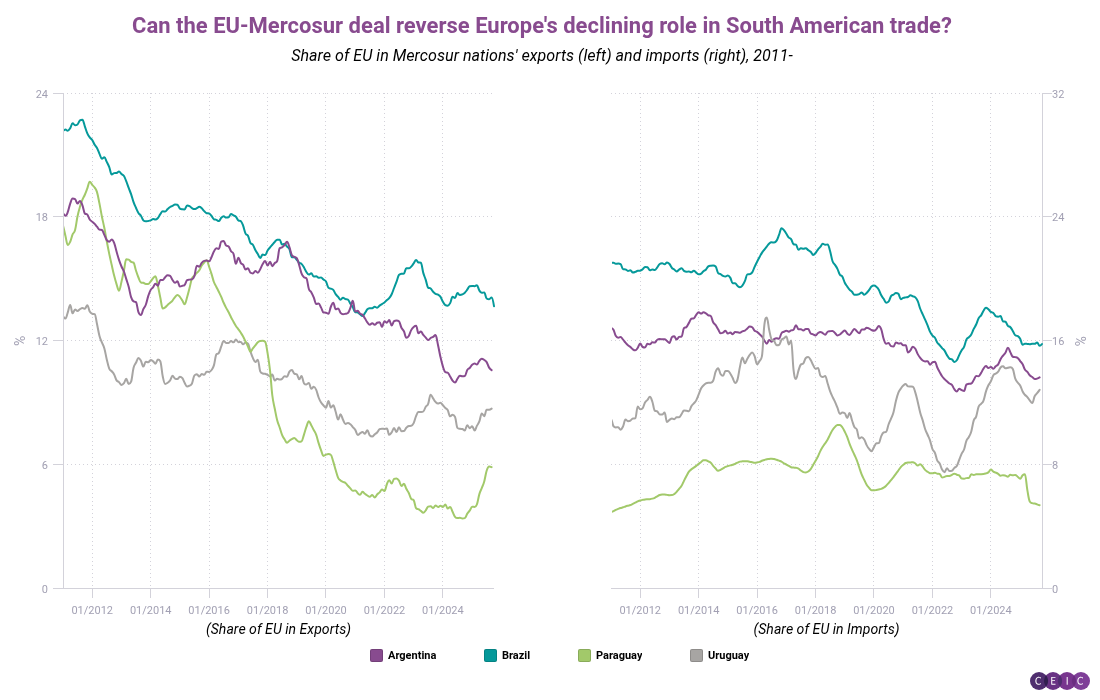
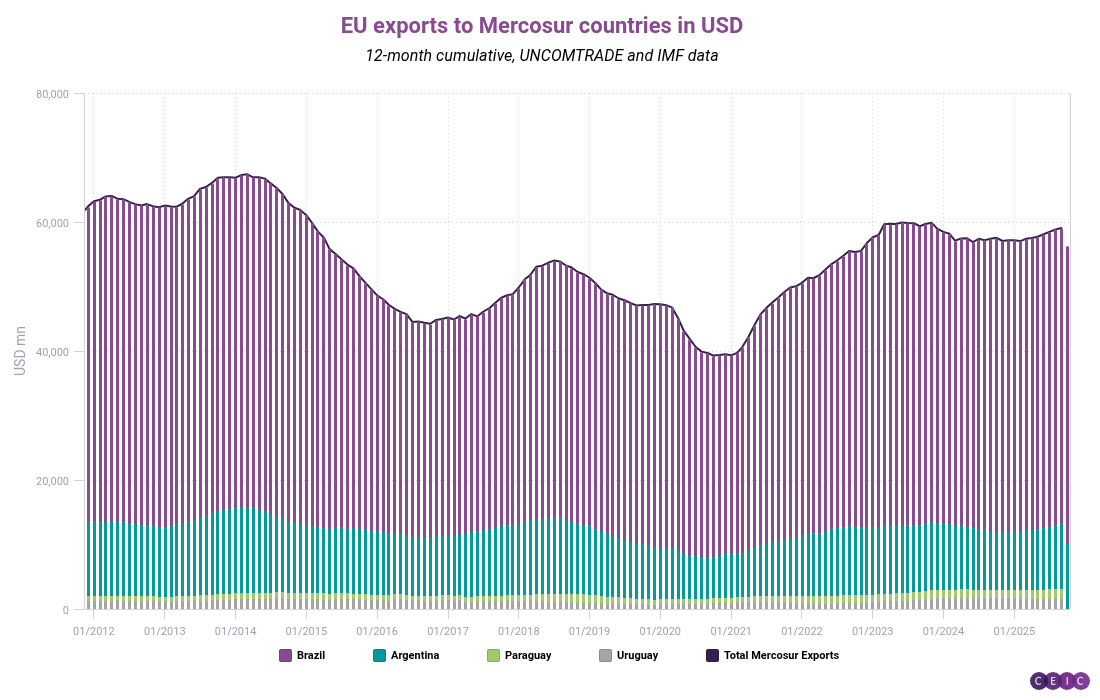
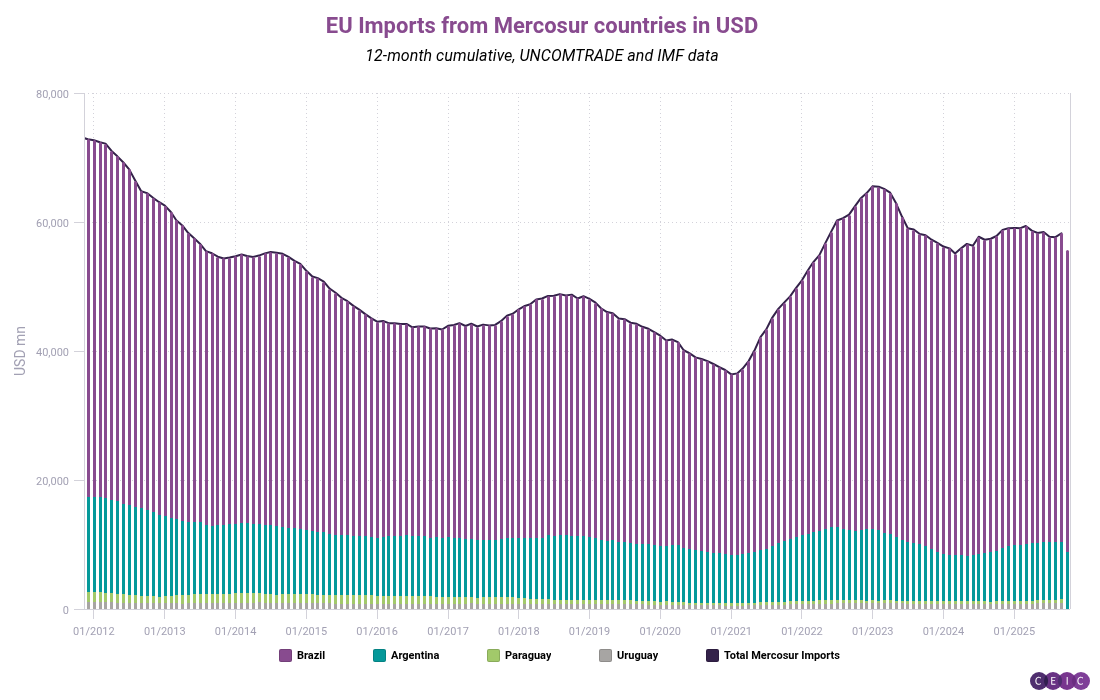
The EU has steadily become a less important export market for Mercosur countries over the last 15 years; the EU's share of Mercosur imports could be described as stagnant at best. In absolute terms, EU-Mercosur trade had been declining for years before a post-pandemic bounce, as our second set of charts shows. These trends are partly due to the rise of Chinese trade, but also reflect Europe's historic barriers to agricultural imports -- a key sector in Latin American economies.
The deal (which has yet to be ratified by legislatures) would eliminate tariffs on more than 90% of goods for both parties, including some of those politically sensitive farm products subjected to quotas. It also opens public procurement markets, liberalizes investment flows, and aims to harmonize technical and safety standards.
Today, total trade between the EU and Mercosur is close to USD 120 billion on an annualised basis (with exports and imports roughly evenly matched). Among individual nations, Brazil has the strongest trade dependency with the EU; the bloc accounts for roughly one-sixth of both exports and imports.
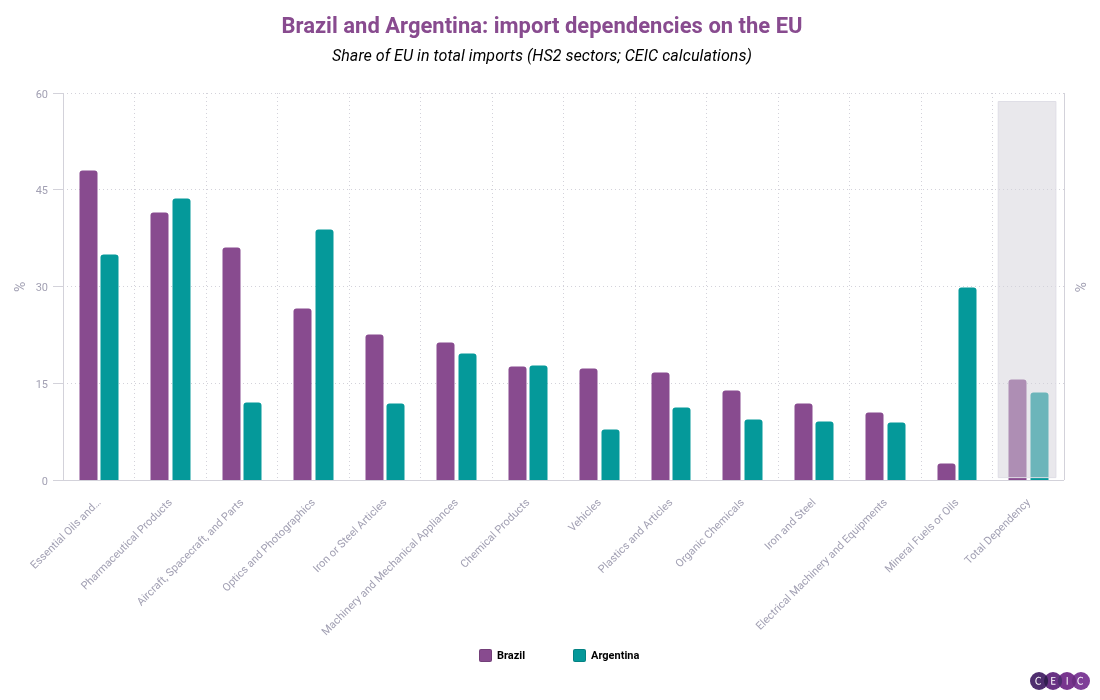
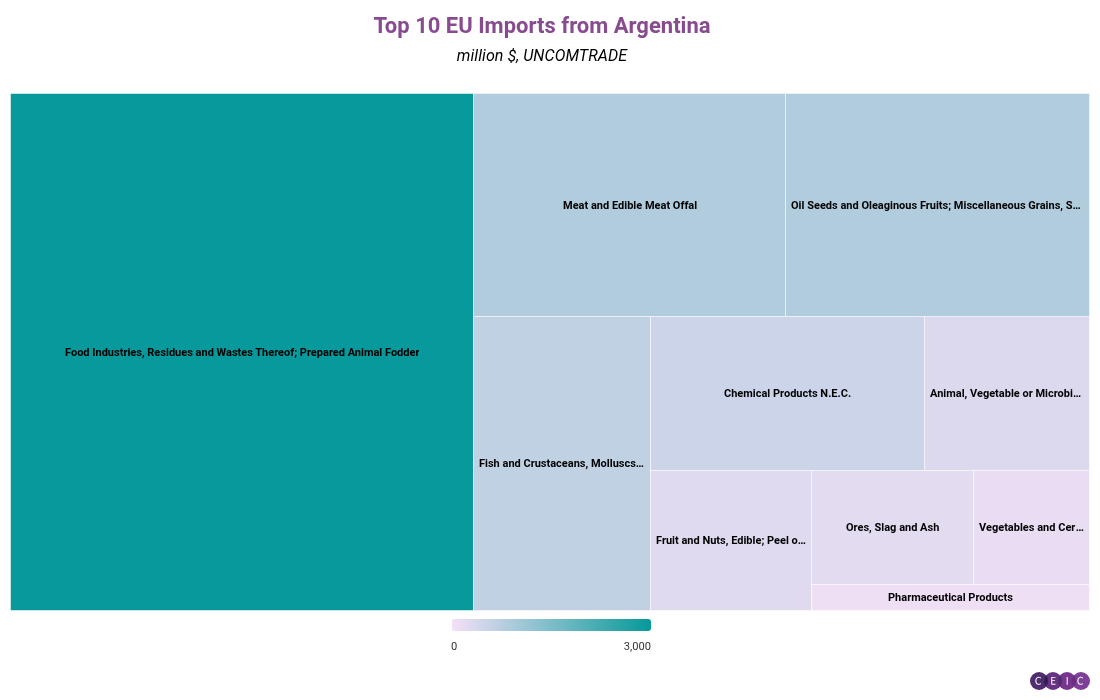
Our subsequent charts take a tour of the most important products in this trading relationship and trade dependencies, using CEIC's harmonized system (HS) customs codes and figures from UNCOMTRADE and the IMF.
Brazil and Argentina are highly reliant on EU countries for imports of essential oils, pharmaceutical products, aircraft, optics, and iron and steel articles. (Though in absolute terms, the largest import categories are machinery, boilers, electrical equipment, vehicles, plastics, and mineral oils.)
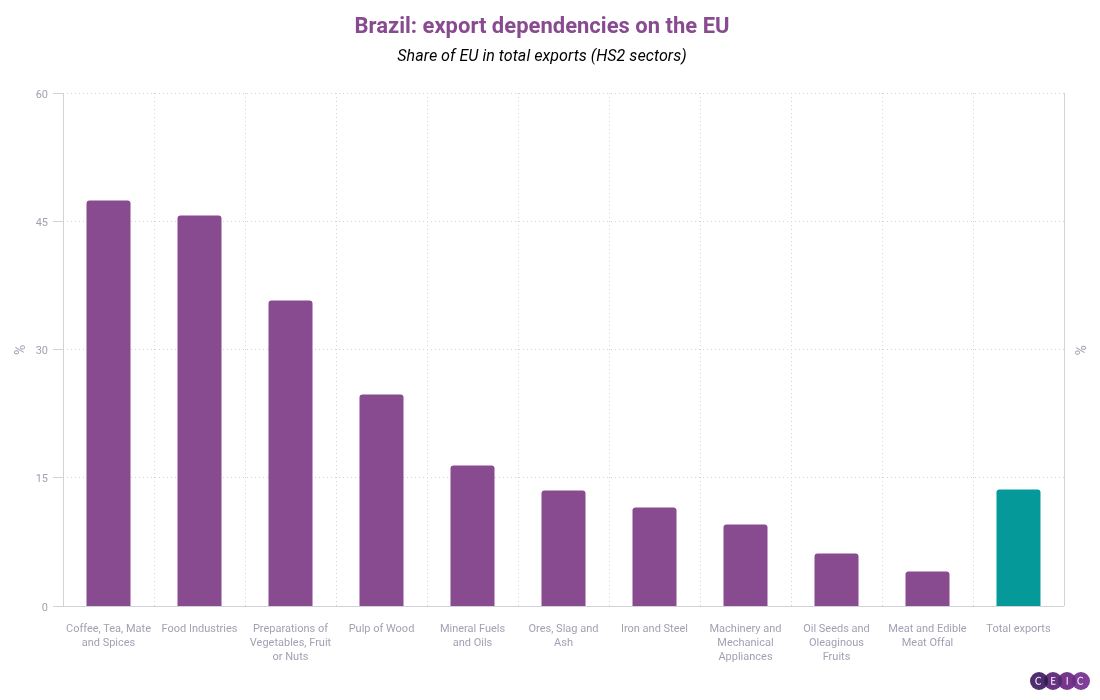
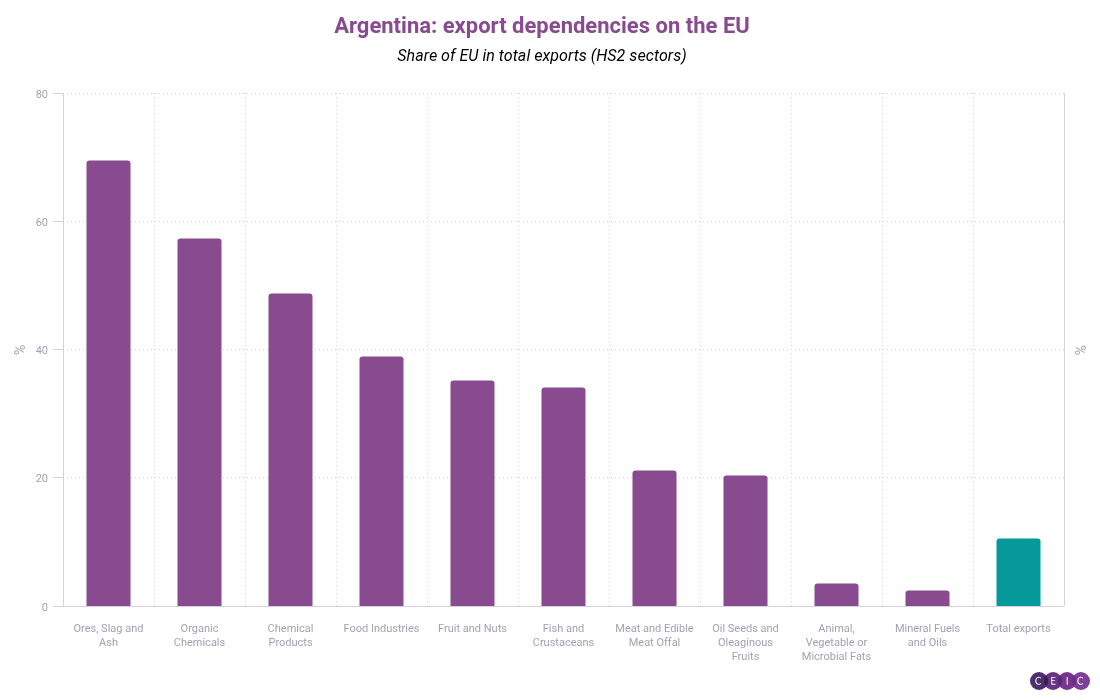
In turn, Brazil is dependent on European purchases of its coffee and other food products, with over 35% of exports in these categories going to the EU. Agriculture is important to Argentina's exports as well -- but other sectors are even more dependent on Europe: the EU accounts for over 50% of Argentina’s exports of ores, organic chemicals, and chemical products. All of these sectors look likely to benefit from the deal.
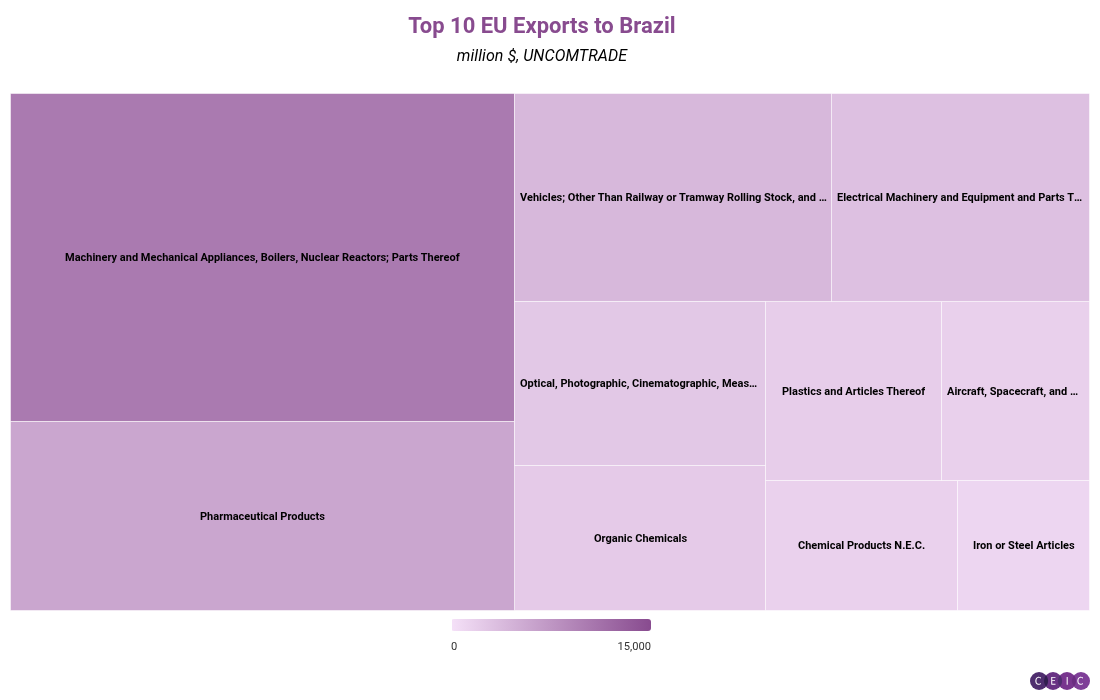
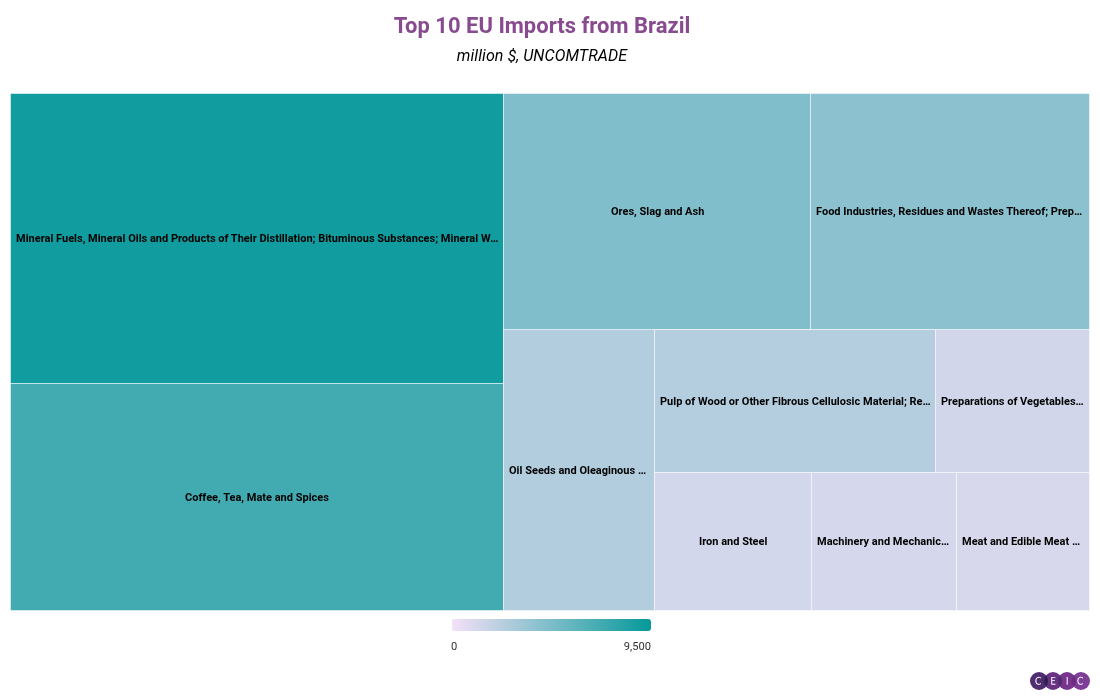
.png?width=1100&height=700&name=Top%2010%20EU%20Exports%20to%20Argentina%20(1).png)
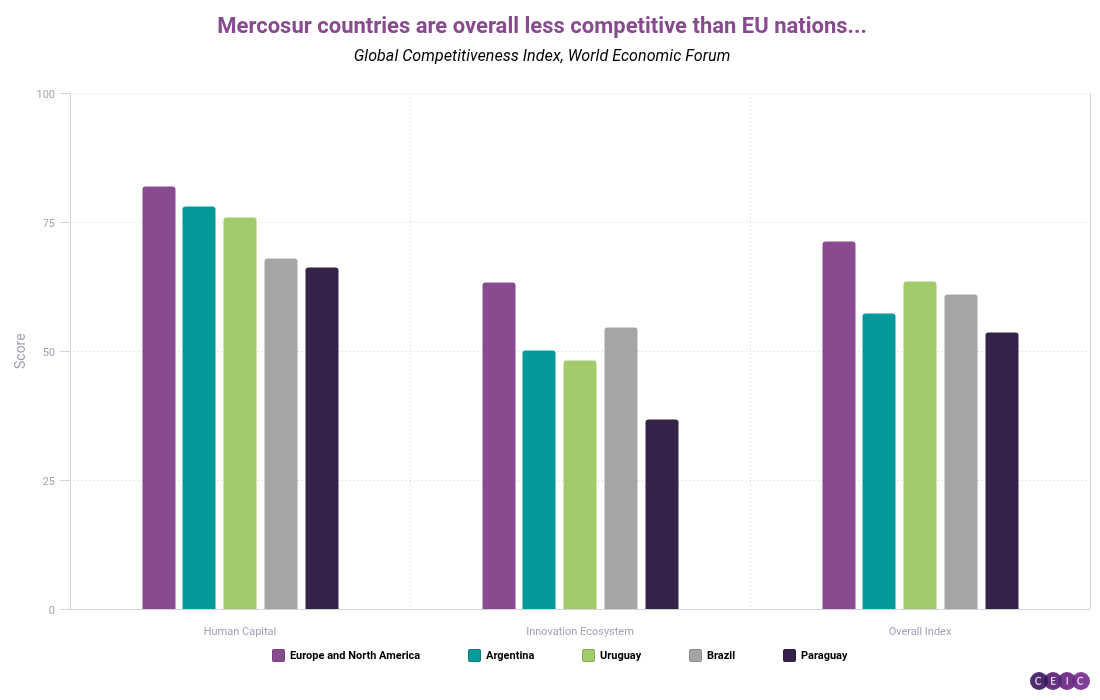
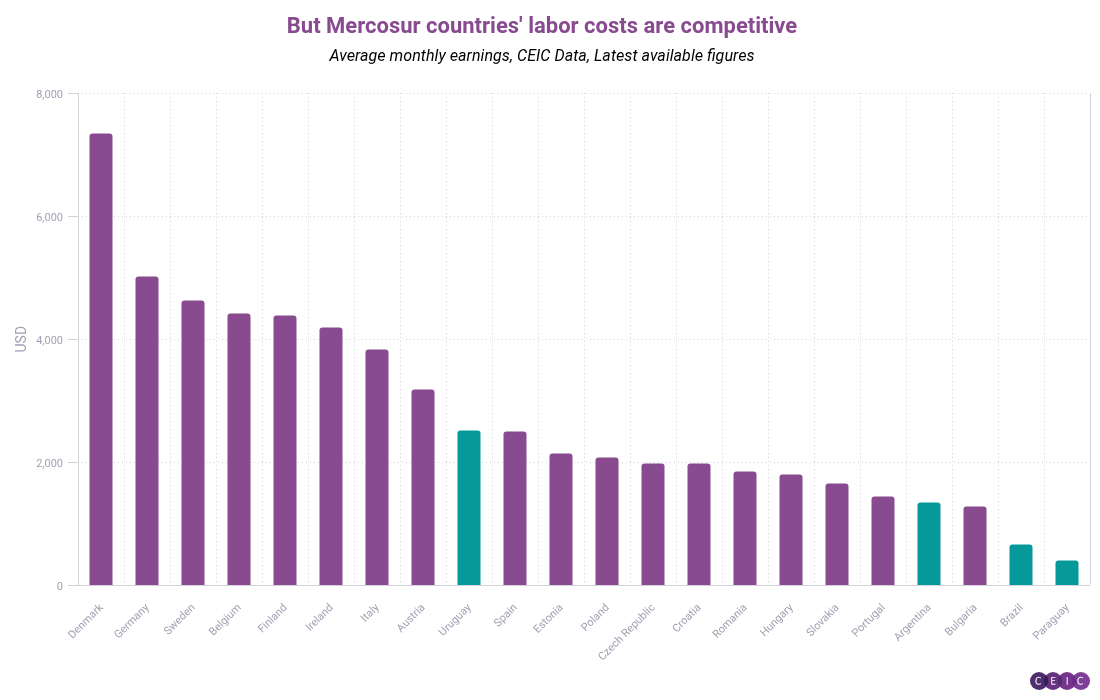
Mercosur nations lag behind the Europeans in competitiveness terms, according to the World Economic Forum; human capital, skilled labor and innovation ecosystems account for that gap. However, Latin America is competitive when it comes to wages -- helping explain opposition to the trade deal by European farmers, whose concerns also extend to compliance with the EU's costly environmental and social standards.
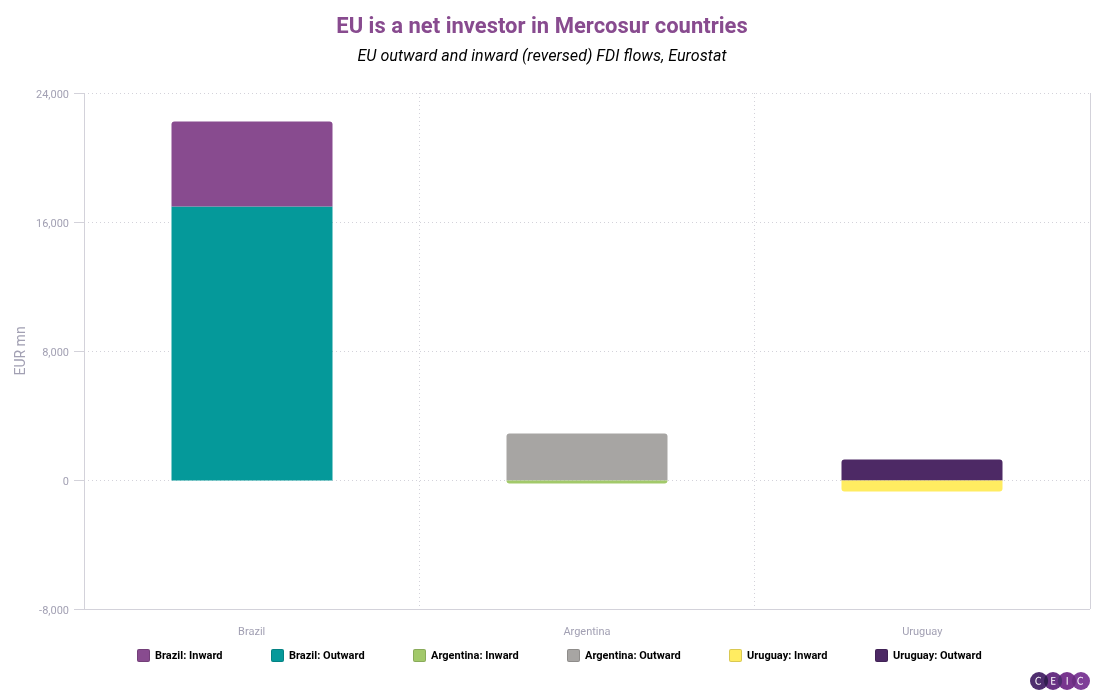
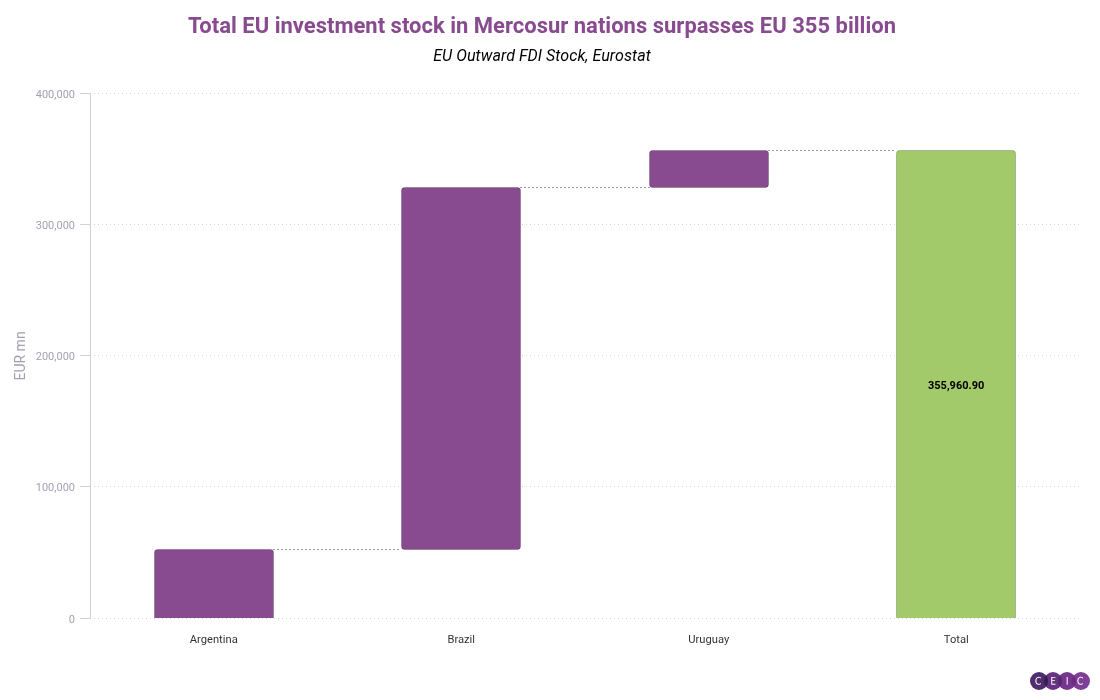
Finally, Eurostat figures show the EU is a net investor in Mercosur countries, with FDI flows particularly concentrated in Brazil. Argentina and Uruguay record much smaller and more volatile figures.
If you are a CEIC user, access the story here.
If you are not a CEIC client, explore how we can assist you in generating alpha by registering for a trial of our product: https://hubs.la/Q02f5lQh0