CEICData.com © 2018 Copyright All Rights Reserved
.png?width=160&name=ceic-logo-Vector%20logo%20no%20tagline%20(002).png)

Inflows to a nation's bond and stock markets can significantly influence exchange rates. We can explore this trend in Malaysia and the broader ASEAN-6 bloc thanks to our partnership with EPFR and its wealth of data on fund flows and asset allocation.
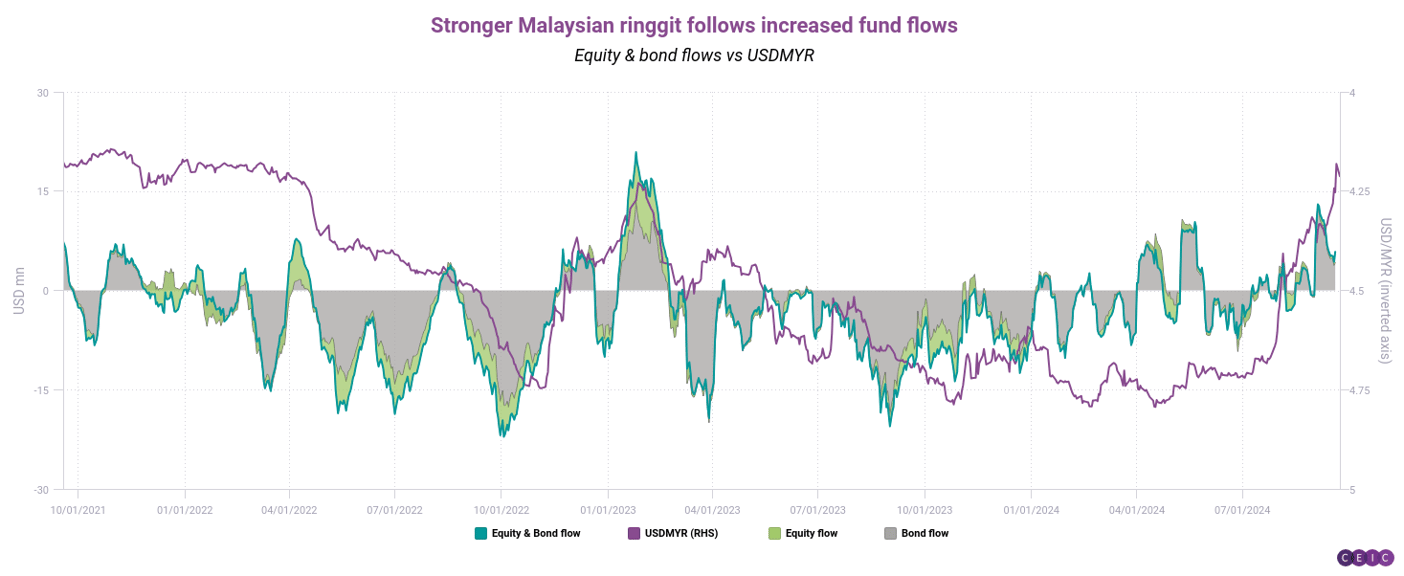
Our first chart tracks the USDMYR exchange rate and shows how inflows to Malaysian financial markets are often a leading indicator for currency strength. Inflows to bond and equity funds gradually turned positive recently; July and August saw the ringgit jump against the dollar, and the currency's strength continues.
This month, fund inflows have tapered. Will this result in a near-term ceiling for ringgit appreciation?
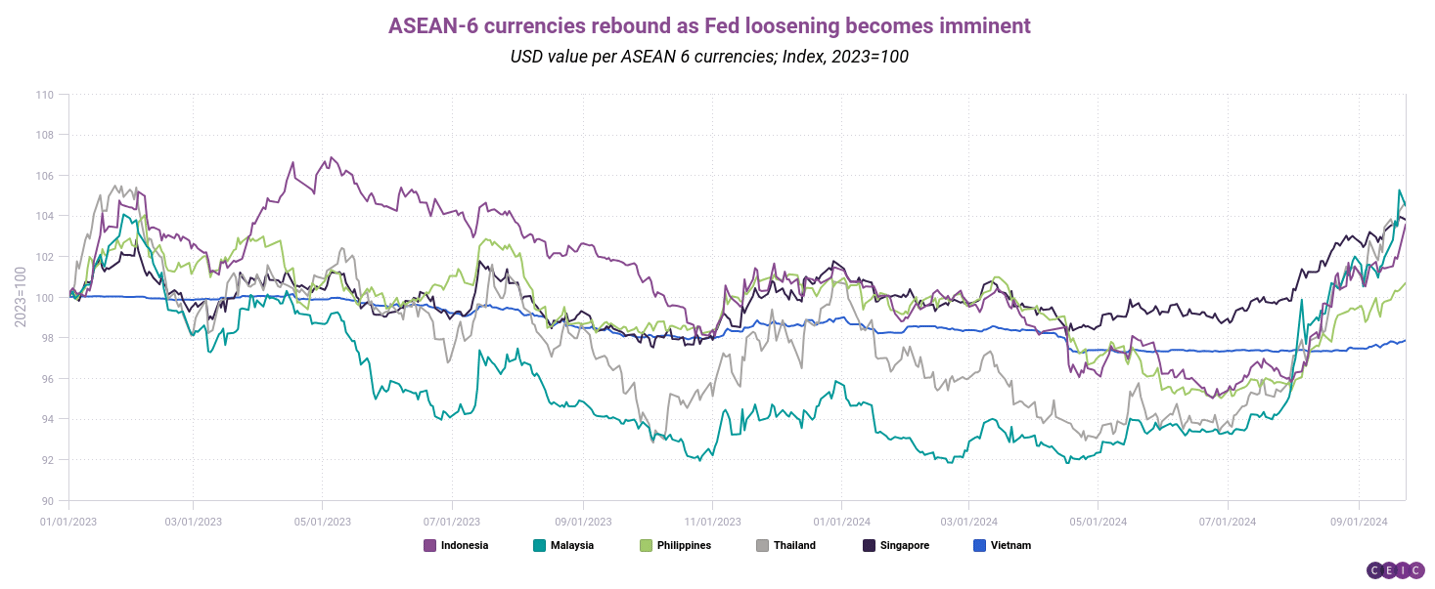
To be sure, the Federal Reserve's 50 basis-point rate cut this week (which surprised some observers) will likely be supportive for regional currencies against the dollar. We chart them in our second visualization.
Returning to EPFR's asset-allocation insights, our third and fourth charts assess accumulated equity fund flows for the ASEAN-6 nations. Cumulative flows are broadly negative for both bonds and equities, but Malaysia's equity flows have held up better than many of the nation's regional peers.
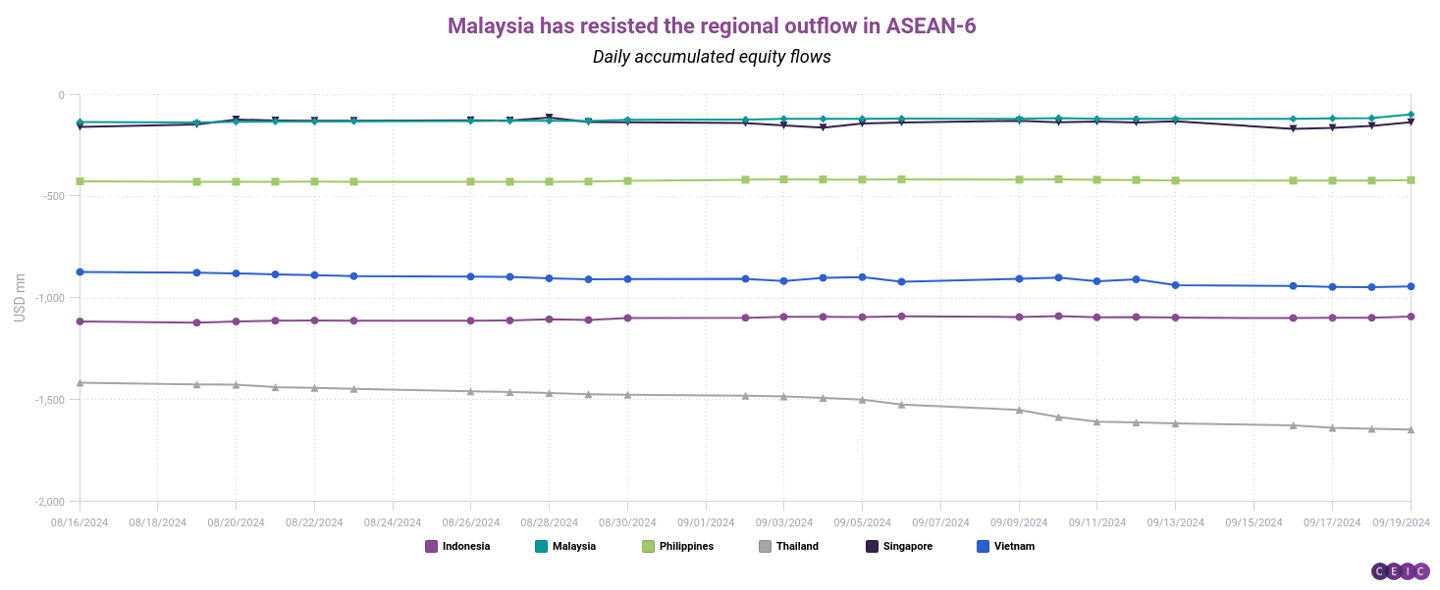
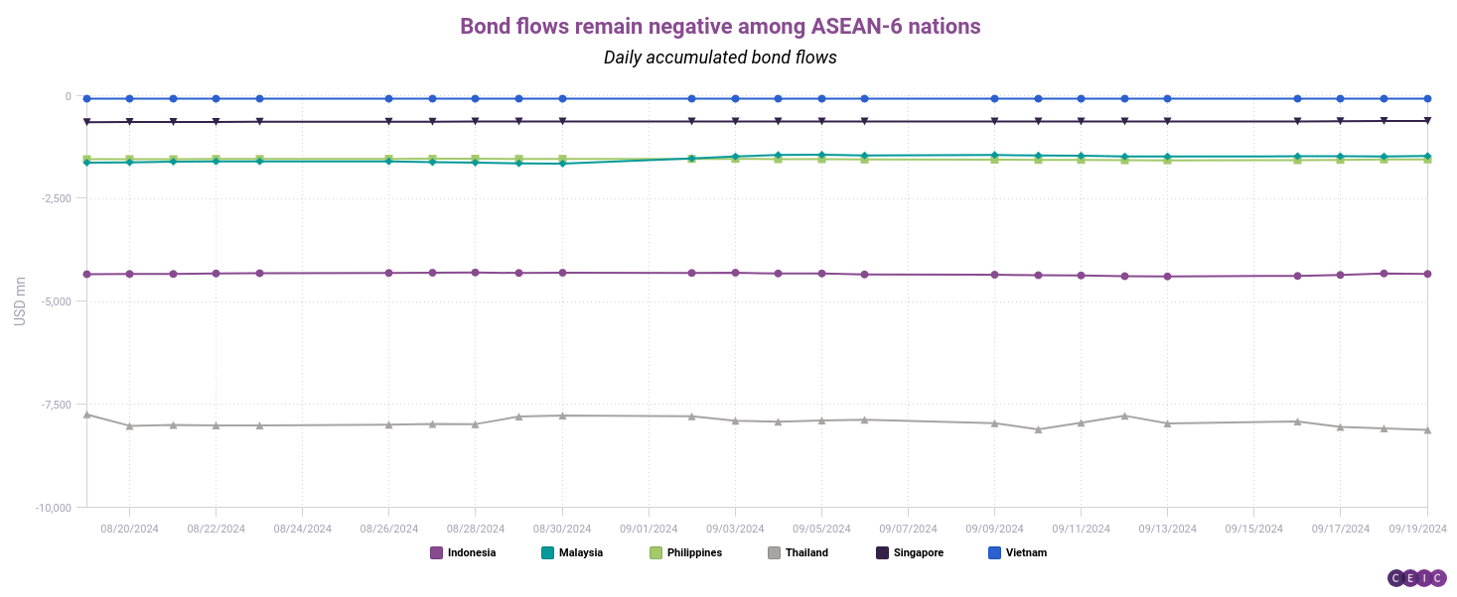
EPFR's daily equity and bond flow data is based on a large sample of funds and uses a 30-day moving average, with weighting prioritizing the most recent time points.
We invite you to visit our ASEAN-6 dashboard, which delves further into regional trends. It shows how fund flows signal major currency appreciation or depreciation, but "lead time" differs between nations. The strongest signals are observed in Indonesia, Malaysia, the Philippines and Singapore.
If you are a CEIC user, access the story here.
If you are not a CEIC client, explore how we can assist you in generating alpha by registering for a trial of our product: https://hubs.la/Q02f5lQh0