CEICData.com © 2018 Copyright All Rights Reserved
.png?width=160&name=ceic-logo-Vector%20logo%20no%20tagline%20(002).png)

Last year, inflationary pressures looked under control in Europe. As war erupts in the Persian Gulf, that could be set to change -- highlighting the continent's energy dependence on oil tankers and LNG vessels.
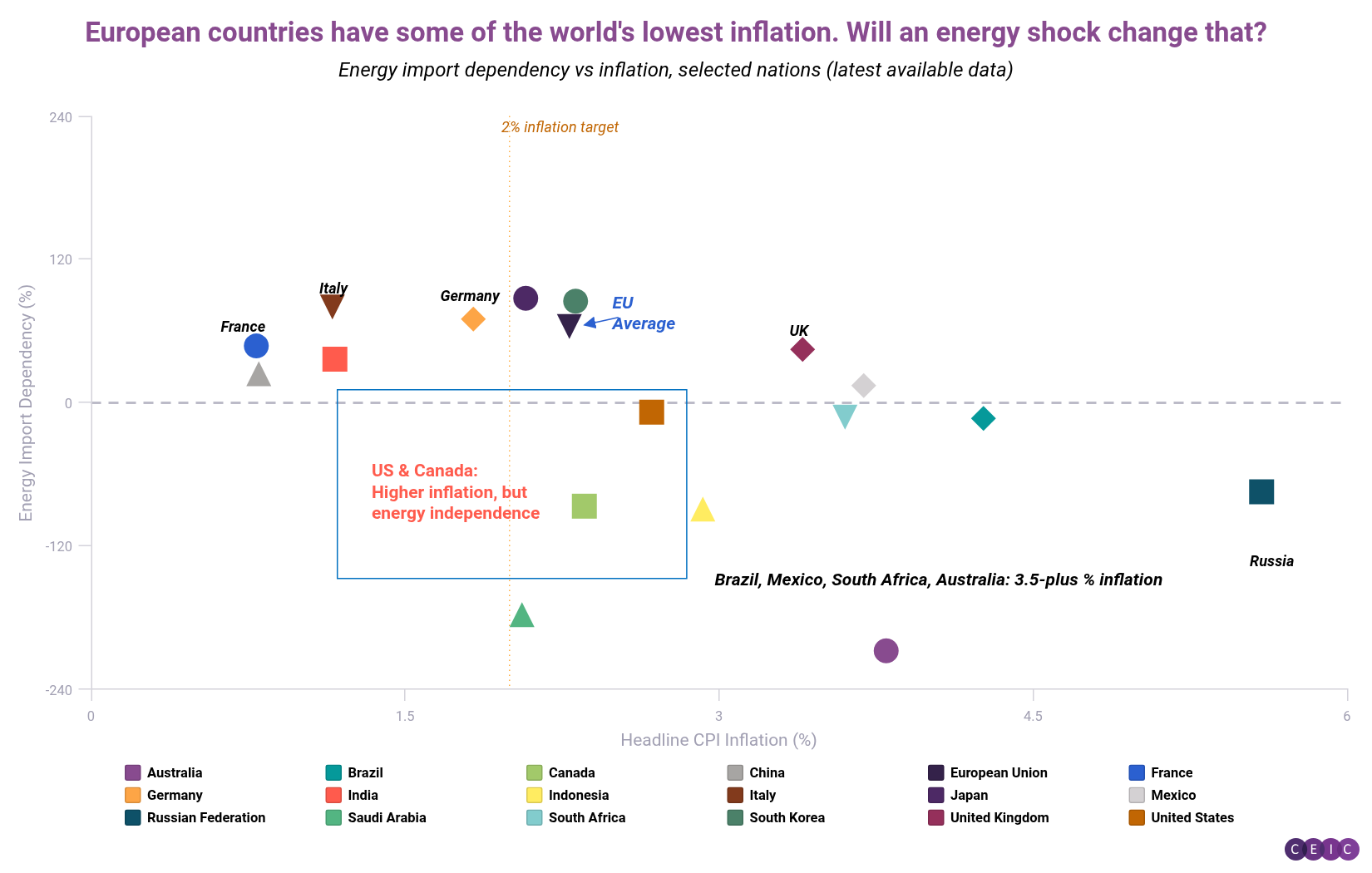
We've created a scatterplot of the world's major economies, comparing their dependence on imported energy to their inflation rate. While the EU average remains relatively elevated, headline inflation for the biggest economies -- France, Italy and Germany, all net energy importers -- remains below the European Central Bank's 2% target. (The UK -- also an energy importer despite its North Sea production -- is notable for substantially higher inflation than its former EU partners.)
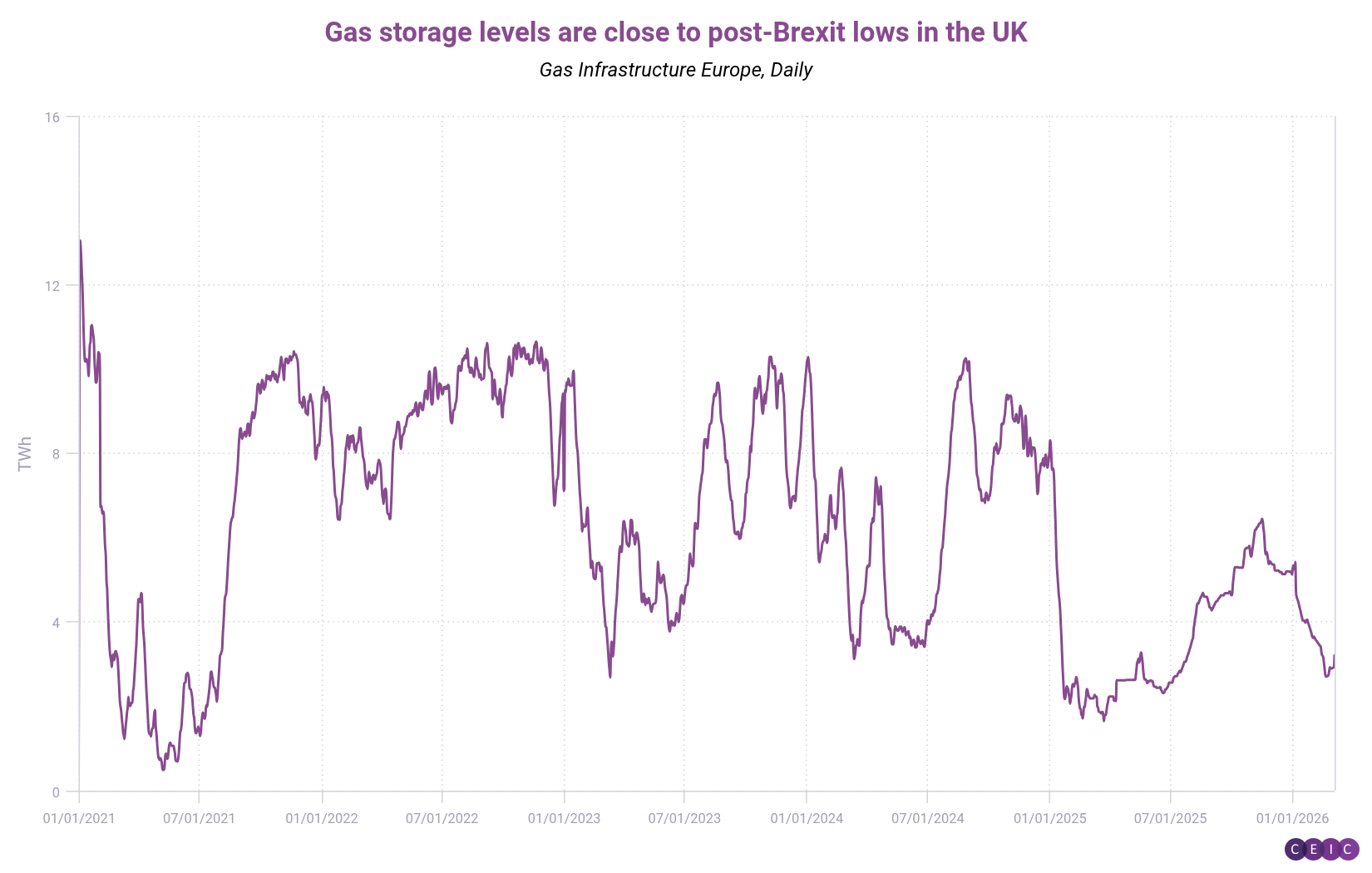
Our subsequent charts explore the potential return of natural-gas shocks that Europe might have thought it had solved. The 2022 Russian invasion of Ukraine and concurrent throttling of EU-bound Russian gas flows focused attention on Europe's low storage levels, which had been depleted by a cold winter.
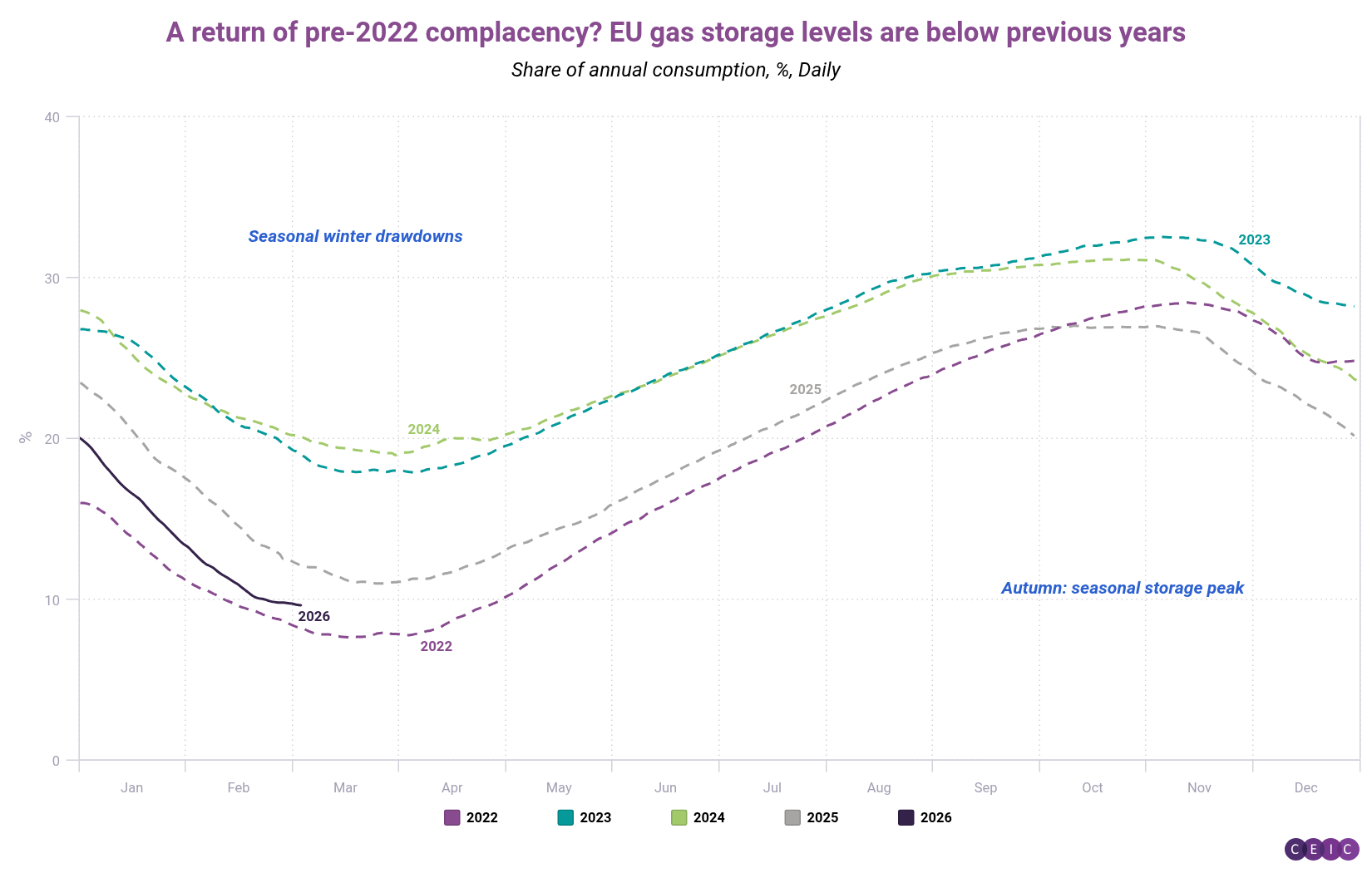
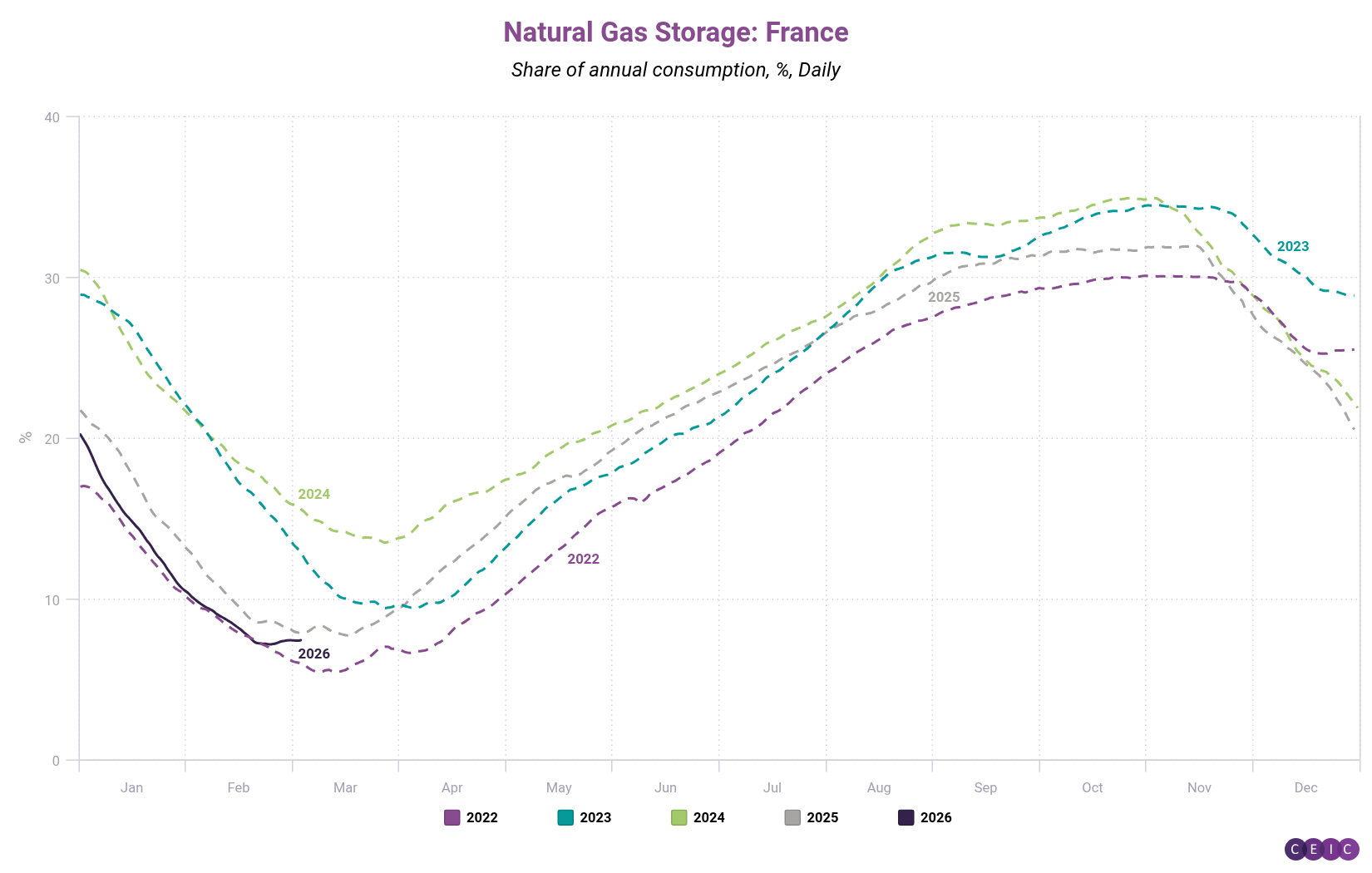
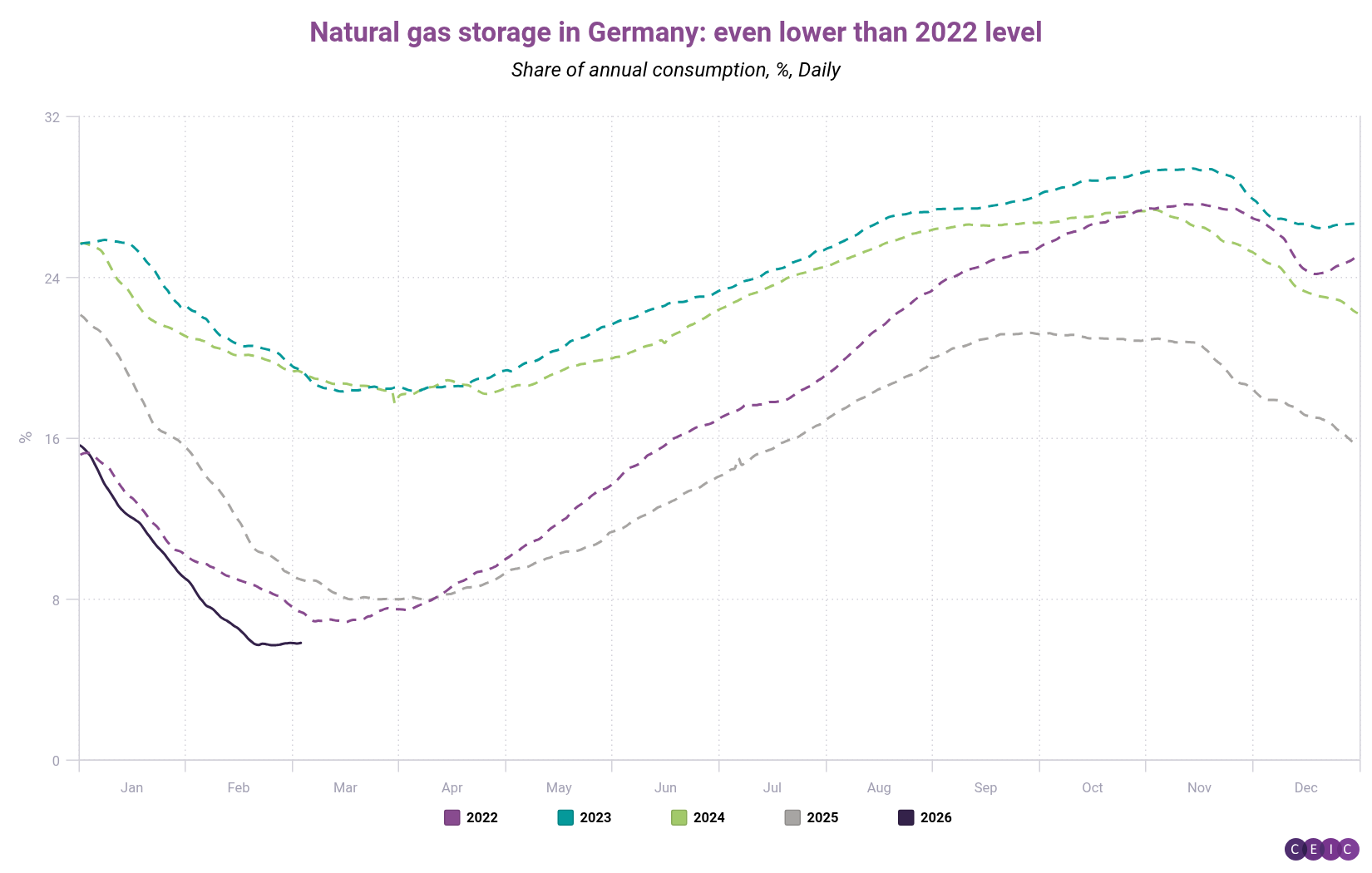
Between the luck of warmer weather and an increased focus on seaborne liquefied natural gas imports, Europe replenished its reserves. But after a tough US winter in 2025-26, prices spiked, global markets tightened and Europe's reserves have sunk back to 2022 levels. In Germany, reserves are even lower than they were before war broke out in Ukraine.
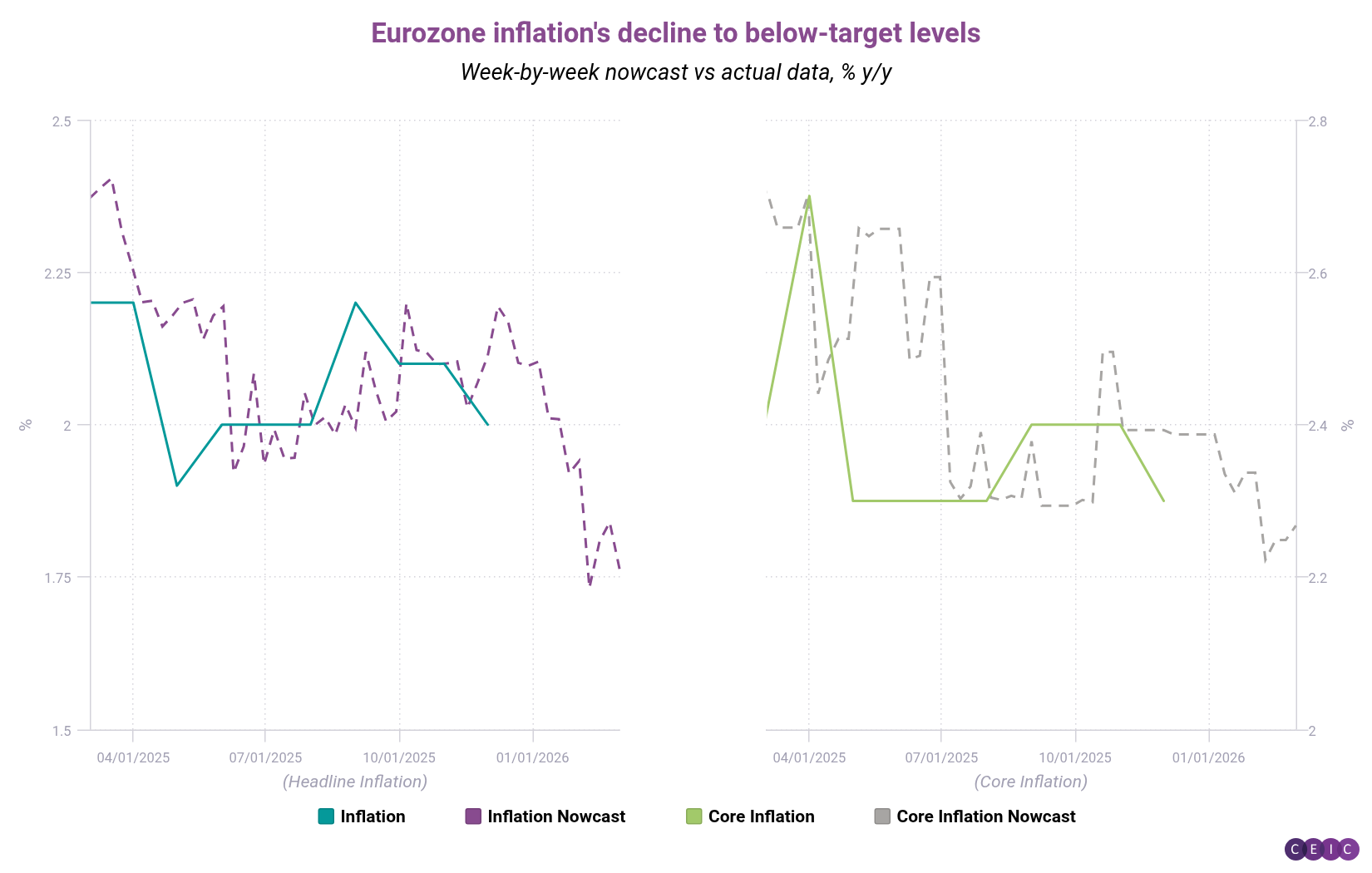
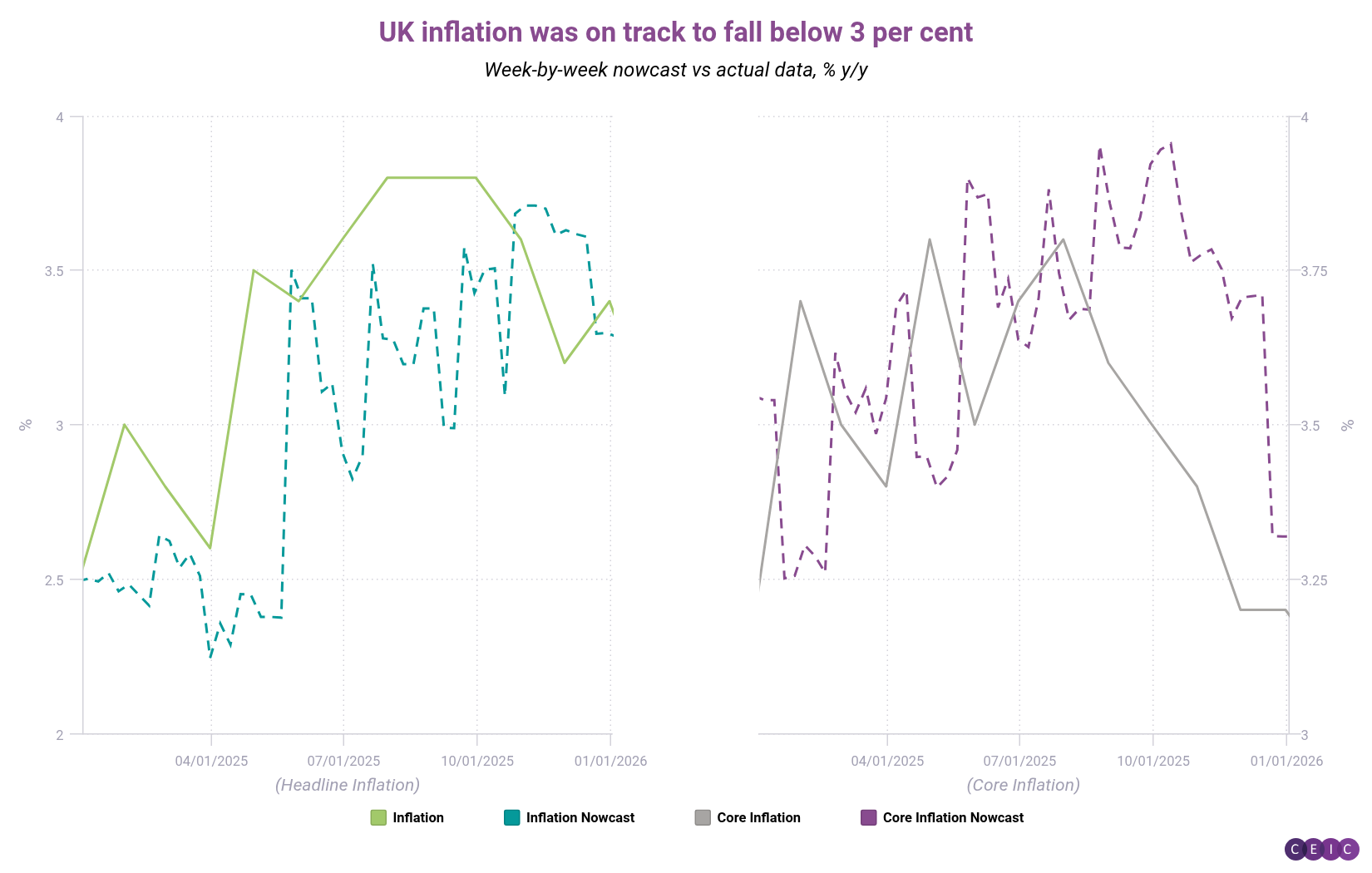
We conclude with our inflation nowcasts for the eurozone and UK. (At the time of publication, they had yet to be updated with readings reflecting the impact of war in the Persian Gulf.) Britain had been on track to finally get CPI growth below 3% -- potentially allowing a March rate cut -- before the current crisis emerged. Meanwhile, the possibility of a European rate hike could be on the table after the ECB's chief economist warned of near-term inflation pressures.
If you are a CEIC user, access the story here.
If you are not a CEIC client, explore how we can assist you in generating alpha by registering for a trial of our product: https://hubs.la/Q02f5lQh0