CEICData.com © 2018 Copyright All Rights Reserved
.png?width=160&name=ceic-logo-Vector%20logo%20no%20tagline%20(002).png)

The "bond vigilantes" are back in Japan amid Sanae Takaichi's plans to spend more and cut taxes. The Japanese Prime Minister is putting her fiscal policies to the voters in a snap election called for Feb. 8, aiming to capitalize on the popularity of this agenda despite fatigue with her LDP party amid various scandals.
The Japanese bond market has recently seen rapid moves and dislocations that were unknown during the decades of ultra-low interest rates and yield curve control. Some commentators have warned of parallels with the UK's "Liz Truss moment," when bond markets balked at a new leader's unfunded tax cuts.
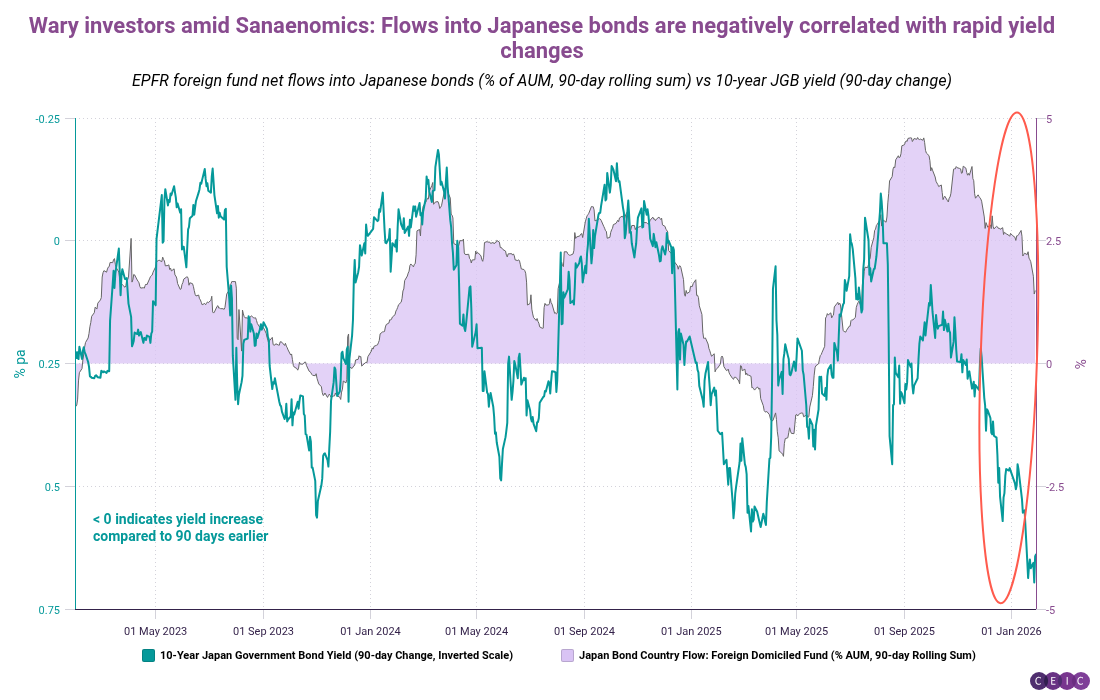
How are foreign investors reacting? We can track exclusive fund-flow data from EPFR for insights. As our chart shows, rapid and pronounced change in bond yields (defined as a rolling 90-day period) is correlated with a chilling effect on foreign inflows to Japanese bond funds -- despite the appeal of those higher coupons. Inflows are well down from their recent September peak.
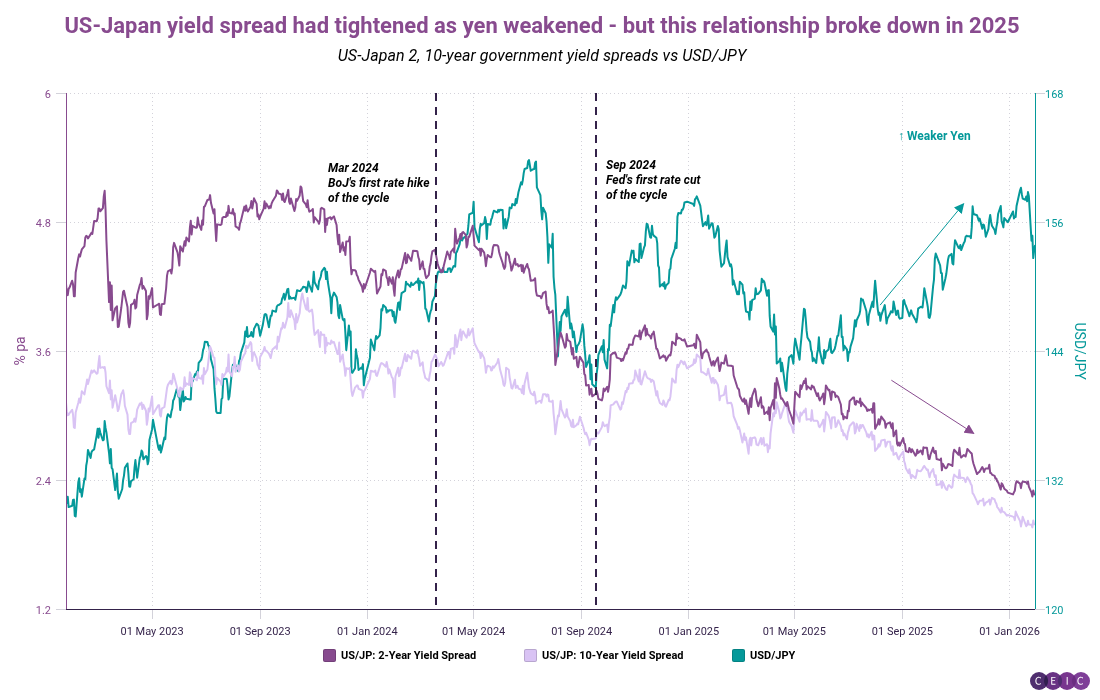
Long-dated government securities' returns have fallen significantly amid a steepening yield curve, as our second chart shows. Meanwhile, the government's spending plans are also arguably undermining the currency.

As our third chart shows, the yen is still weakening against the US dollar despite a narrowing yield differential between the two nations. That marks a break from a historic relationship, and signals that a fiscal risk premium is being priced in.
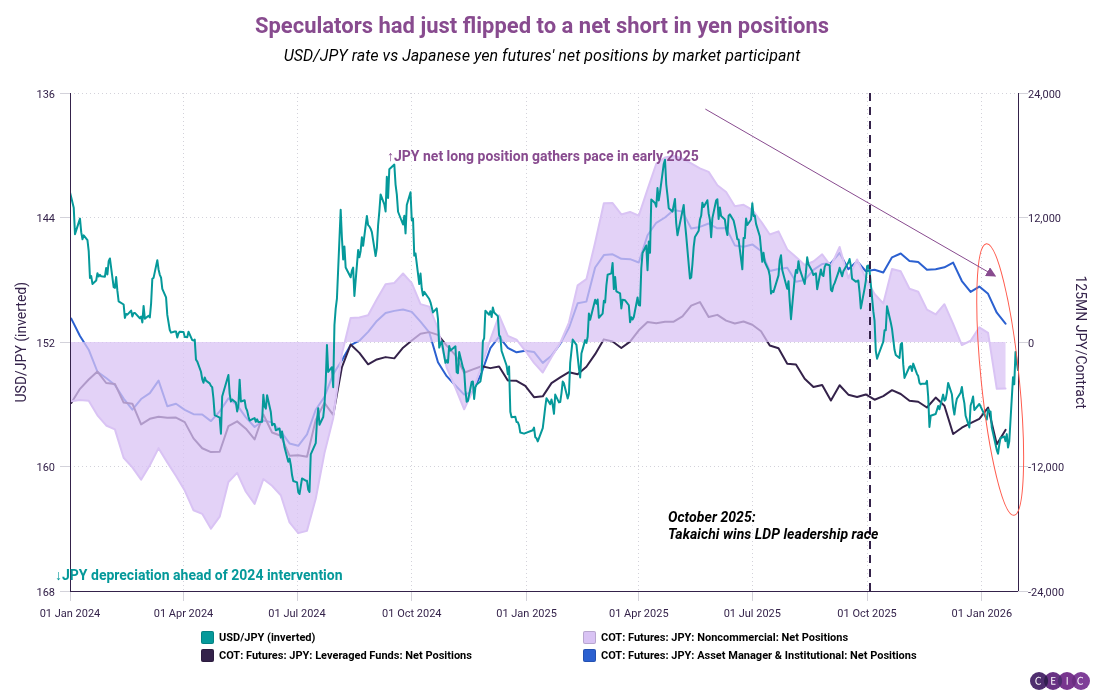
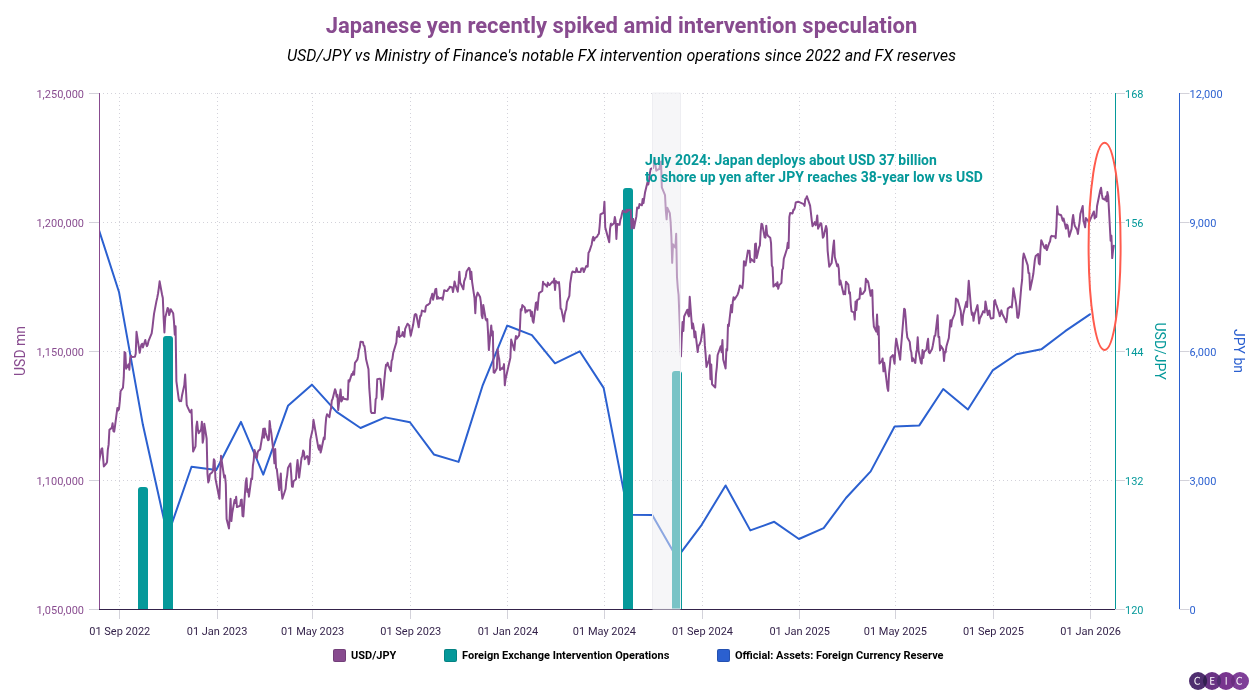
Meanwhile, data from the US Commodity Futures Trading Commission (CFTC) shows that speculators such as leveraged funds have steadily reduced their net long yen positions since late April. Recently, they flipped to a net short position. As the yen approaches the 160 level, the market is wary of a Ministry of Finance intervention similar to the one that occurred in mid-2024.
Takaichi's populist measures include suspending the 8% sales tax on food for two years, a response to the spike in food inflation that's driving Japan's cost-of-living crisis. Our pie charts consider why this might be unnerving the bond market: government finances are much more reliant on sales-tax revenue than they were a few years earlier.

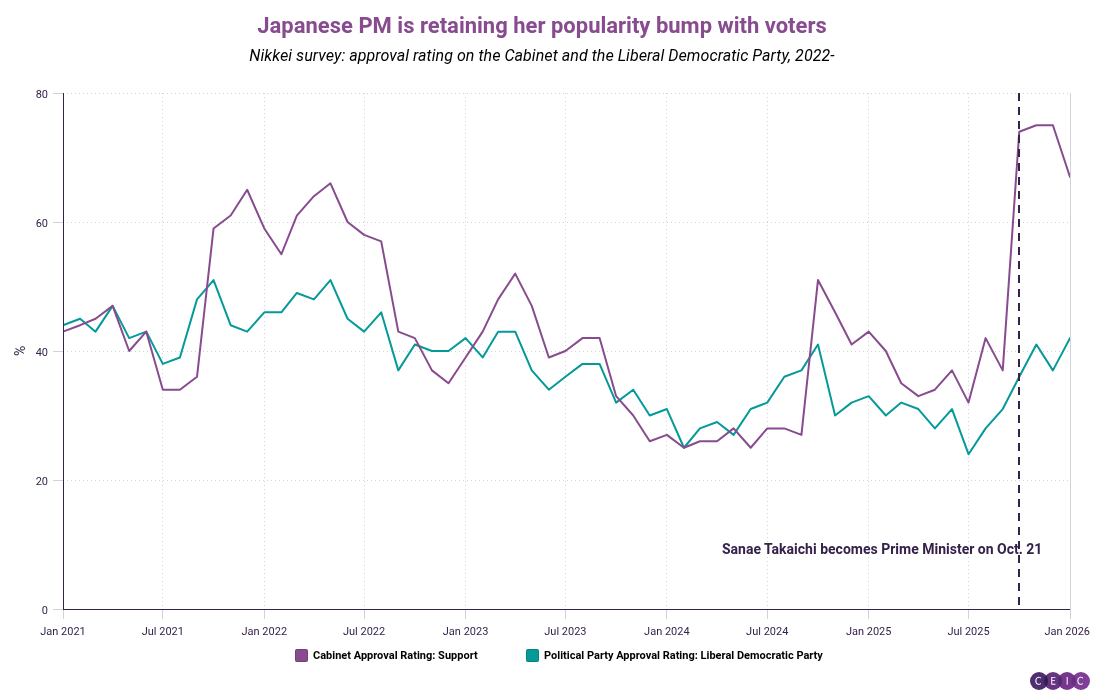
Click here to monitor upcoming JGB auction results with our dashboards.
If you are a CEIC user, access the story here.
If you are not a CEIC client, explore how we can assist you in generating alpha by registering for a trial of our product: https://hubs.la/Q02f5lQh0