CEICData.com © 2018 Copyright All Rights Reserved
.png?width=160&name=ceic-logo-Vector%20logo%20no%20tagline%20(002).png)

China's population has been shrinking for four consecutive years, but the demographic change is not uniform. Like Japan, workers are moving to modern employment hotspots and driving a growing population in certain provinces.
As our map visualization shows, the coastal provinces of Guangdong, Fujian and Zhejiang are seeing the strongest population growth. Guangdong -- home to the booming high-tech cluster centered around Shenzhen -- is leading the way.

We invite you to toggle through different years in the map. Going back a decade reveals that China's northeast (known for its traditional heavy industries) has seen its population shrink for the most consecutive years.
Our subsequent charts compare China's demographics more broadly to various emerging and developed economies, taking a look at historic data and adding United Nations forecasts. Though China's overall fertility has fallen below most other nations in the 2020s and looks likely to stay that way (despite subsidies for families and other incentives), the population is not set to become "older" than the EU and US for another decade or so (as measured by the dependency ratio, comparing the proportion of working-age people to the over-65s).
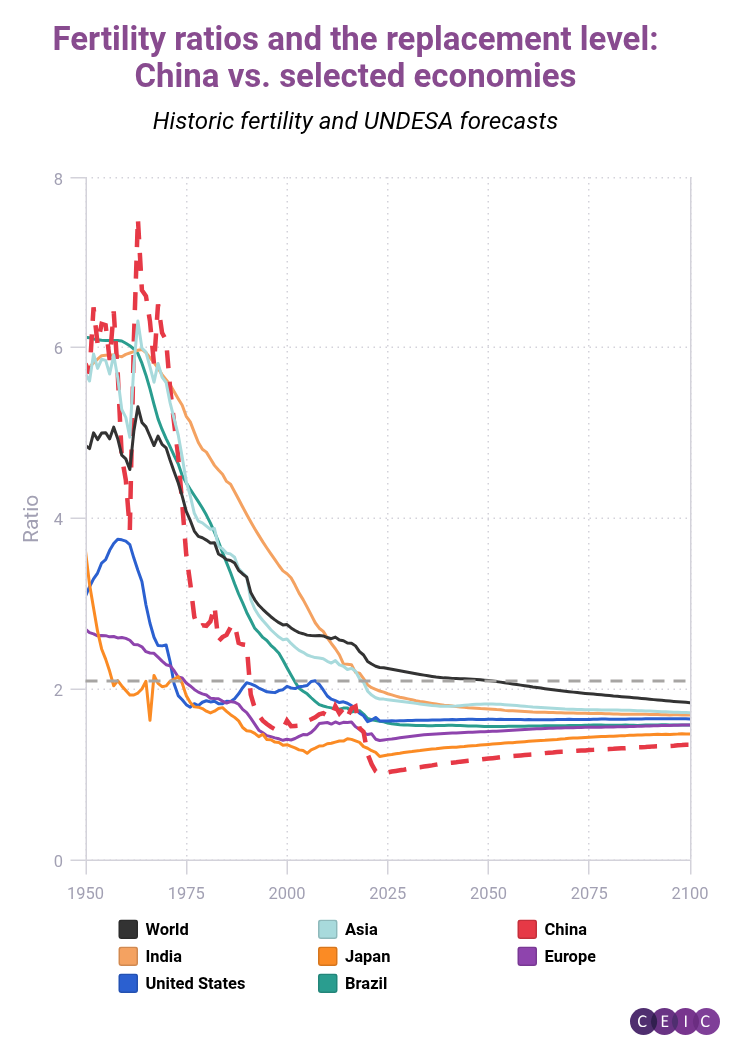
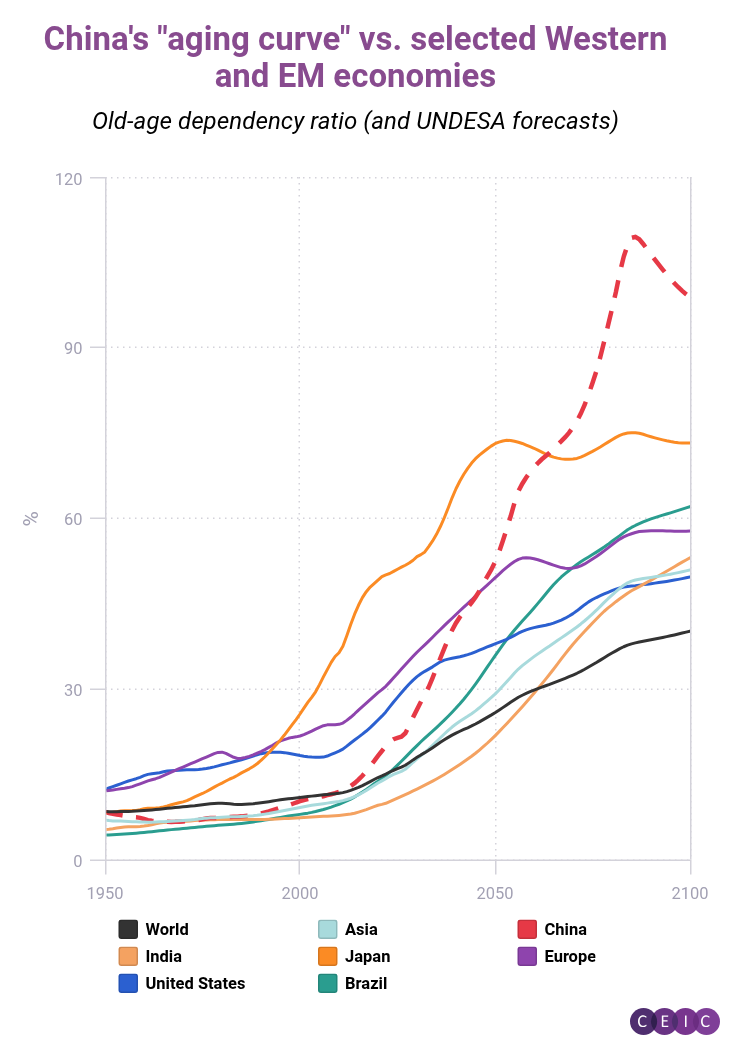
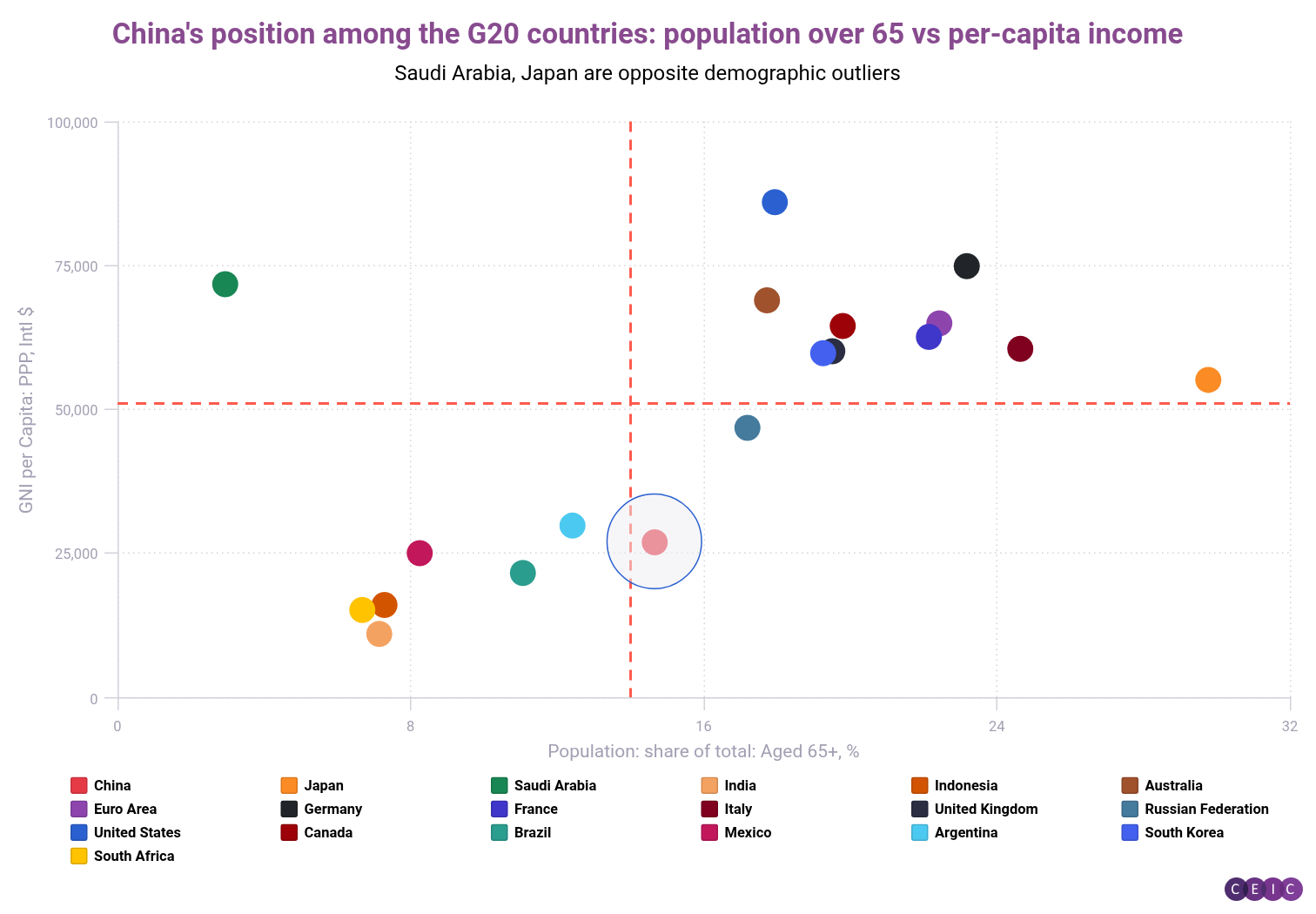 This environment partly guides China's focus on less labor-intensive, higher value-added industries such as robotics and AI. (It also highlights the opportunity for growth in healthcare-related industries.)
If you are a CEIC user, access the story here.
If you are not a CEIC client, explore how we can assist you in generating alpha by registering for a trial of our product: https://hubs.la/Q02f5lQh0