CEICData.com © 2018 Copyright All Rights Reserved
.png?width=160&name=ceic-logo-Vector%20logo%20no%20tagline%20(002).png)

With the globally vital Strait of Hormuz de facto closed to commercial shipping for now, we've examined how China's energy reserves were poised for resilience before the outbreak of conflict between the US, Israel and Iran.
Crude oil tankers: High-frequency shipping traffic data can be closely correlated with monthly oil-import figures released with a time lag. In this case, we visualized a rolling 90-day measure of oil-tanker deadweight tonnage calling at Chinese ports. Since January, this indicator has been running at its strongest level in five years, suggesting steady inflows of seaborne crude even before geopolitical strains intensified.

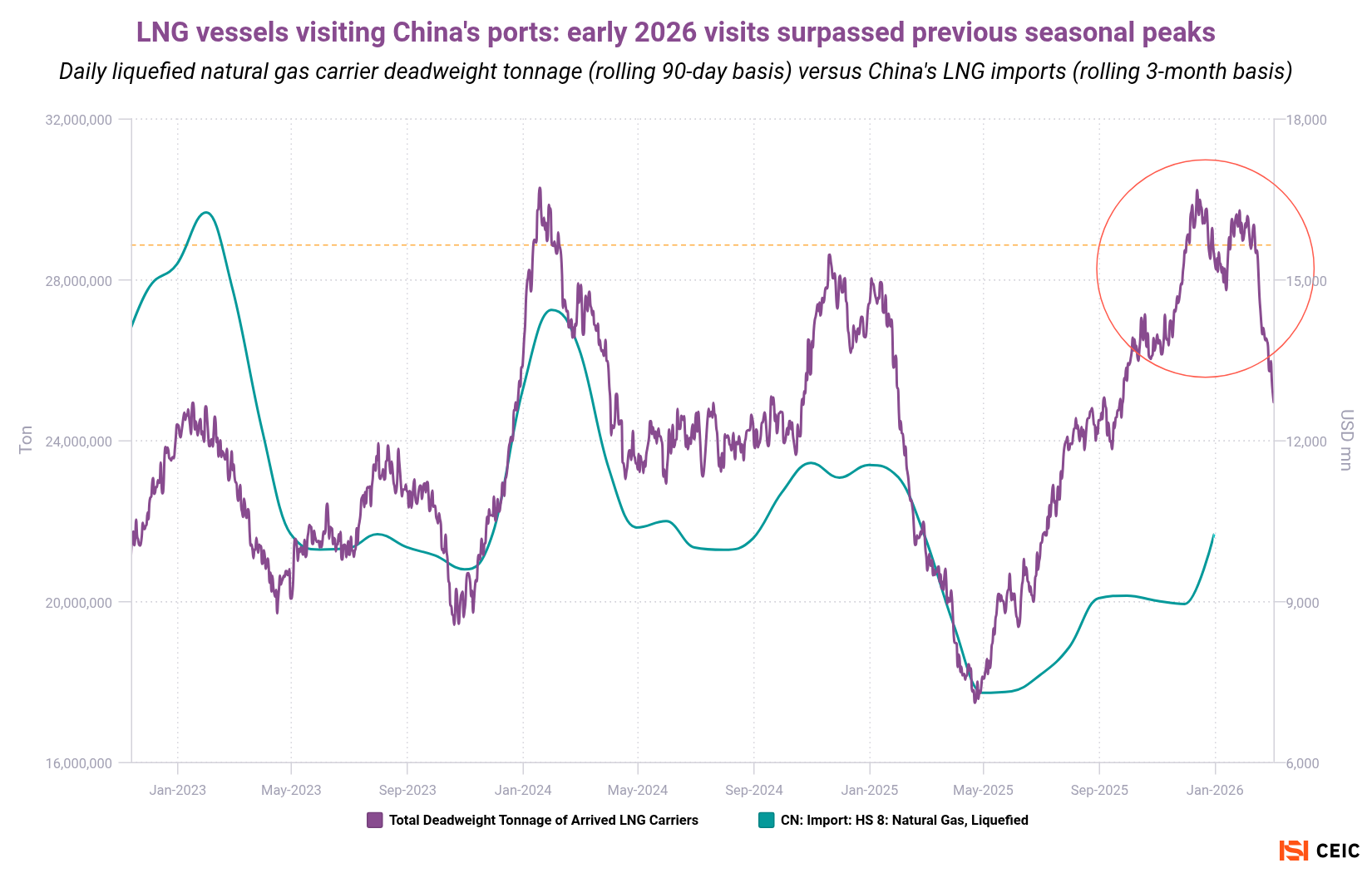
Liquefied natural gas shipments: We can perform the same analysis for LNG port calls, which suggests China has a robust level of imported gas reserves in place. While these shipments are more seasonal than crude oil, early 2026 vessel traffic surpassed 2025 levels on a tonnage basis and was more sustained than the 2024 peak. This indicates that contracted volumes and diversified sourcing continued to deliver cargoes on schedule. (In the LNG sector, infrastructure such as receiving terminals must be complemented by coordination capacity: allocating berthing slots, balancing long-term and flexible cargoes and managing short-term fluctuations.)
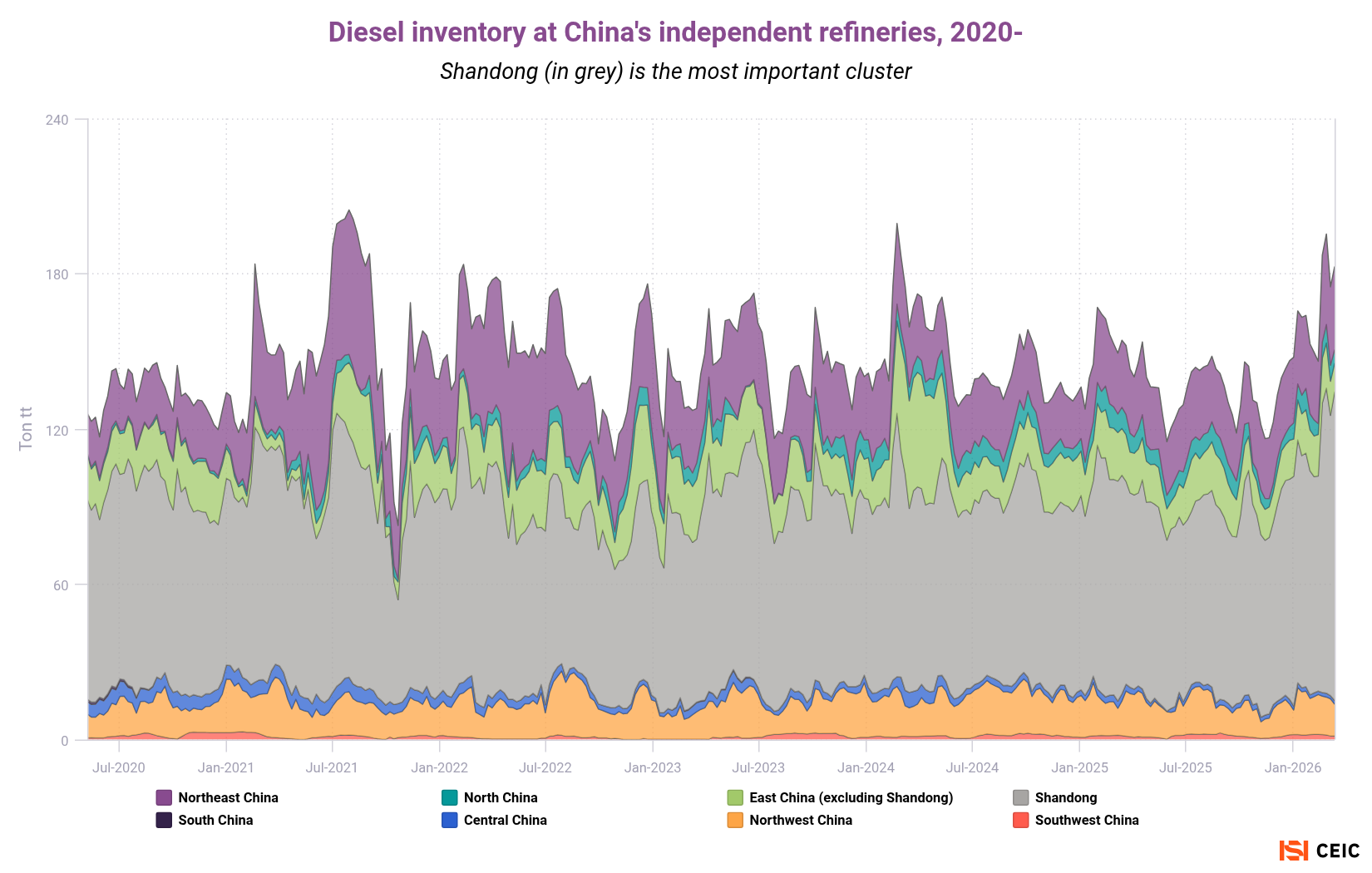
Diesel inventories: Independent refiners (known as "teapots," and especially clustered in Shandong province) can provide an early signal of tightness in this segment. Our third chart shows diesel inventories at these plants shows levels near the upper end of the past five years across several regions heading into 2026, indicating a degree of cushion in the refined-products market.
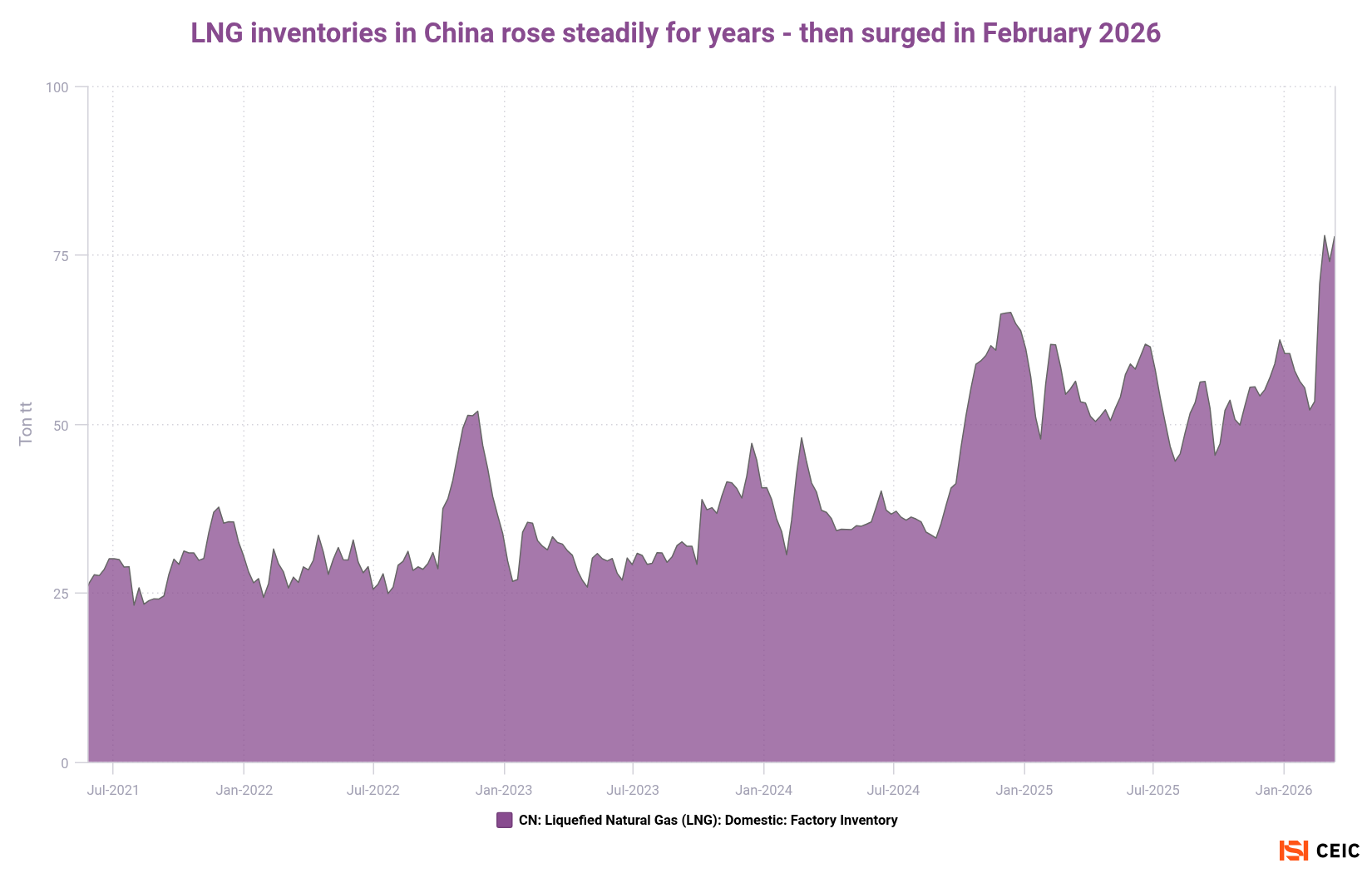
LNG inventories: Factory-level stocks of LNG inventories moved in cycles after 2021, then reached a five-year high through 2025 and into early 2026. This build-up points to a cautious stance in energy management.
Together, these indicators suggest that China's energy stockpiles are poised to soften the blow of potential supply shocks as external risks increase.
If you are a CEIC user, access the story here.
If you are not a CEIC client, explore how we can assist you in generating alpha by registering for a trial of our product: https://hubs.la/Q02f5lQh0