CEICData.com © 2018 Copyright All Rights Reserved
.png?width=160&name=ceic-logo-Vector%20logo%20no%20tagline%20(002).png)

China recently concluded its "Two Sessions" meetings, a key forum for policy-setting. Similarly to last year, domestic-driven demand and consumption are being targeted.
In this context, we're exploring our newly introduced inflation nowcast for China to get an early sense of how this demand-driven policy thrust has been rippling through the economy.
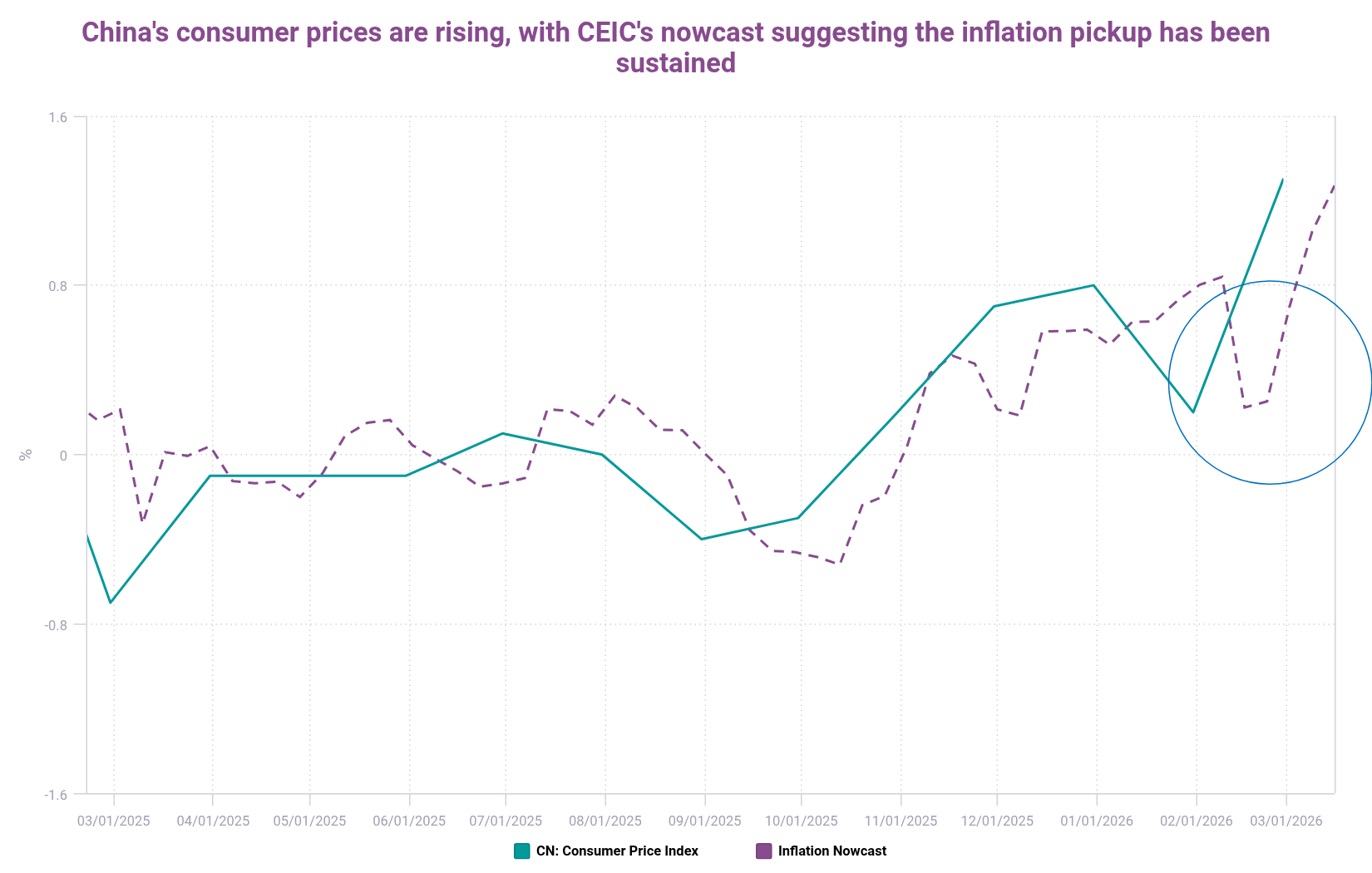
February consumer prices ticked higher to a 1.3% annualized rate, according to the most recent reported figure. Our nowcast suggests this trend has been sustained in early March.
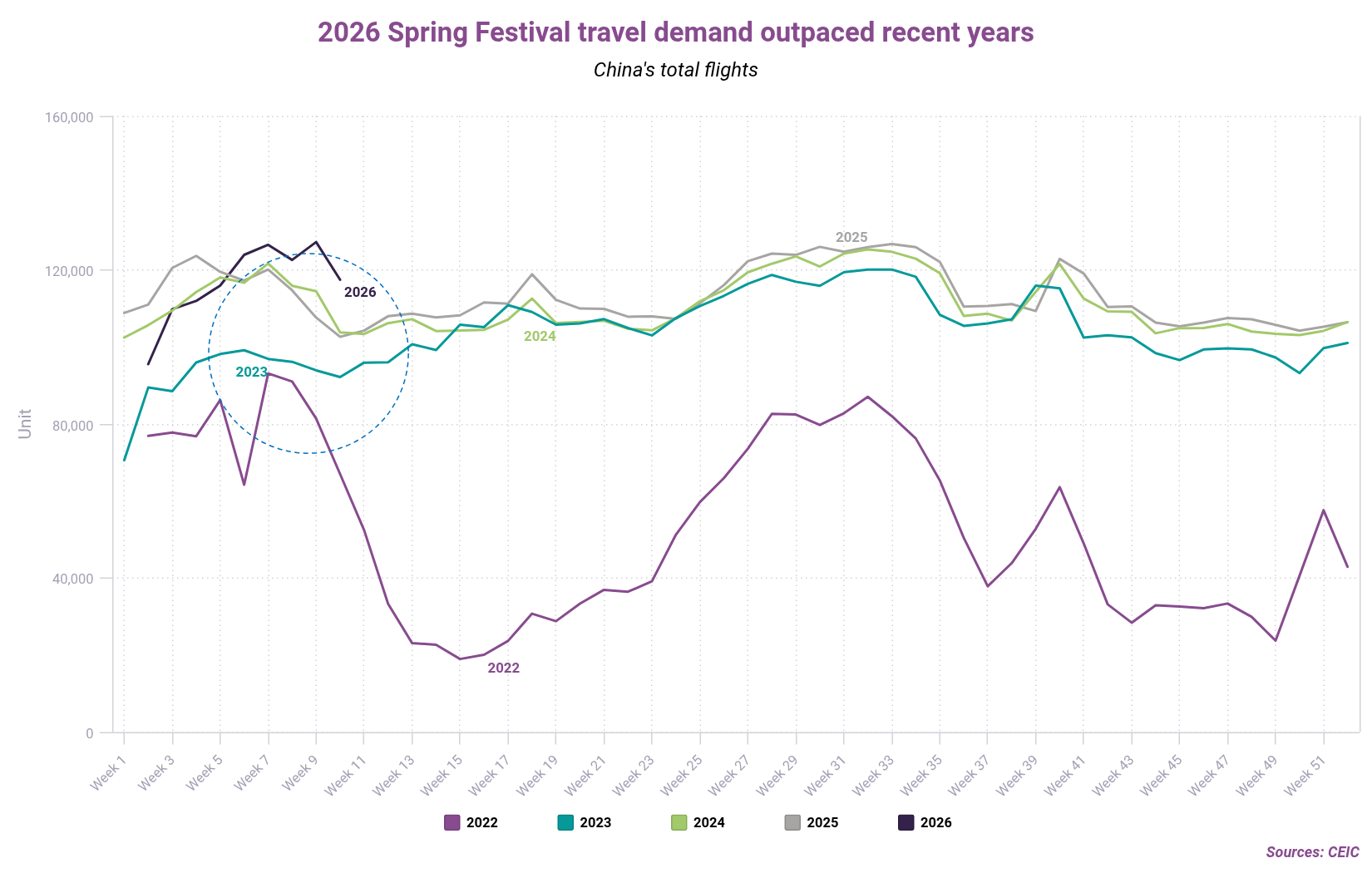
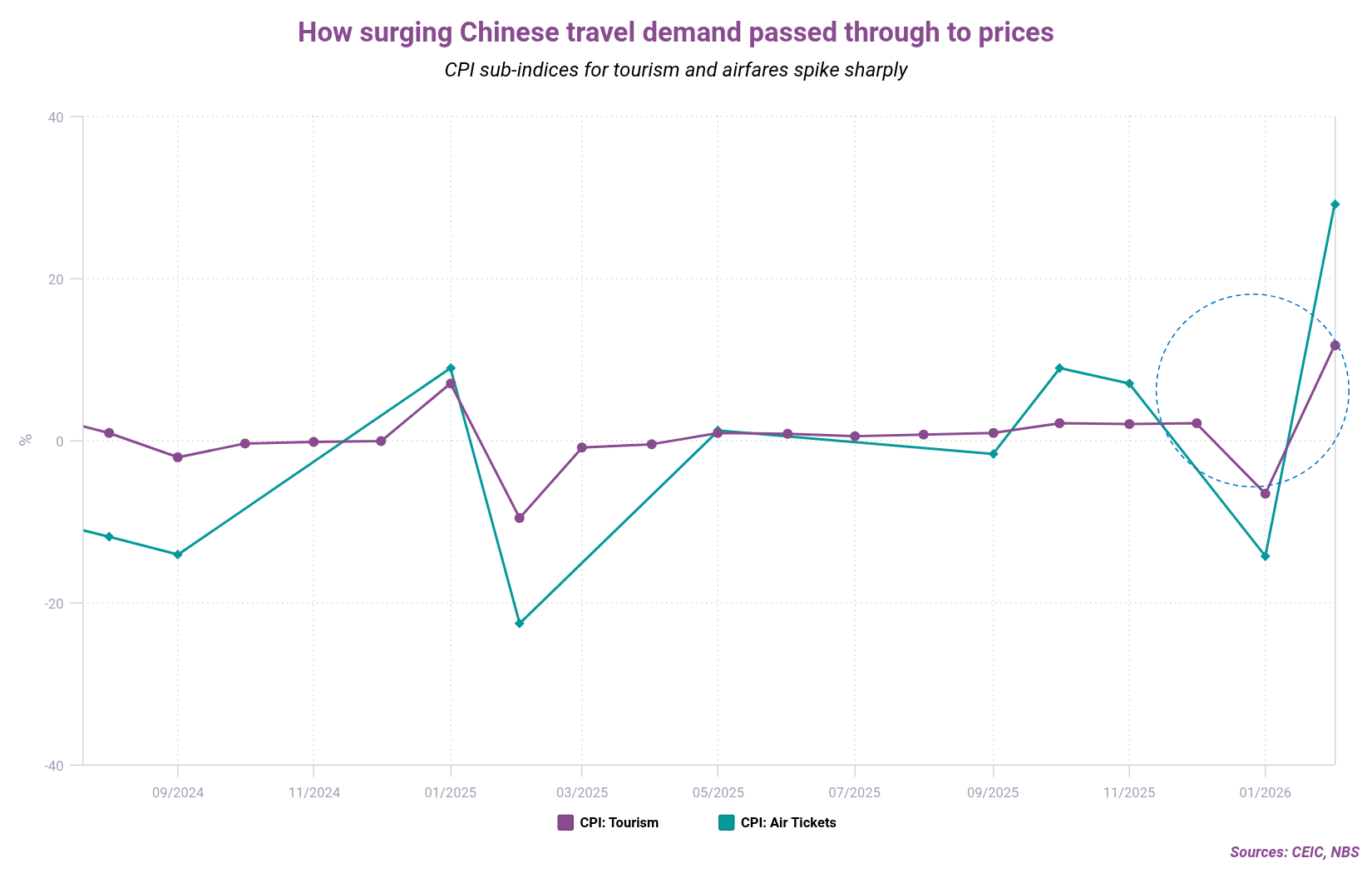
This tracks with our previous story on the economically important Spring Festival, which showed how Chinese consumers were favoring domestic travel and tourism. Flight traffic hit a multi-year high, for instance. This surging demand fed through to prices, causing the CPI sub-indices for tourism and airfares to spike.
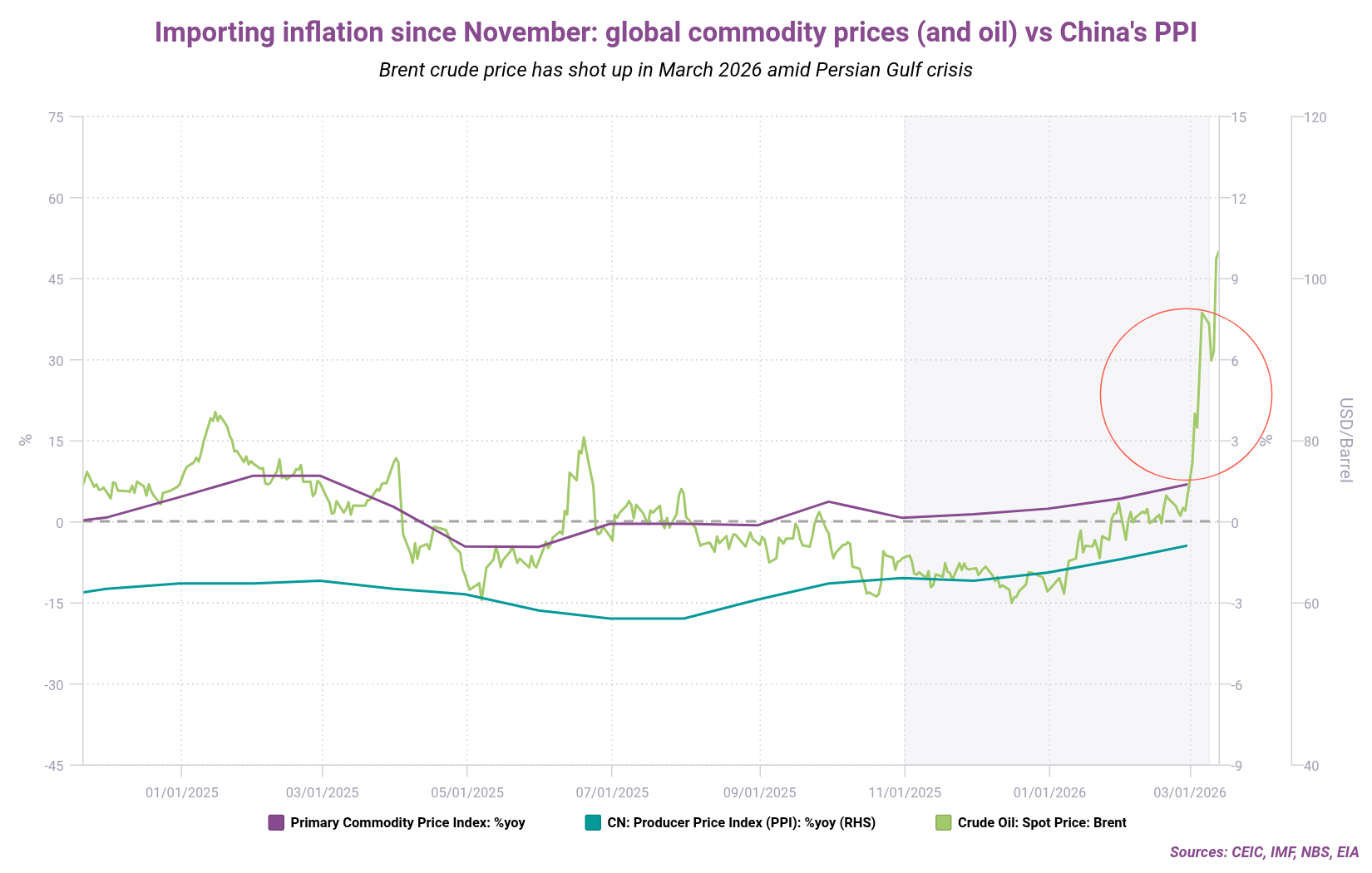
Of course, external factors also feed into Chinese inflation. An analysis of prices paid by Chinese factories (i.e., PPI) shows how they have been correlated with a pickup in global commodity prices since late last year. (Amid the crisis in the Persian Gulf, we've added the Brent crude oil price surge to our chart; this is sure to be reflected when March PPI and commodity index figures are released.)
Chinese CPI is also dragged higher by the surge in gold prices, which feeds through to the "miscellaneous" category (which includes jewelry). Looking at manufactured goods inflation reveals a divergence: home appliance prices are rising, driven by the national "trade-in" policy to support demand and rising upstream costs from those commodity inputs.
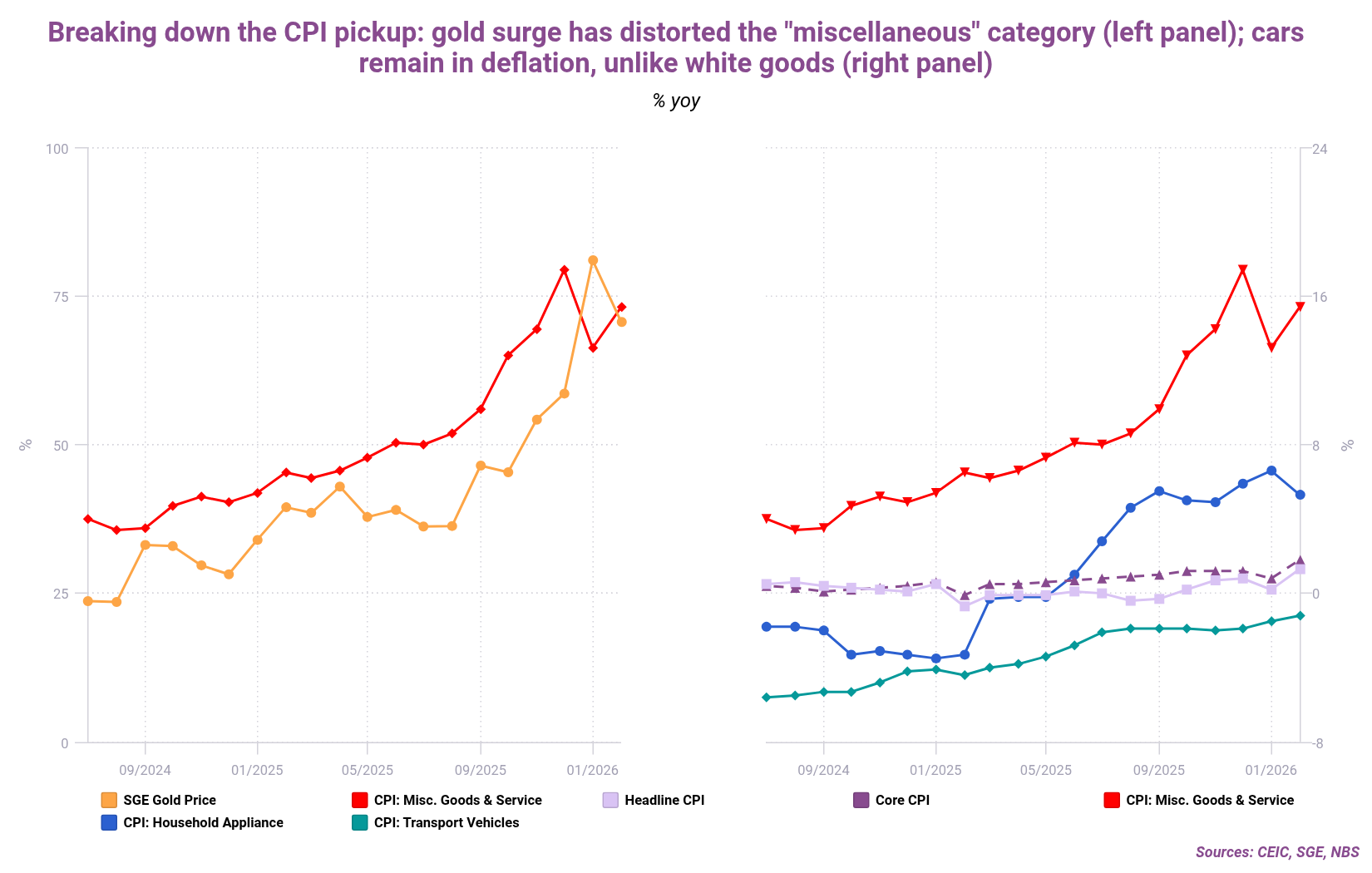
Meanwhile, manufacturing PMI sub-indices continue to indicate a weakness in supply and demand. Neither production nor new orders have returned to the expansionary zone (i.e. readings over 50). Overall business sentiment remains under pressure. High-tech manufacturing and large enterprises are maintaining some resilience, while SMEs are facing headwinds.
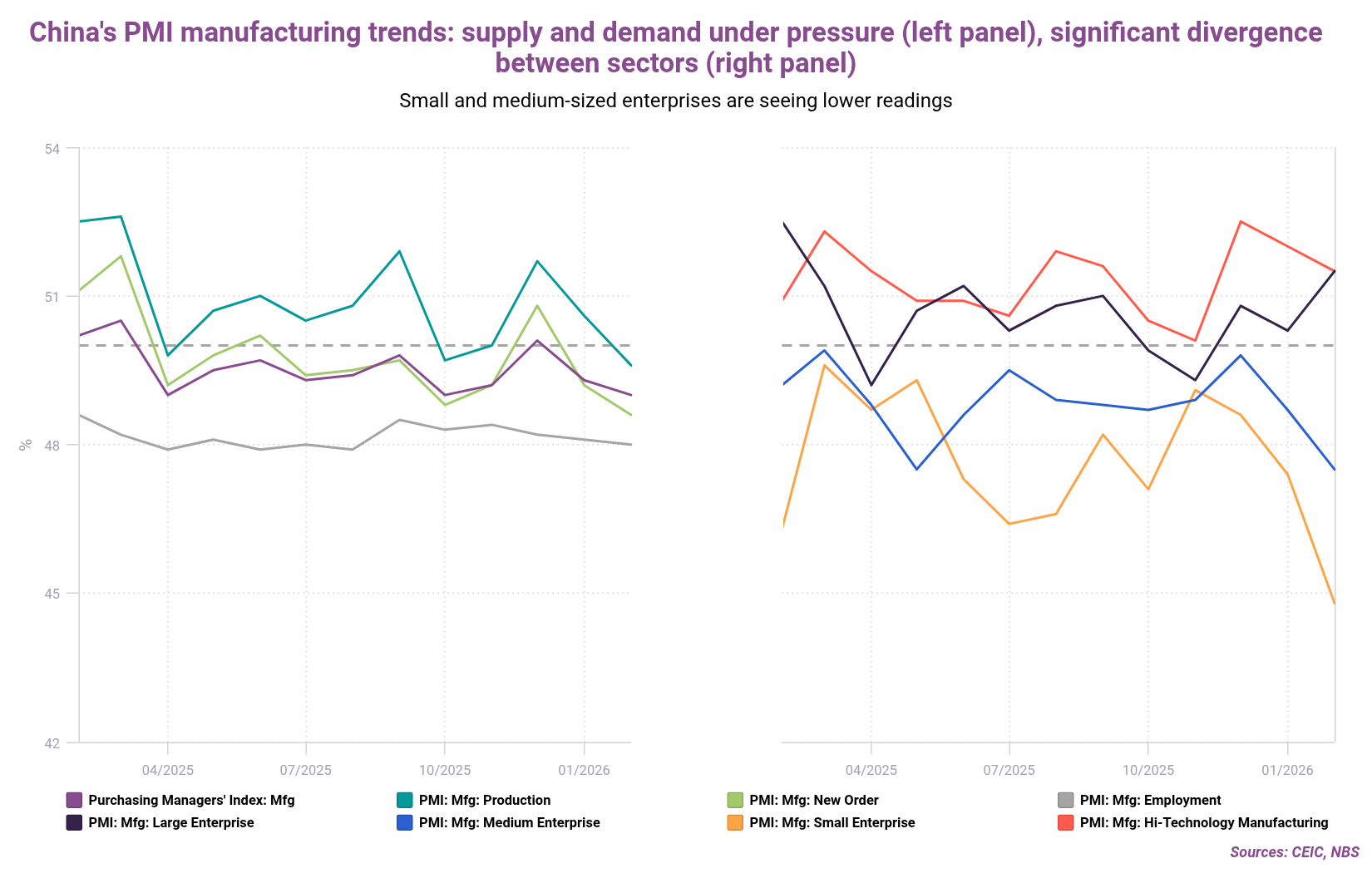
In total, our charts suggest that the current inflation uptick is not a generalized demand recovery, but rather an uneven phenomenon shaped by commodity imports, policy shifts and localized cost-push factors.
If you are a CEIC user, access the story here.
If you are not a CEIC client, explore how we can assist you in generating alpha by registering for a trial of our product: https://hubs.la/Q02f5lQh0