CEICData.com © 2018 Copyright All Rights Reserved
.png?width=160&name=ceic-logo-Vector%20logo%20no%20tagline%20(002).png)

As a year of global trade realignment and lingering inflation concerns comes to a close, we're examining one of the side effects of Chinese exports.
Amid overcapacity at Chinese factories, the nation is effect exporting disinflation to other markets -- especially the ASEAN economies and their "connector" role in global trade.
We've scatter-plotted a selection of nations to track how their inflation rates and Chinese imports fared in 2024 versus 2025.
.png?width=1572&height=700&name=Selected%20nations%20imports%20from%20China%20vs%20their%20inflation%20rate%202024%20vs%202025%20(1).png)
Malaysia and Thailand are notable for seeing their Chinese imports surge while the consumer price index fell. In Thailand's case, the CPI has tipped into outright deflation, helped by inexpensive Chinese consumer goods.
Meanwhile, US imports from China sank 23% year on year amid Donald Trump's tariff onslaught. US CPI also followed the global disinflationary trend, but year-on-year inflation is growing at a rate exceeding every nation on our chart except for Japan.
We've added two charts considering longer-term trade figures for Thailand, which is sometimes known as the "Detroit of Asia" due to its outsized auto sector. Even as Thai factories were able to charge more for their auto exports, import costs in this sector have flatlined. (This includes imported vehicles, but also some of the imported Chinese parts used in Thai auto factories.)
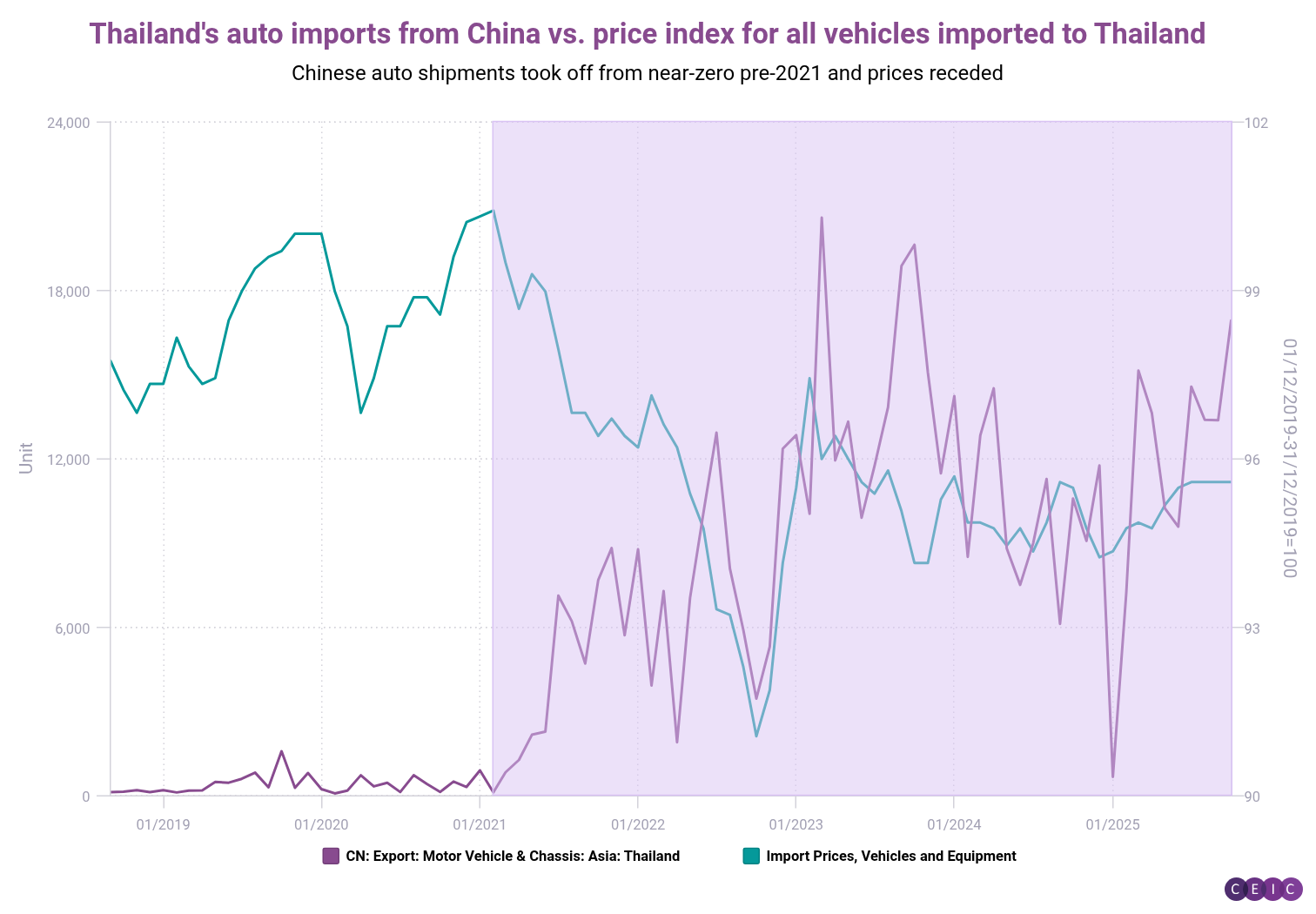
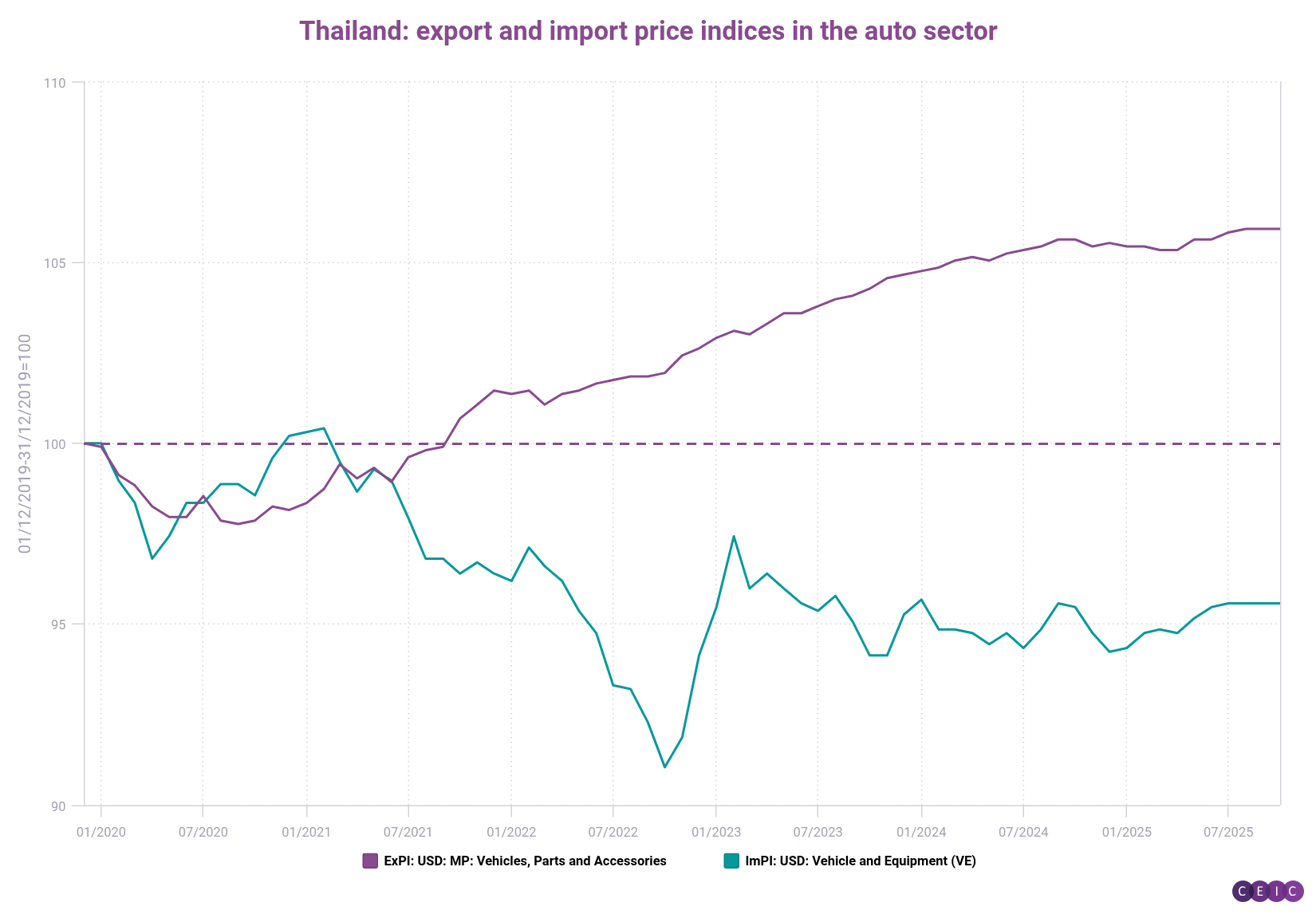
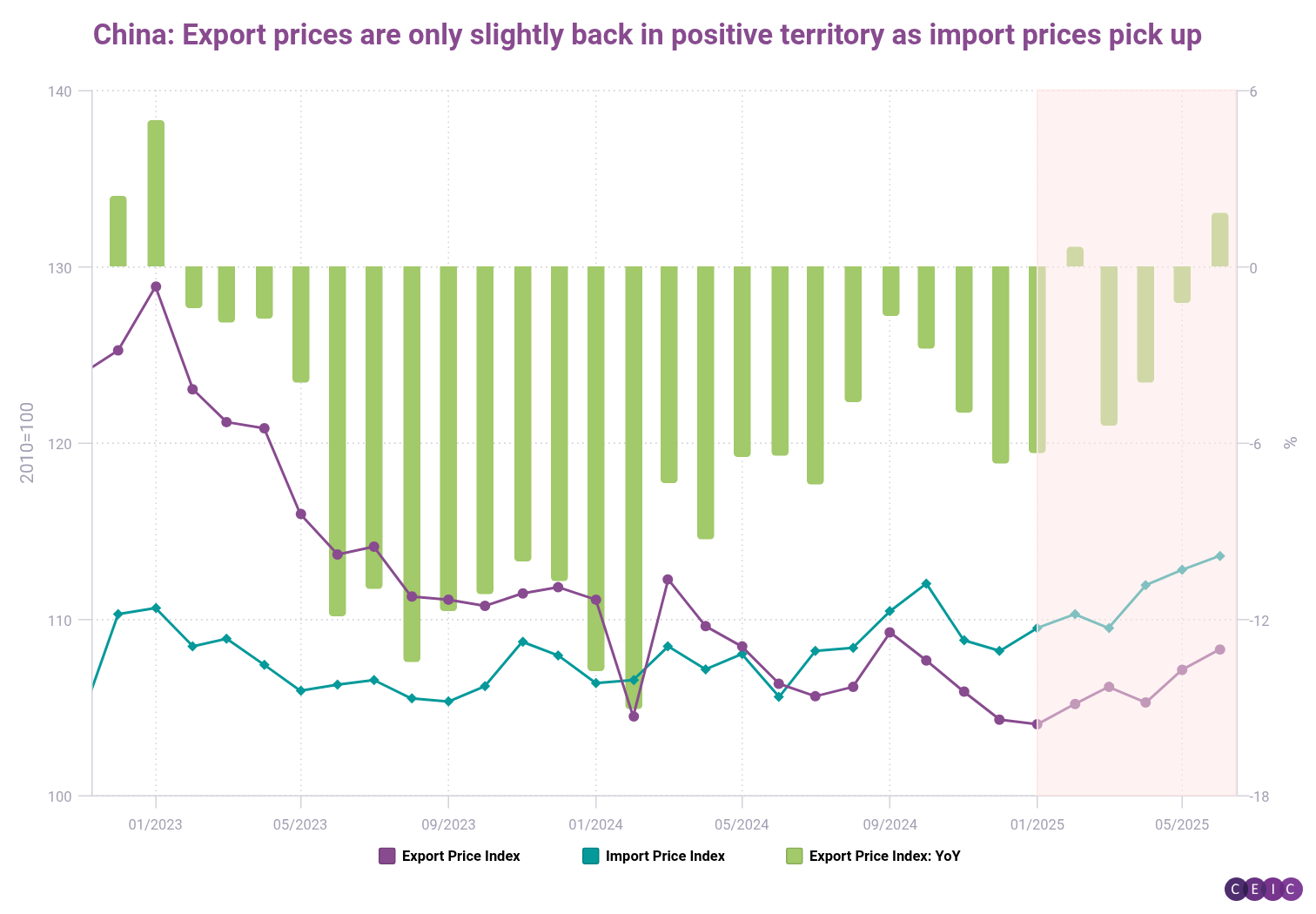
This trend is in line with the flat export-index prices for China that we can observe in our final chart.
If you are a CEIC user, access the story here.
If you are not a CEIC client, explore how we can assist you in generating alpha by registering for a trial of our product: https://hubs.la/Q02f5lQh0