CEICData.com © 2018 Copyright All Rights Reserved
.png?width=160&name=ceic-logo-Vector%20logo%20no%20tagline%20(002).png)

The Philippines might be grappling with a growth-rattling corruption scandal, but behind the headlines, Filipinos are benefiting from a surge in purchasing power. That's likely long-term bullish for the economy.
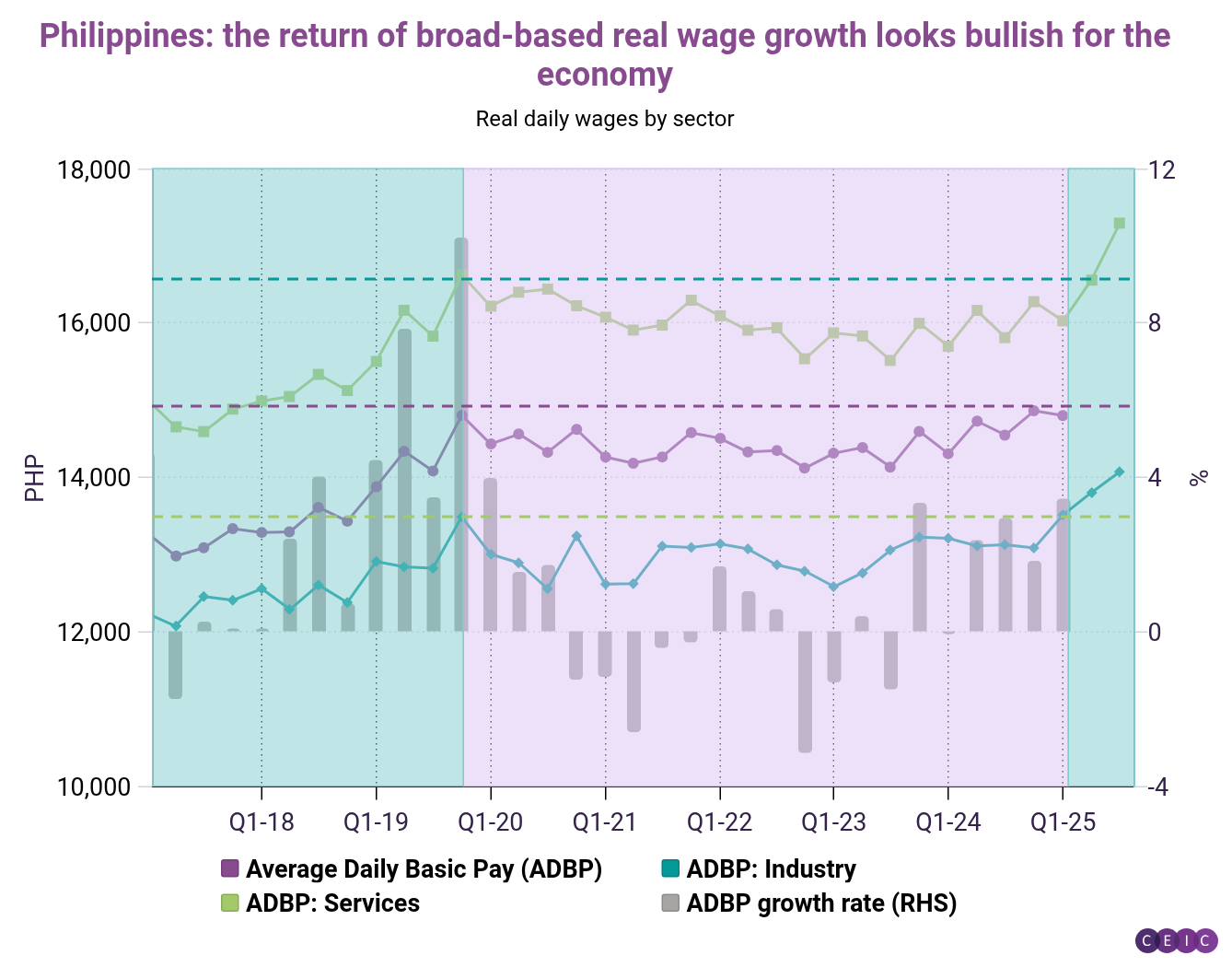
We've charted inflation-adjusted wage growth over the past decade. A long period of stagnation began even before the pandemic and the global inflationary surge that followed. But as of the start of this year, wages have been climbing in real terms -- both for industry and services.
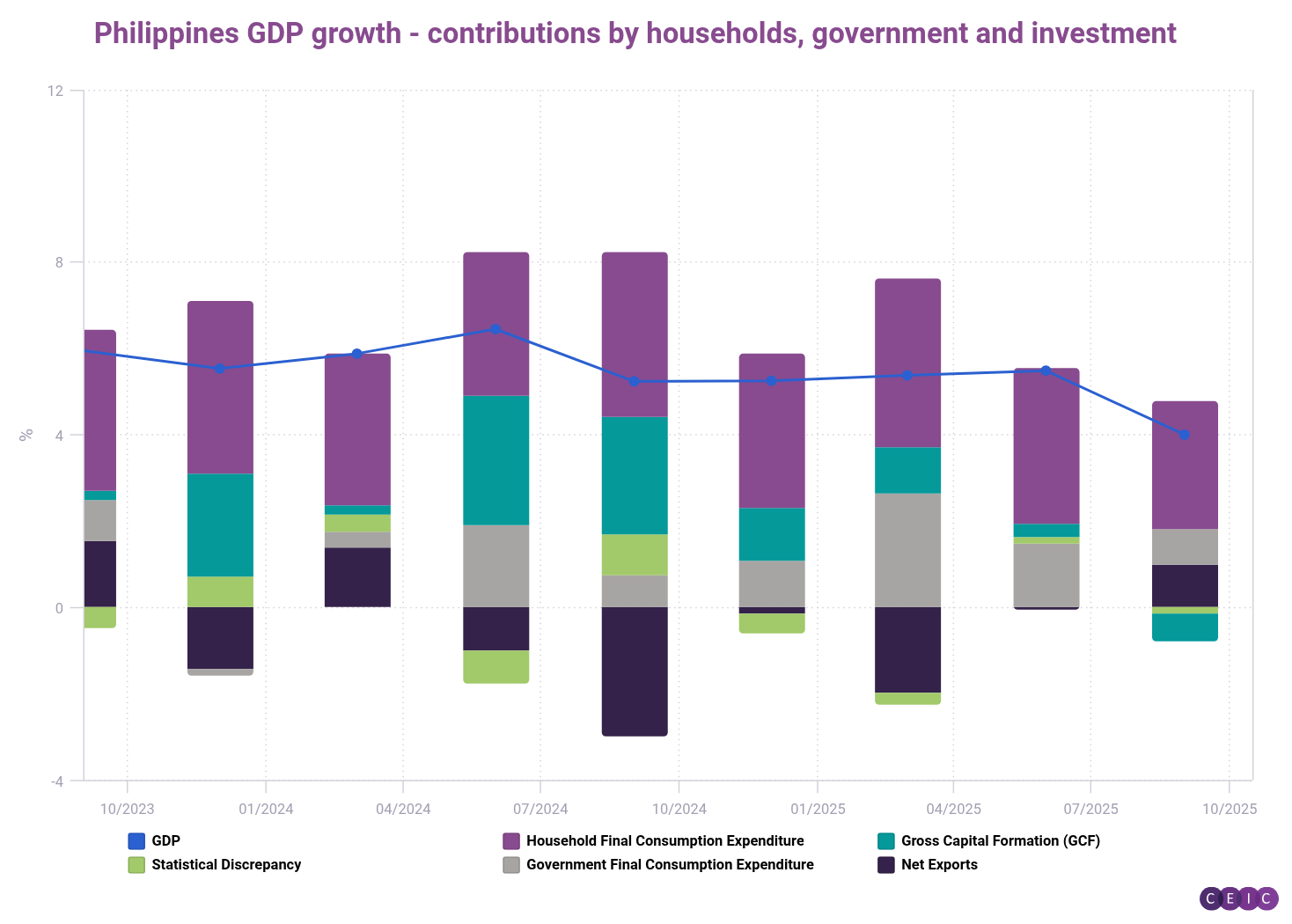
Healthy household incomes are reflected in our second chart, which measures various contributions to Philippine GDP. As subdued manufacturing-related investment has pushed down gross fixed capital formation, consumption has taken the lead in maintaining positive economic growth.
Our final chart takes another look at the stagnant industrial sector, which has also been hit by the unsettled global trade environment: non-consumer loans remain weak.
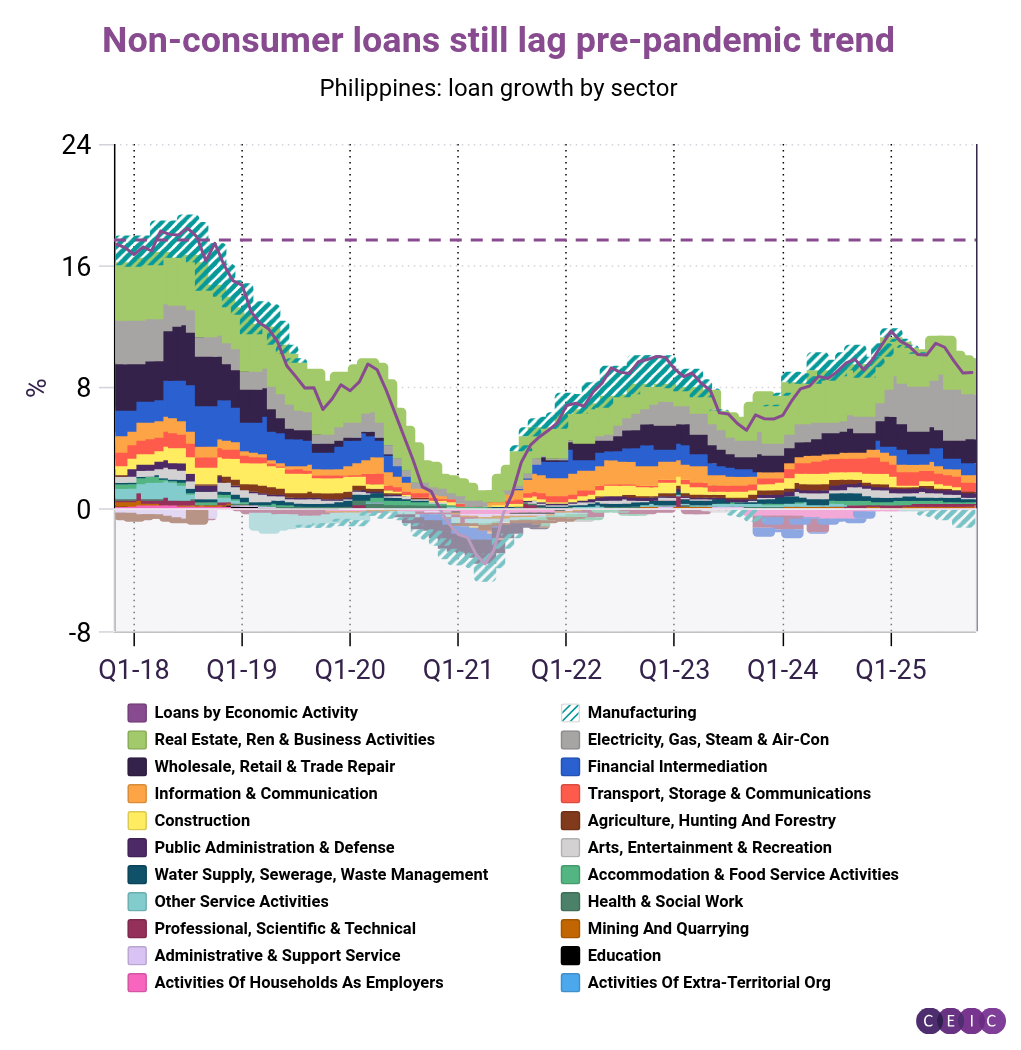
This soft investment climate could reinforce the case for further rate cuts, especially as inflation remains stable and continues to ease. Meanwhile, the nation's finance minister, Frederick Go, recently said he expects growth to pick up as early as next quarter as projects put on hold by the corruption scandal come back online.
Against this backdrop, growth in 2026 is expected to be driven even further by strengthening real purchasing power.
If you are a CEIC user, access the story here.
If you are not a CEIC client, explore how we can assist you in generating alpha by registering for a trial of our product: https://hubs.la/Q02f5lQh0