CEICData.com © 2018 Copyright All Rights Reserved
.png?width=160&name=ceic-logo-Vector%20logo%20no%20tagline%20(002).png)

China is the world's largest buyer of soybeans, which it primarily uses for animal feed. As it balances costs, security of supply and international relations, China's procurement decisions drive this market and will continue to do so.
The decades-long boom in Chinese demand has reshaped Brazilian agriculture; it surpassed the US as the biggest producer of this crop in the 2010s. Meanwhile, American soy farmers, already dealing with greater seasonal swings than their Brazilian counterparts, have lost share in the Chinese market after a decade of trade friction driven by Donald Trump.
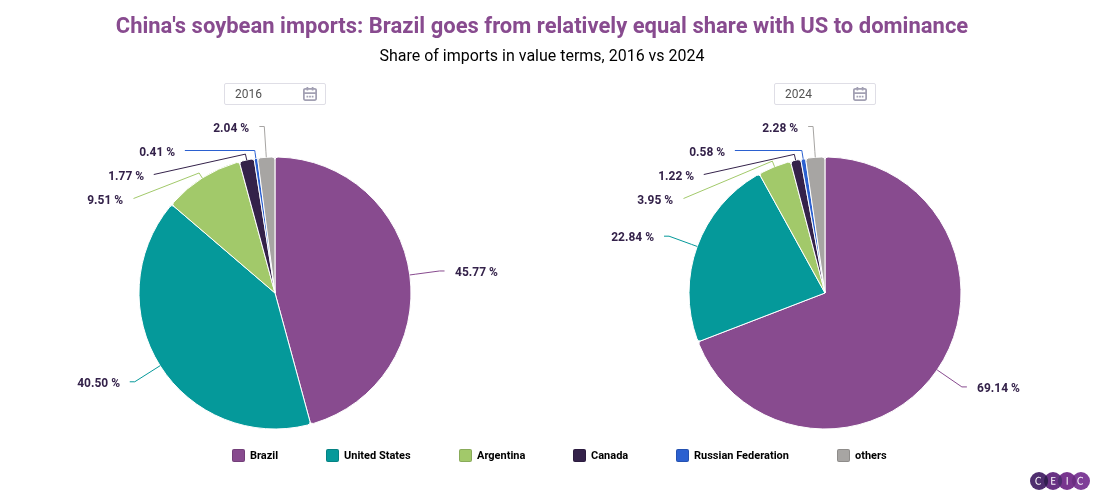
We've compared 2016 to 2024 to show just how profound this shift has been. The US share has shrunk from about 40% to less than 23%, contracting in absolute value terms. Brazilian exports have more than doubled in value terms; it now takes more than two-thirds of the Chinese market. (Argentina, the no. 3 producer, has lost considerable share to Brazil as well.)
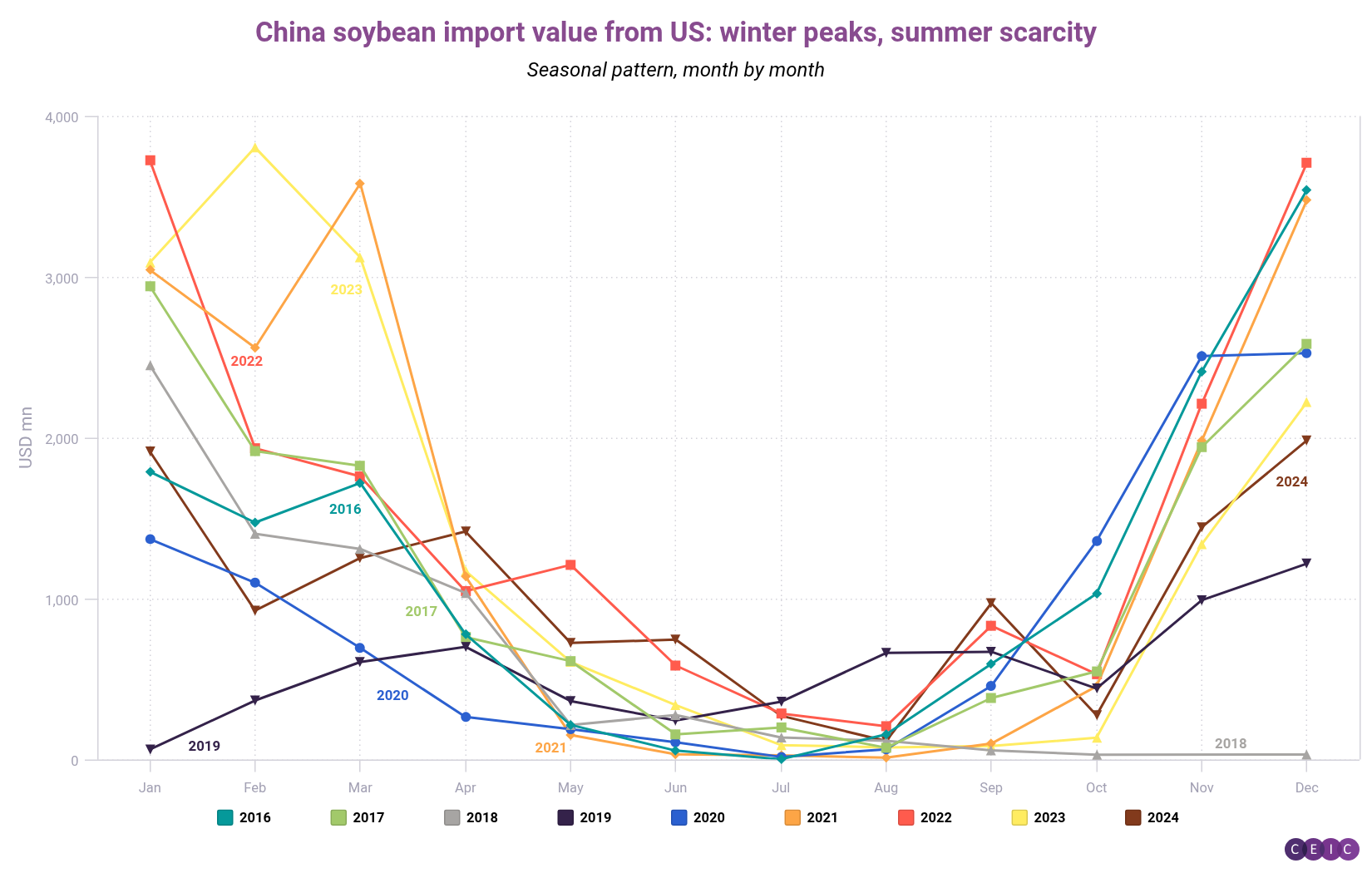
The seasonality of soy production is another key contrast between the US and Brazil. Midwestern farmers produce one main crop per year, harvested in the Northern Hemisphere autumn and shipped over the winter; Brazil's agricultural zones span equatorial and more temperate regions, resulting in multiple harvests per year (though shipments peak in the middle of the calendar year).
Under the Trump administration, US-China trade ties are always in flux and have often resulted in US soybeans priced at a discount compared to their Brazilian counterparts (again, subject to seasonal ebbs and flows from both countries' harvest patterns).

In the most recent dealmaking, US Treasury Secretary Scott Bessent indicated China had committed to buy 12 million metric tons of soybeans through year end, plus an additional 25 MMT annually over the next three years. (By comparison, China imports more than 100 million tons of soybeans per year, accounting for 60% of global volume.)
News of this agreement affected US soybean prices, as we can see in our third chart; CME futures recently climbed to a multi-month high.

If you are a CEIC user, access the story here.
If you are not a CEIC client, explore how we can assist you in generating alpha by registering for a trial of our product: https://hubs.la/Q02f5lQh0