CEICData.com © 2018 Copyright All Rights Reserved
.png?width=160&name=ceic-logo-Vector%20logo%20no%20tagline%20(002).png)

.png?width=1140&height=442&name=BRIICS%20buyers%20stepped%20up%20oil%20purchases%20from%20Russia%20after%202022%20sanctions%20(2).png)
The pandemic might have ended years ago, but its effects on the Indonesian economy have been long-lasting. The central bank has been stepping in to help the government refinance an elevated post-Covid debt load; meanwhile, consumers are pulling back, leaving government spending as the main pillar of support for the economy.
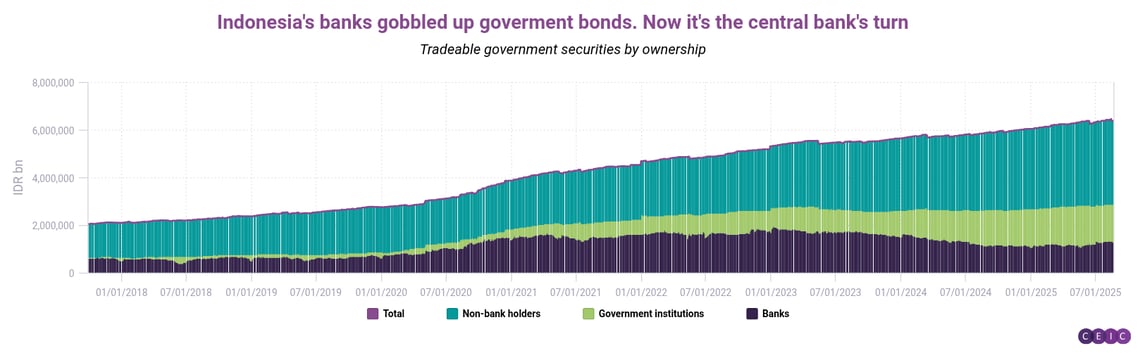
To illustrate these trends, we've charted Indonesia's bond market against the velocity of money -- which is associated with levels of spending and economic activity. In 2020, government debt issuance shot up, and Indonesia's commercial banks were the buyers. But since early 2023, the proportion of Indonesian bonds outstanding owned by banks has steadily fallen; the central bank stepped in under a "burden-sharing agreement," becoming the largest holder of the national debt.
Meanwhile, the turnover of money never recovered to pre-pandemic levels. As an economist might put it, this signaled heightened liquidity preference by households and businesses and subdued demand for goods and services at the prevailing money supply. (We wrote recently about why Indonesia's consumers aren't spending, and how the job market is stagnating for university graduates in particular.) To sustain real GDP growth near 5% despite these headwinds, the government kept borrowing.
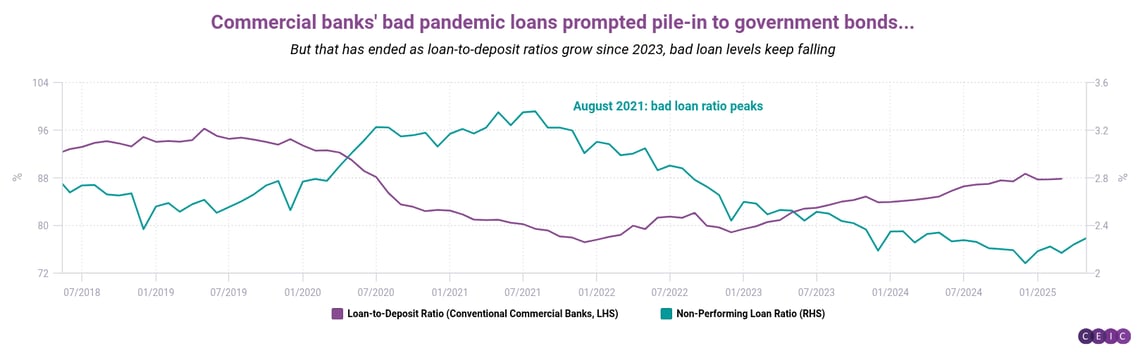
We can view the pandemic and post-pandemic trends from another angle in our second and third charts, which zero in on the role of Indonesian commercial banks. Their bad loans shot up during the pandemic and private credit demand tumbled. As a result, the lenders reallocated their balance-sheet capacity to government securities. This, in turn, drove the loans-to-deposit ratio down.
As balance sheets gradually strengthened, NPLs improved and commercial banks started lending to the private sector again, Bank Indonesia was driven to augment its role in sovereign financing through bond purchases in the secondary market.
Many global central banks are still grappling with the unwind of quantitative easing, but Indonesia faces a particular dilemma on how to unload its holdings without unsettling the bond market. Some observers have compared its policies to Japan-style yield curve control, anchoring borrowing costs to support the recovery.
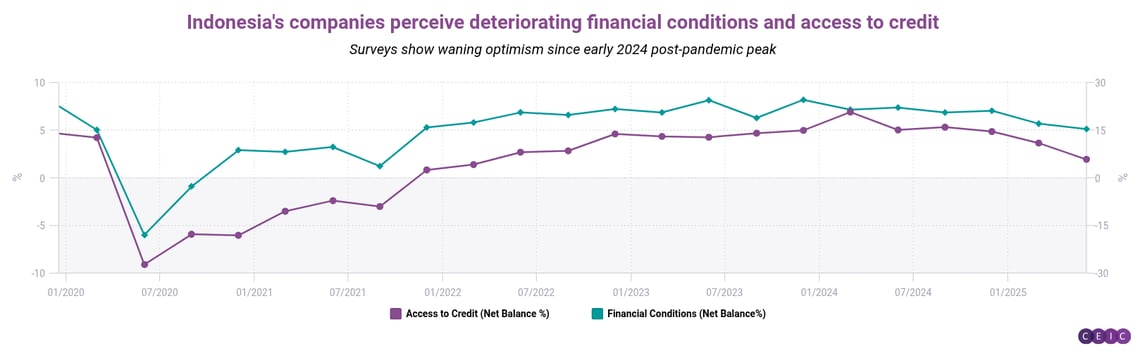
As businesses report deteriorating conditions in 2025 (as our fourth chart shows) amid global trade tensions, Bank Indonesia might opt to buy even more government bonds.
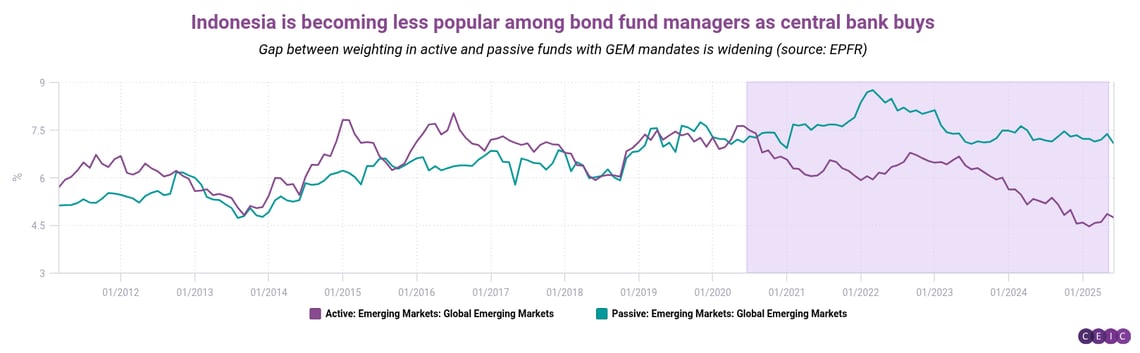
Our fifth chart shows a potential side-effect of this trend, courtesy of exclusive fund-flow data from our partners at EPFR. Active bond fund managers with a global emerging-markets mandate are holding less Indonesian government debt than its weighting in global indices would suggest (as reflected in passive fund holdings that track those indices).
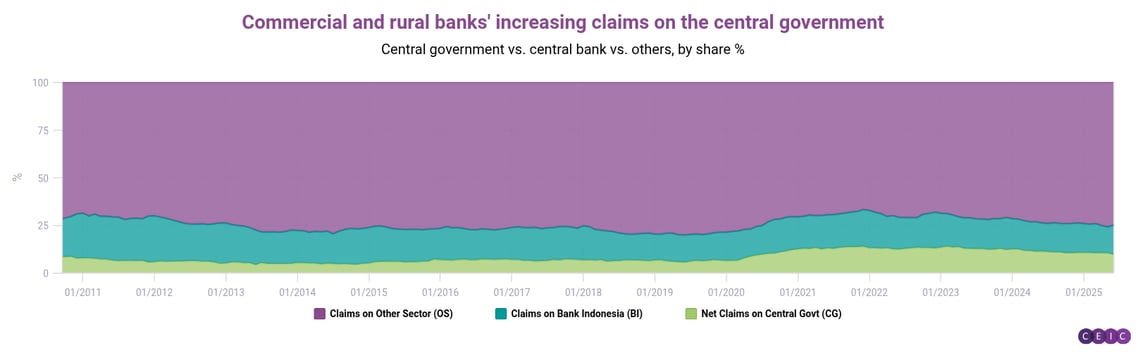
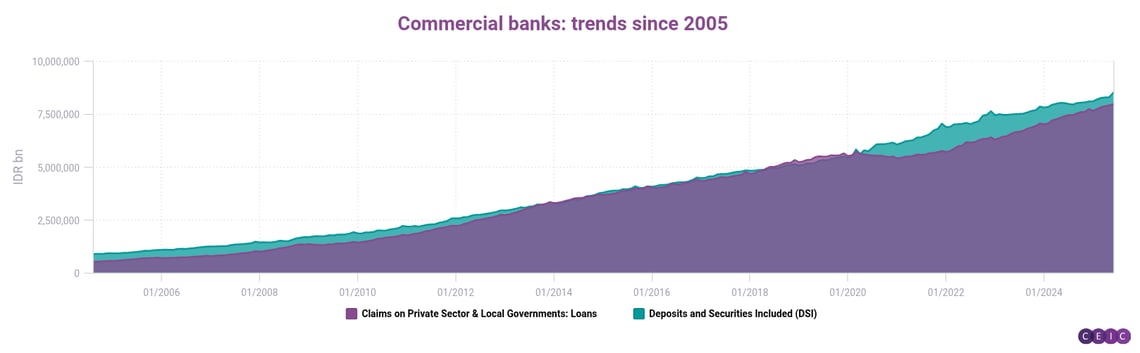
We've added two final charts exploring more of our granular data on Indonesia's banking system, with details on deposits and lenders' relationship with the central bank.
Click here to read about India's imports of Russian "mineral fuels" and Malaysia's role as a transshipment country for Iranian crude.
If you are a CEIC user, access the story here.
If you are not a CEIC client, explore how we can assist you in generating alpha by registering for a trial of our product: https://hubs.la/Q02f5lQh0