CEICData.com © 2018 Copyright All Rights Reserved
.png?width=160&name=ceic-logo-Vector%20logo%20no%20tagline%20(002).png)

As companies like BYD roll out inexpensive cars, China has become the epicenter of the global electric-vehicle market. In the third quarter alone, a staggering 4.2 million EVs (also known as new energy vehicles, or NEVs, in China) were added to the nation’s roads. That’s almost 10 times the equivalent number for the US.
CEIC unifies disparate national statistics to generate useful international comparisons. We've charted the penetration rate for EVs in the total number of new vehicles sold for China, the US, the EU and India. (New vehicle registrations were used as a proxy for the latter two markets.)
.png?width=1512&height=1050&name=Diverging%20EV%20adoption%20China%20is%20far%20ahead%20in%20penetration%20rate%20for%20newly%20sold%20vehicles%20(1).png)
Today, more than half the new vehicles that hit the road in China are EVs. That's up from less than 5% at the start of 2020.
It's notable that Europe was the global leader pre-2022 before backsliding. This is due to the outsized economy of Germany, which scrapped its EV subsidies to shore up the national budget; end-of-year sales spikes to get the last of these incentives can be identified on our chart. The share of EVs in new car sales across Europe has only just matched the end-2022 level.
.png?width=735&height=1050&name=Electric%20vehicle%20sales%20or%20new%20registrations%20in%20major%20global%20markets%203Q%202025%20(2).png)
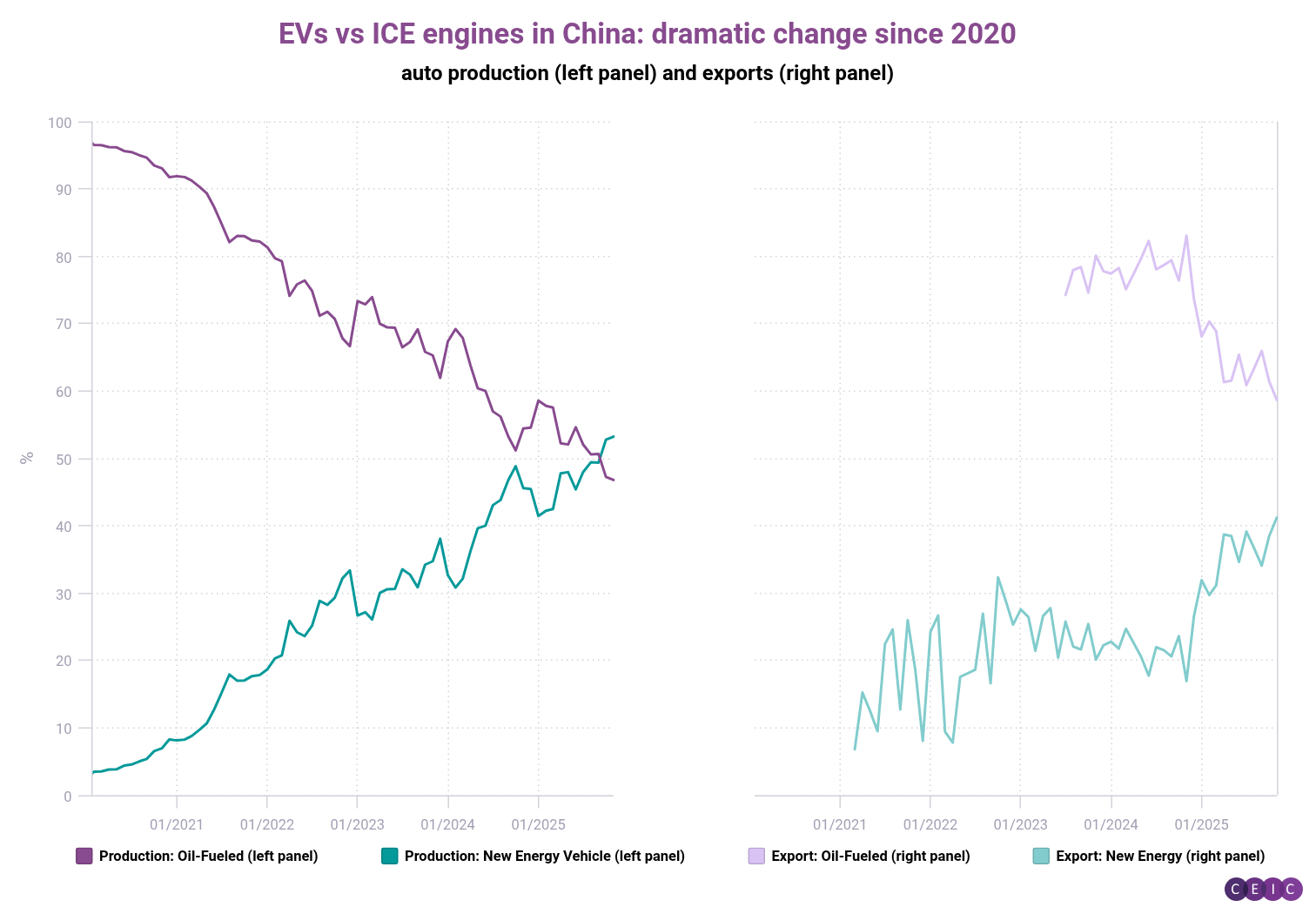
Like Germany's factories, the Chinese auto sector was once dominated by combustion engines, but as our third chart shows, the past five years have seen a massive pivot. NEV production hit 53% of the national total in October -- surpassing fossil fuel-powered vehicles for the first time. NEVs are catching up in export share, too.
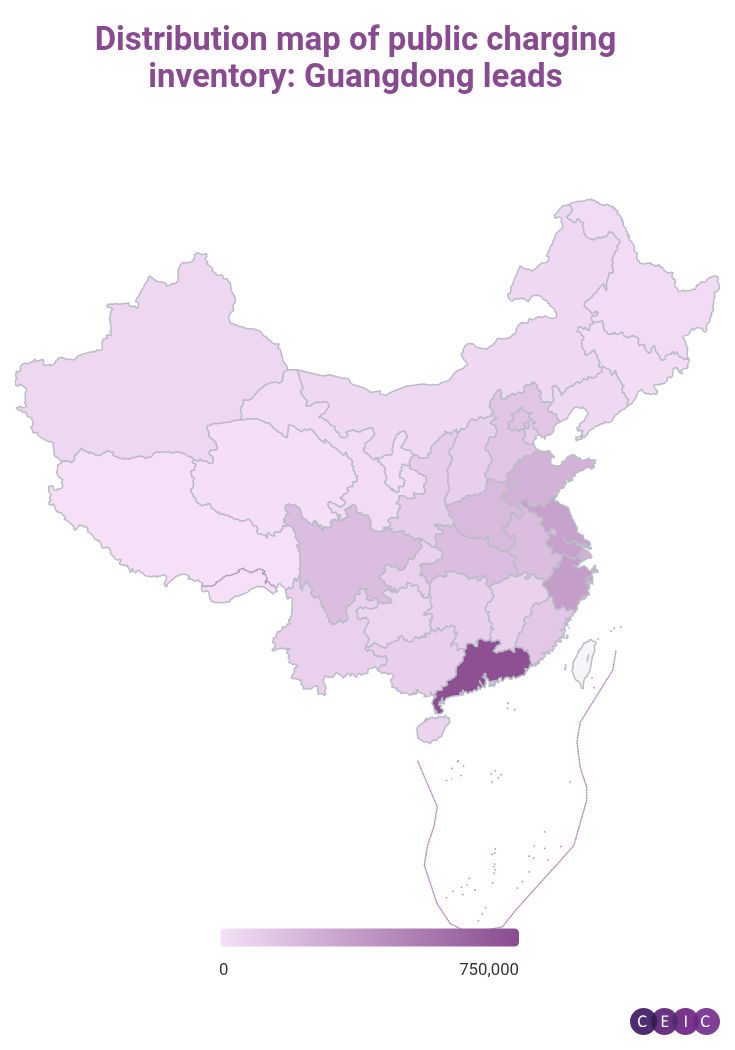
While EVs are now mainstream in China and becoming the default option, regional charging infrastructure has some catching up to do. Guangdong -- the province known for the high-tech cluster focused on Shenzhen -- leads the way, as our map visualization shows. Good penetration in east-coast regions near Shanghai has reduced "range anxiety" about recharging for drivers in China's biggest population centers.
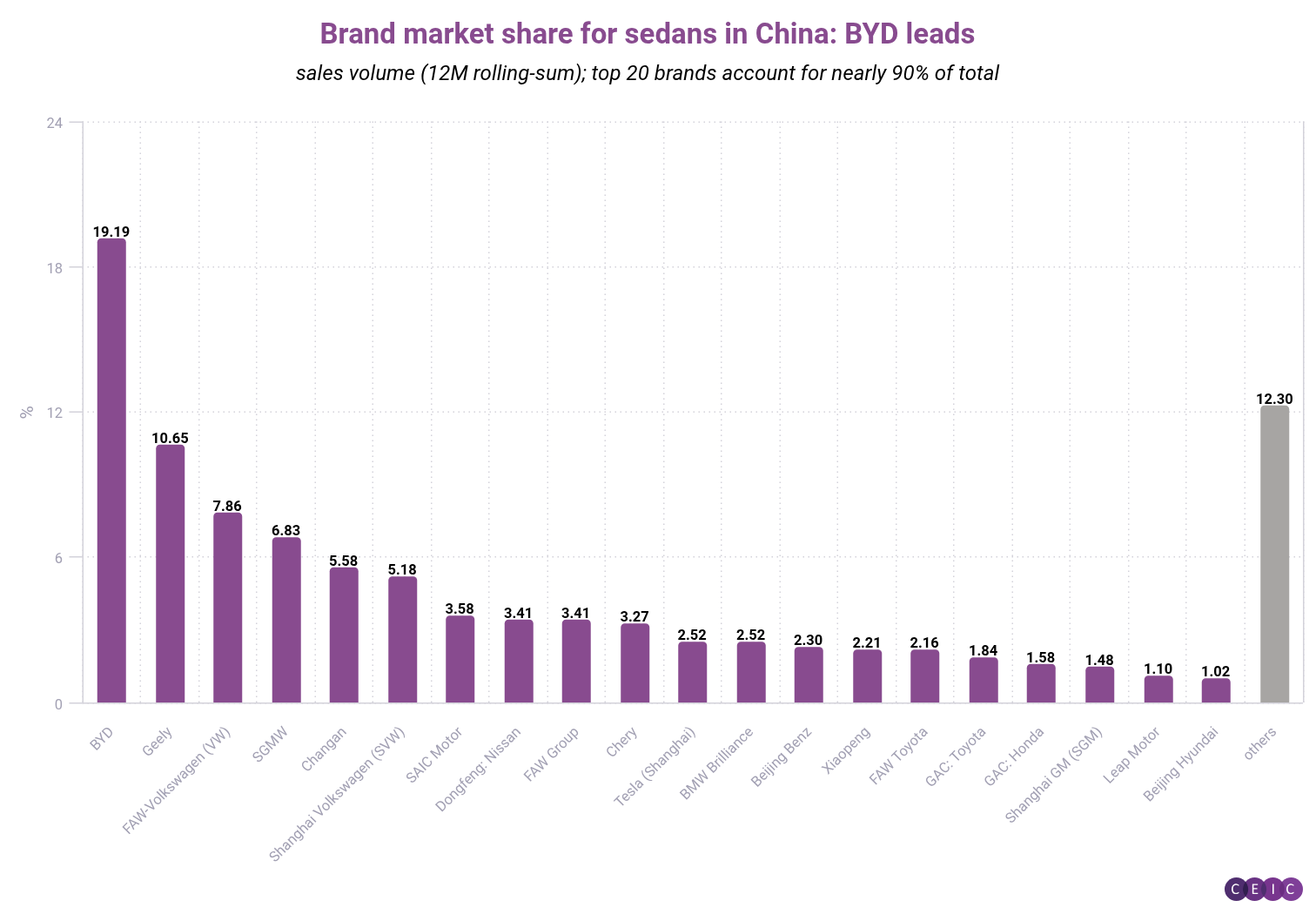
BYD is now China's best-selling brand for passenger cars of all fuel types, with almost twice the market share of Geely, its nearest competitor. In a reversal of their lead decades ago, foreign auto brands now trail behind both Chinese firms.
If you are a CEIC user, access the story here.
If you are not a CEIC client, explore how we can assist you in generating alpha by registering for a trial of our product: https://hubs.la/Q02f5lQh0