CEICData.com © 2018 Copyright All Rights Reserved
.png?width=160&name=ceic-logo-Vector%20logo%20no%20tagline%20(002).png)

Australia's central bank looks likely to be a pioneer in the next global pivot to rate hikes. Sticky inflation is spreading across core measures of inflation, prompting a relatively swift reversal of last year's easing stance.
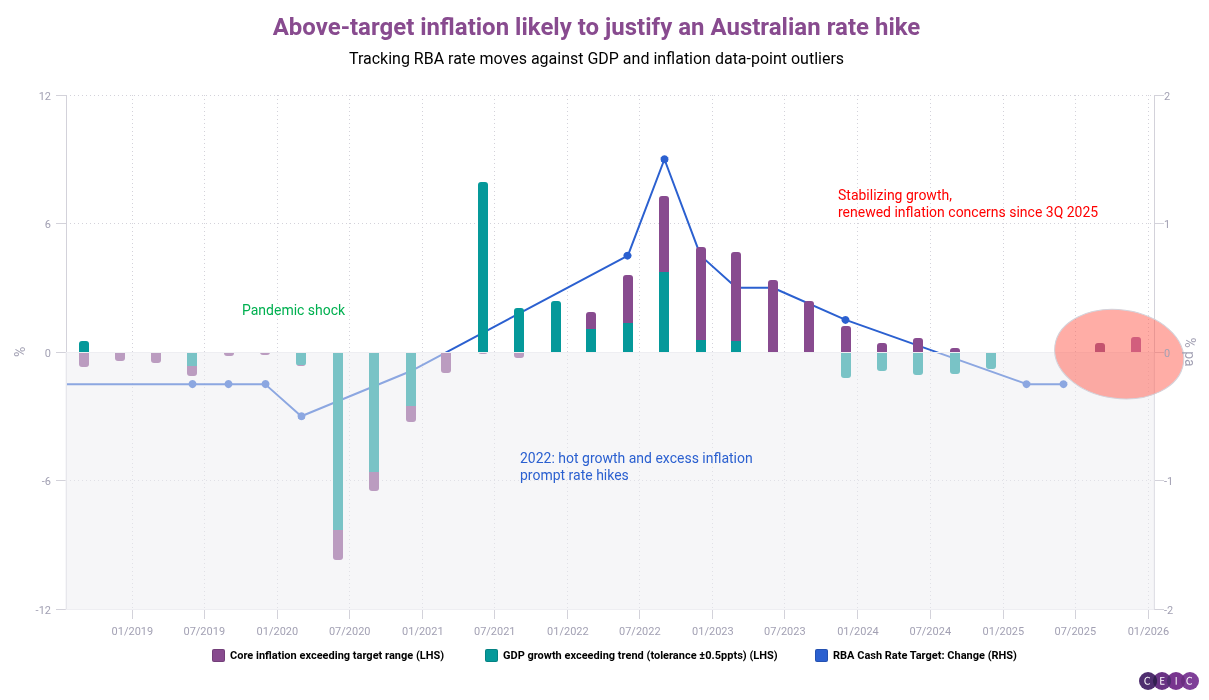
The Reserve Bank of Australia holds its next policy meeting on Feb. 17-18. We've visualized the RBA's recent rate moves against trends for inflation and growth -- in particular, whether price increases were exceeding the RBA's target range of 2-3%, and whether GDP growth was deviating from recent trends.
As our chart shows, excess inflation is appearing for the first time since 2023; meanwhile, the below-trend growth during five quarters of 2023-25 that prompted loosening have yet to recur.
The RBA has long been perceived as one of the more hawkish central banks in developed markets. Less than a year ago, we tapped our nowcasts to illustrate how policy makers had finally pivoted to rate cuts, long after their European and US counterparts. Some observers have noted that Australia lacked the slack in the economy to absorb the monetary stimulus relative to similar economies such as Canada and New Zealand.
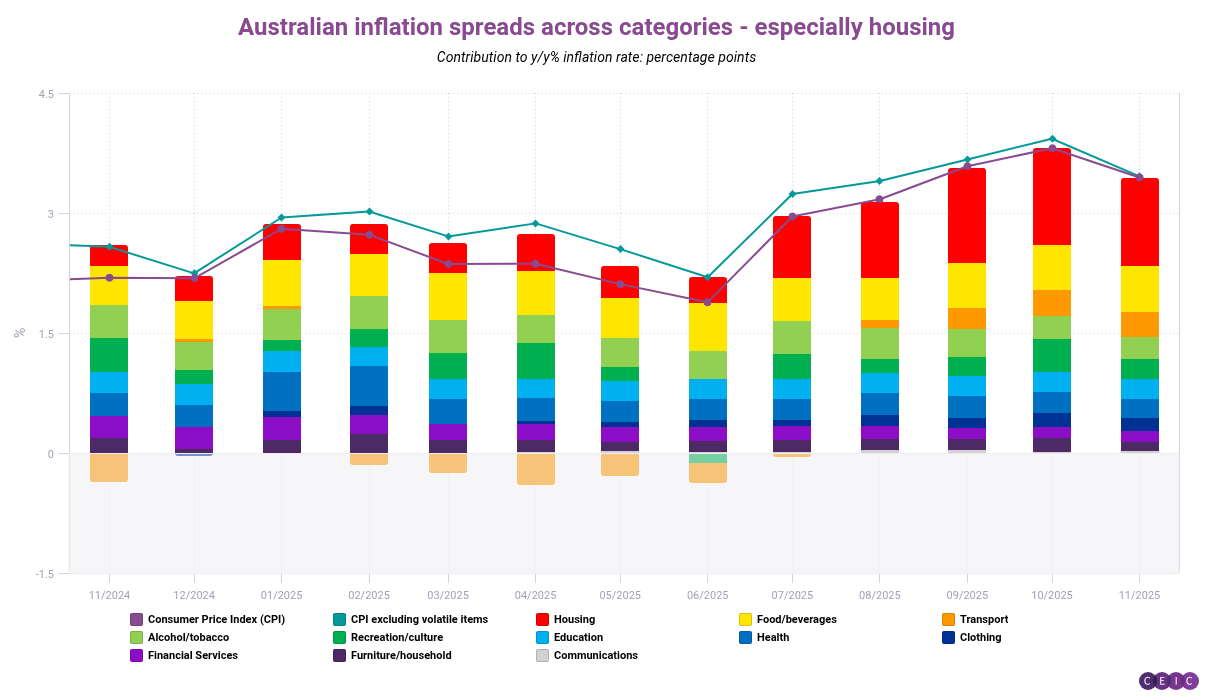
Our second chart examines how price increases have become more generalized, especially outside traditional sources of volatility such as food and energy. Shelter costs have been adding about 1 percentage point to the CPI for a year. Core inflation has exceeded headline CPI throughout 2025.
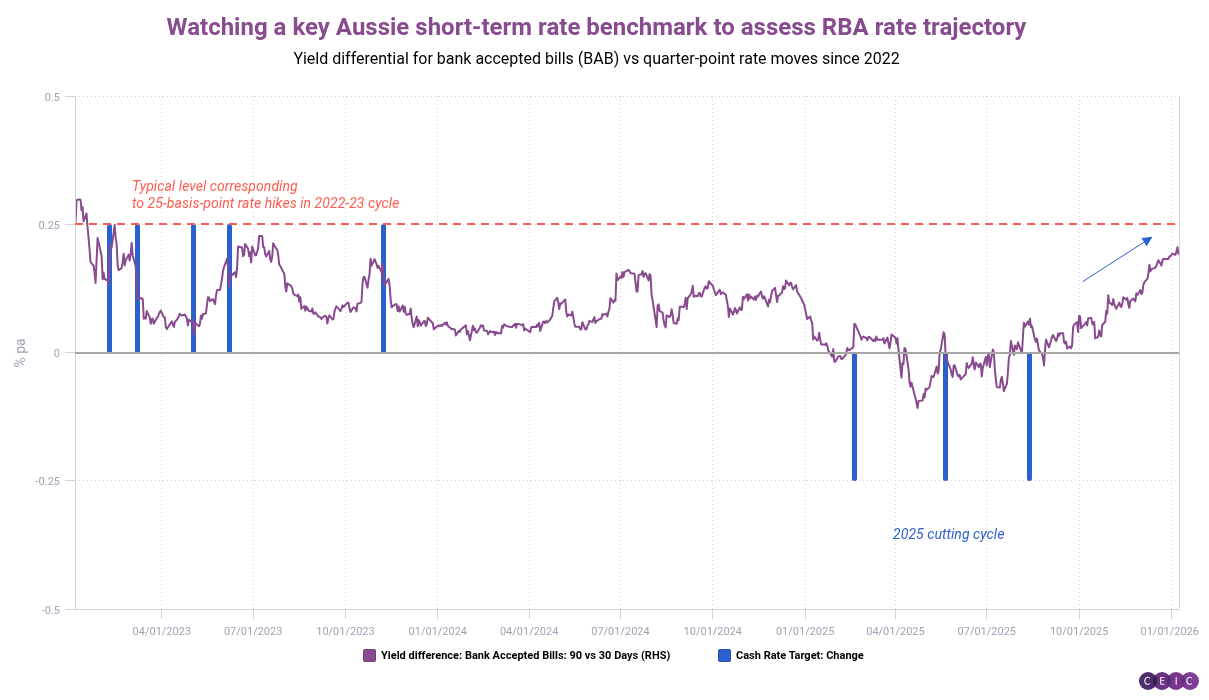
We conclude with a market-based indicator: bank-accepted bills (BAB), a key measure of short-term borrowing costs in Australia. The rate for 90-day BAB is diverging from its 30-day equivalent, rising to its highest level in more than two years. This phenomenon tends to flag imminent rate increases by the central bank.
If you are a CEIC user, access the story here.
If you are not a CEIC client, explore how we can assist you in generating alpha by registering for a trial of our product: https://hubs.la/Q02f5lQh0