CEICData.com © 2018 Copyright All Rights Reserved
.png?width=160&name=ceic-logo-Vector%20logo%20no%20tagline%20(002).png)

As shipping traffic through the Strait of Hormuz grinds to a halt and Iranian attacks shutter some of the world's biggest oil and LNG facilities, Asia risks facing the greatest economic pain and the return of inflation.
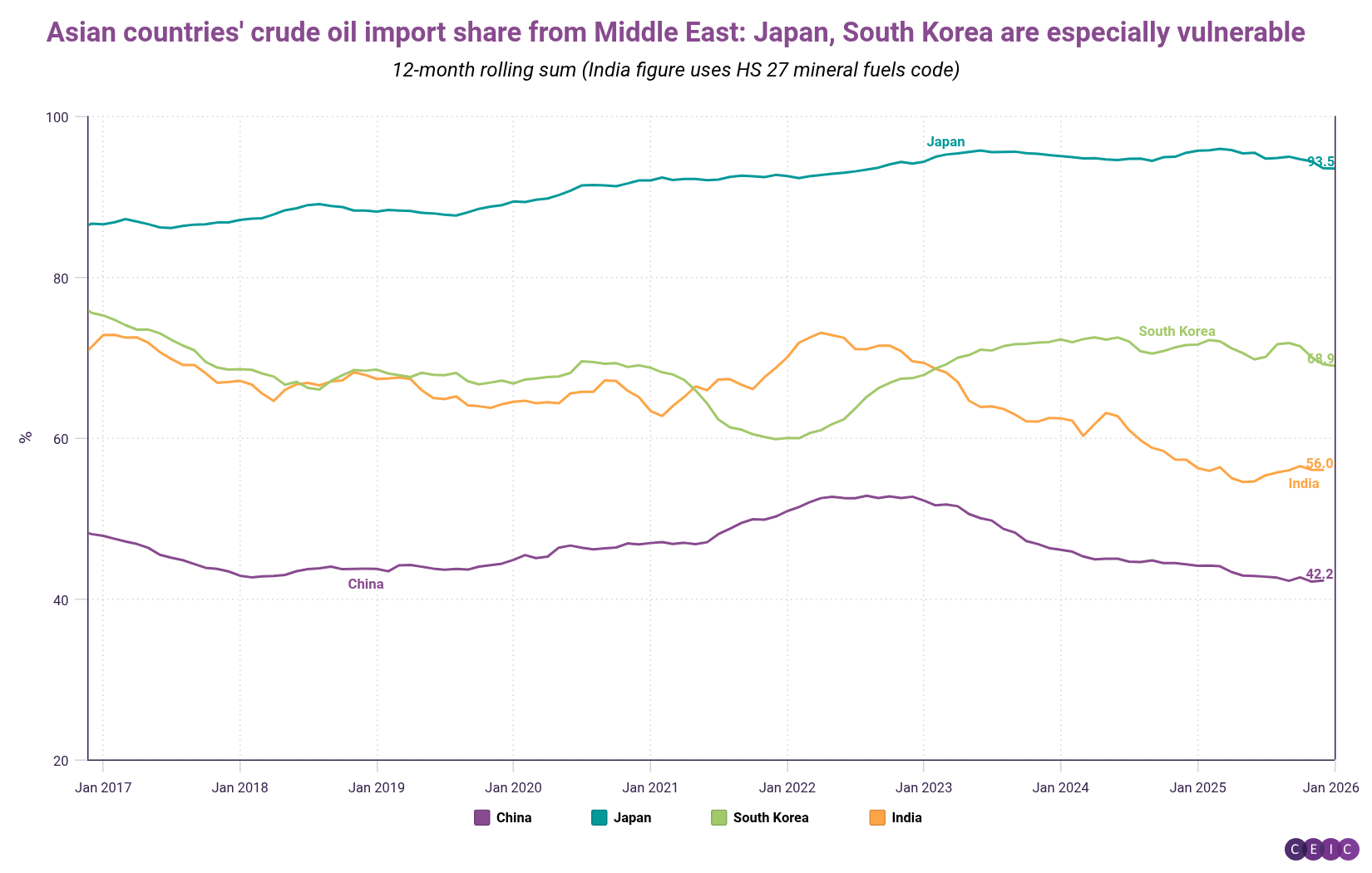
Japan's reliance on Gulf imports has grown ever higher over the past decade, surpassing 93% of imports. South Korea had reduced its dependency below 60% in 2021, but that figure has drifted higher. India* has seen a steep reduction as it turned to Russian supplies, but more than 50% of its net imports still come from the Middle East.
As for China, the world's largest oil consumer has sought diversification in sourcing; its proportion of crude sourced from the Middle East is the lowest of the "big four" on our chart, but 42% is still a considerable dependency.
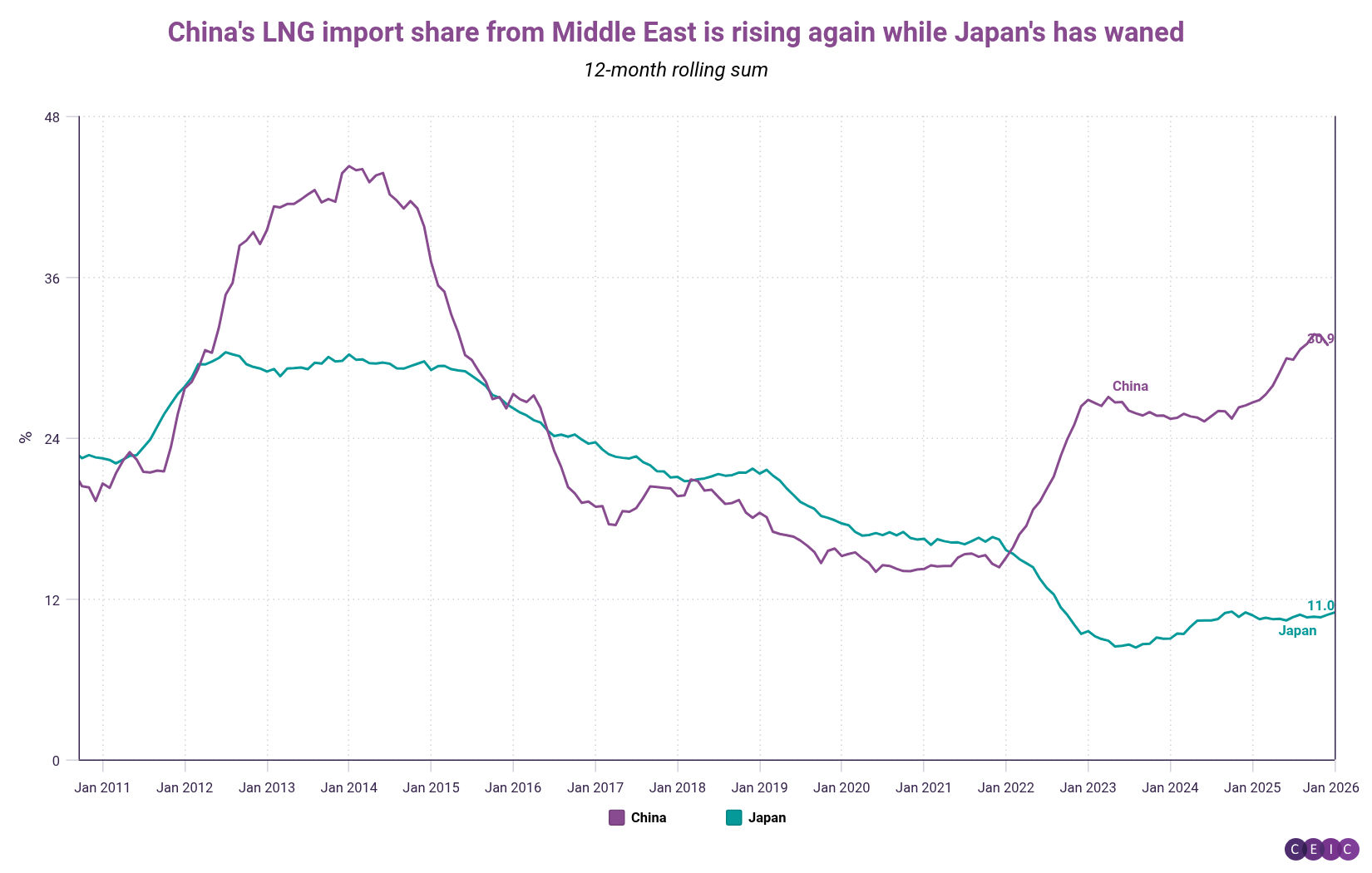
As our second chart shows, China's gas dependence on the Persian Gulf -- primarily LNG imports from Qatar -- has been increasing again since 2022. Japan is less dependent on LNG from the Middle East, with greater reliance on Australia and the Middle East.
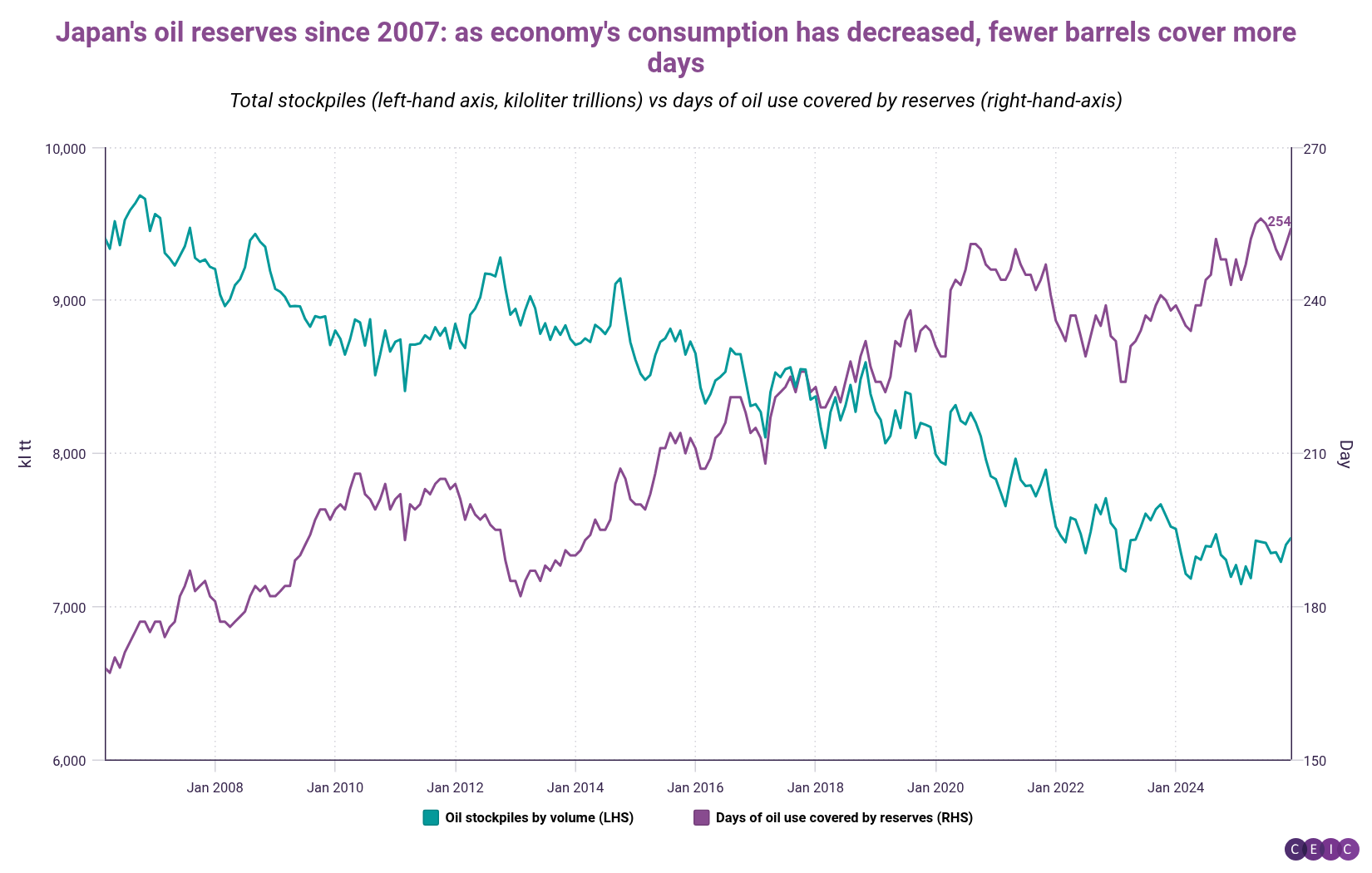
Energy traders are already scrutinizing Asian nations' energy reserves. Japan, whose reserve policy was influenced by the 1973 OPEC embargo, stands out; its oil reserves cover more than 250 days of use for the economy. (It's notable that coverage has risen on that basis even as Japan holds fewer barrels in reserve -- a sign of how the economy has become less oil-intensive.)
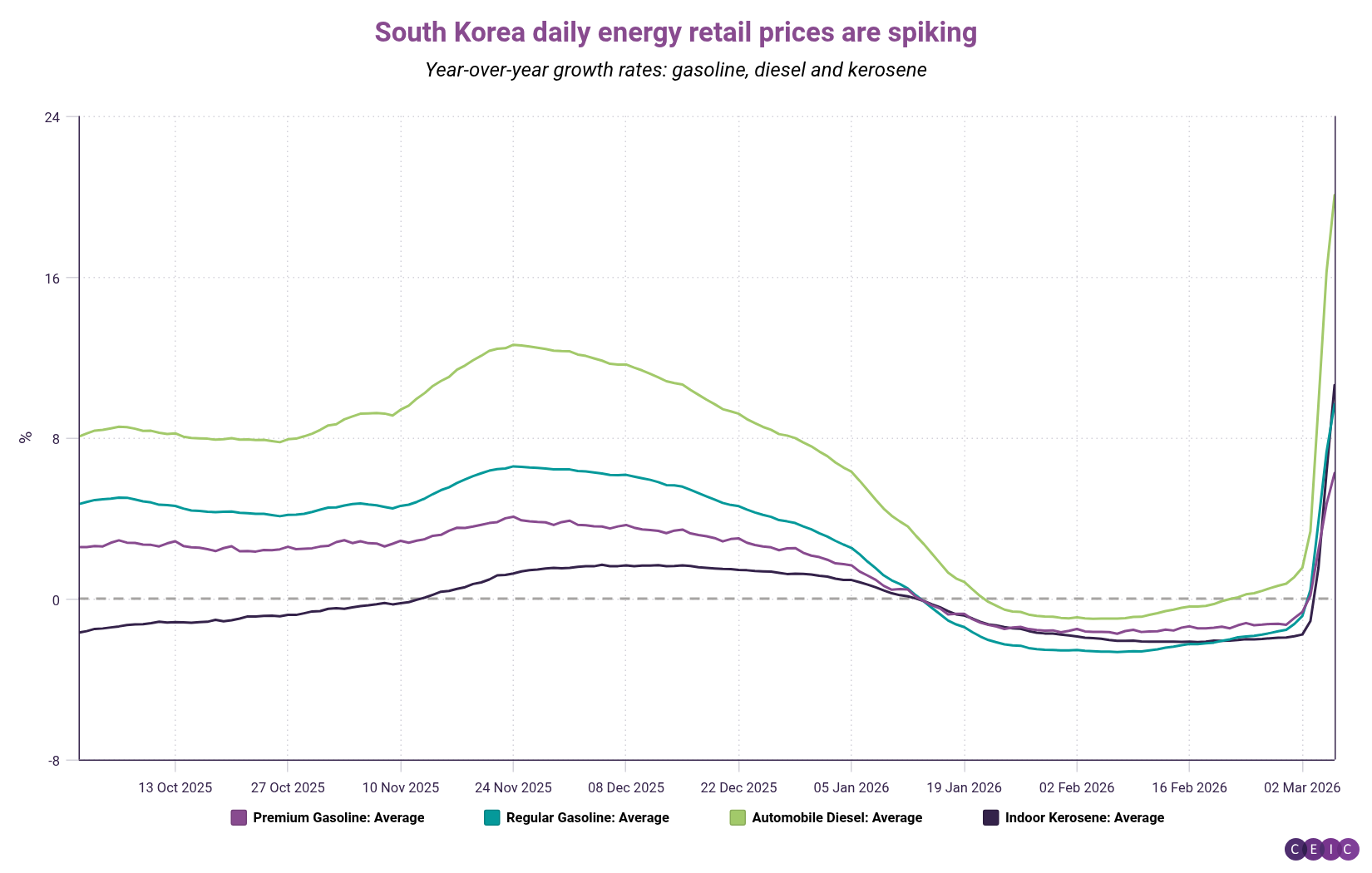
South Korea is already seeing gasoline and diesel prices spike, as our high-frequency data show. Will an energy shock spill over into a 2022-style inflation surge across the region?
Japan had been enjoying energy deflation thanks to the return of consumer subsidies; food was already getting cheaper.
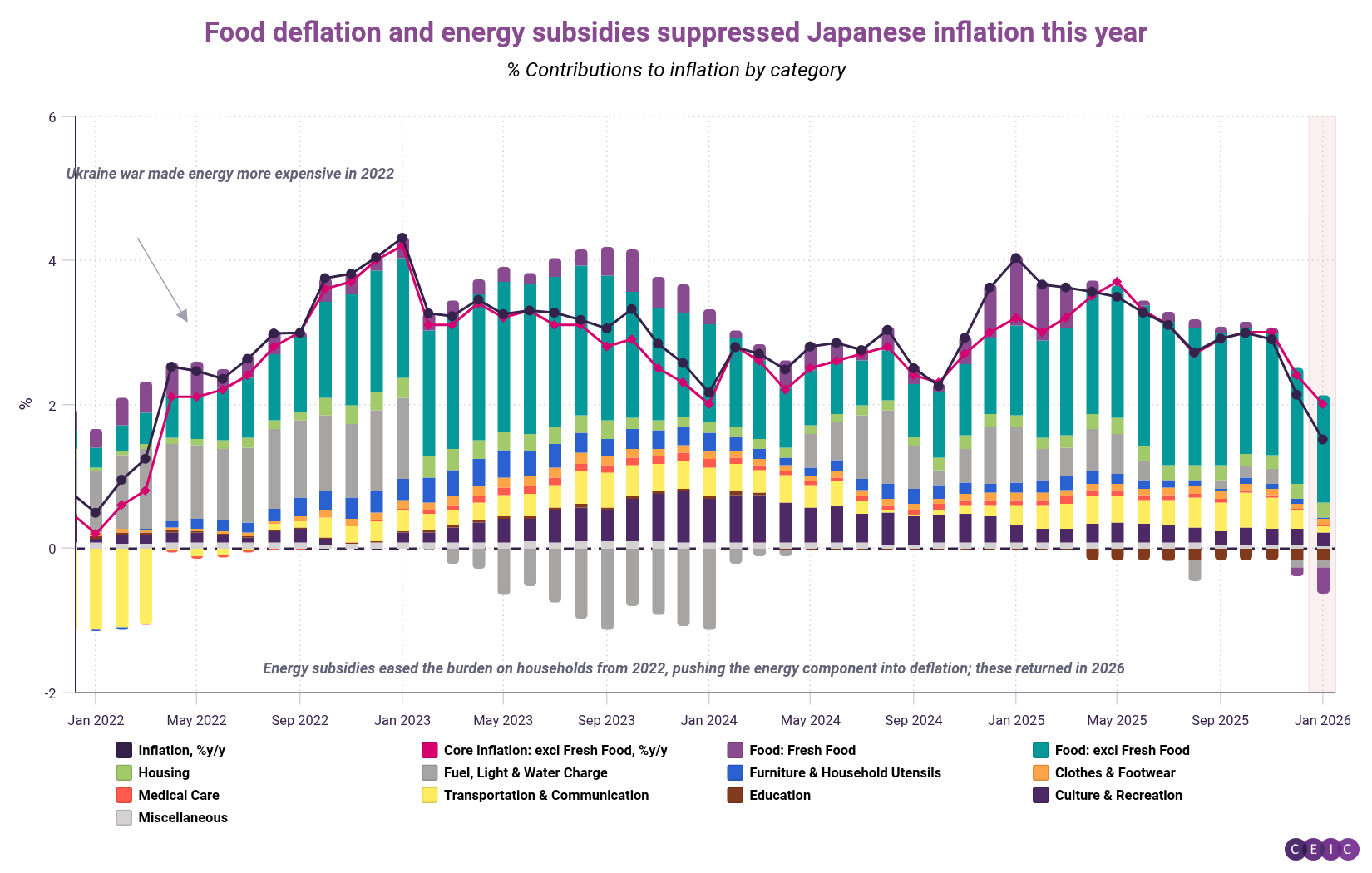
Our nowcasts are monitoring South Korean and Japanese inflation in near-real time. The most recent weekly readings are showing an uptick.
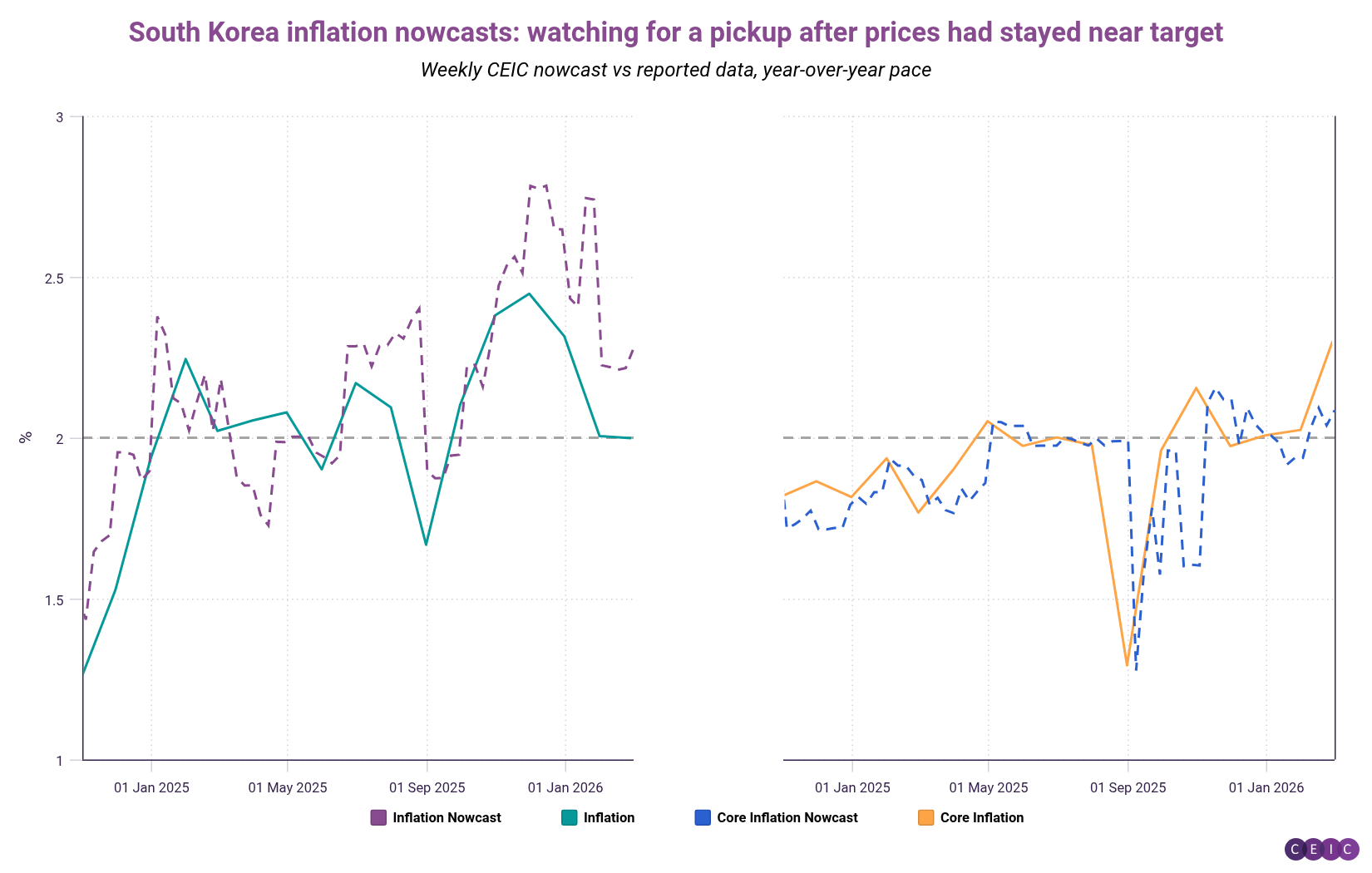
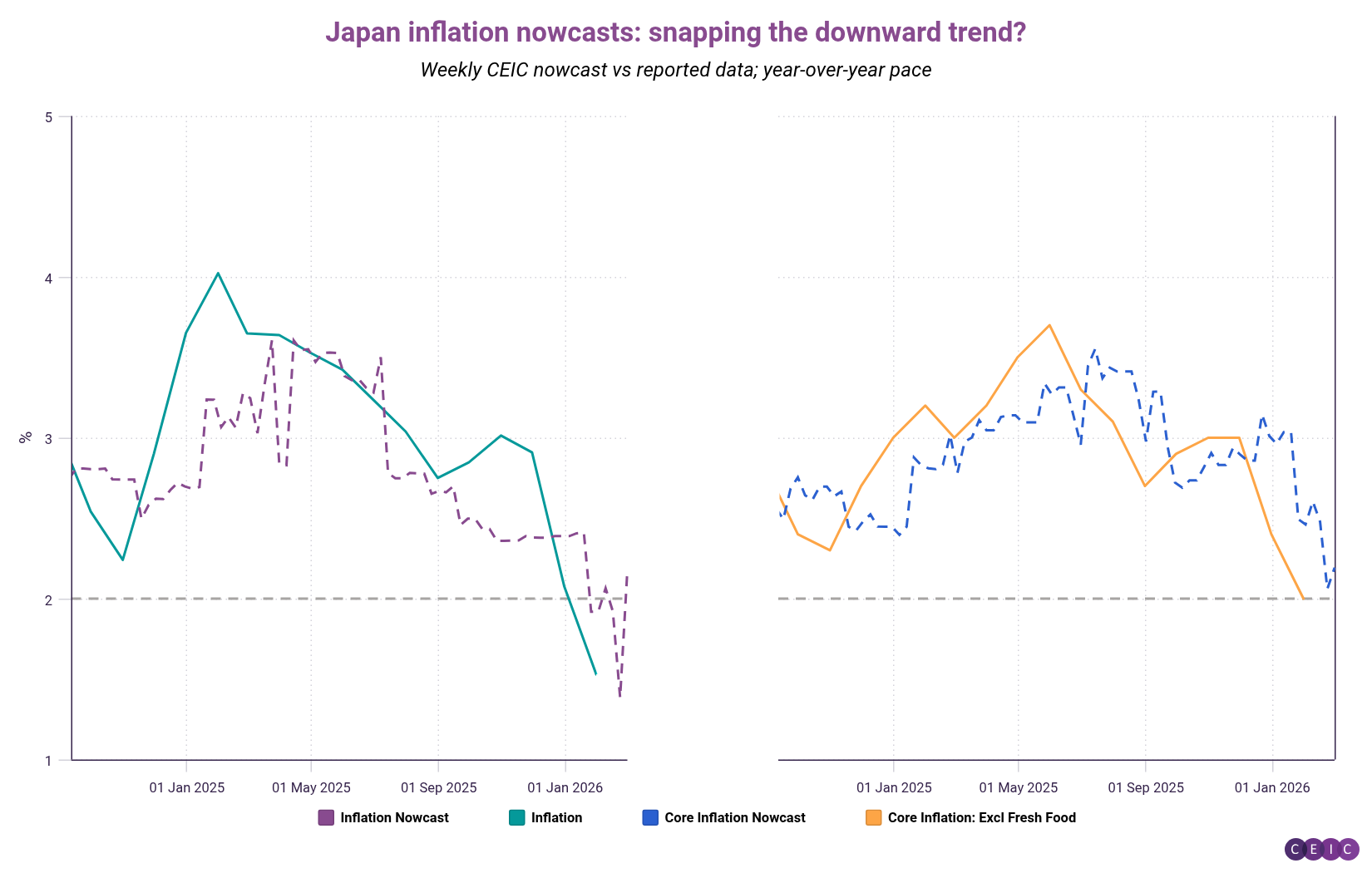
CEIC users can explore Asian countries' energy import dependencies and other relevant indicators in detail via our Middle East Geopolitical Risk Dashboard.
*India's figure uses the Harmonized System (HS) code 27, which covers mineral fuels beyond crude oil.
If you are a CEIC user, access the story here.
If you are not a CEIC client, explore how we can assist you in generating alpha by registering for a trial of our product: https://hubs.la/Q02f5lQh0