CEICData.com © 2018 Copyright All Rights Reserved
.png?width=160&name=ceic-logo-Vector%20logo%20no%20tagline%20(002).png)

In an increasingly fractured global economy, ASEAN policymakers have been discussing greater regional self-sufficiency: trading more within the Southeast Asian economic bloc, rather than relying on large external markets -- i.e. the US.
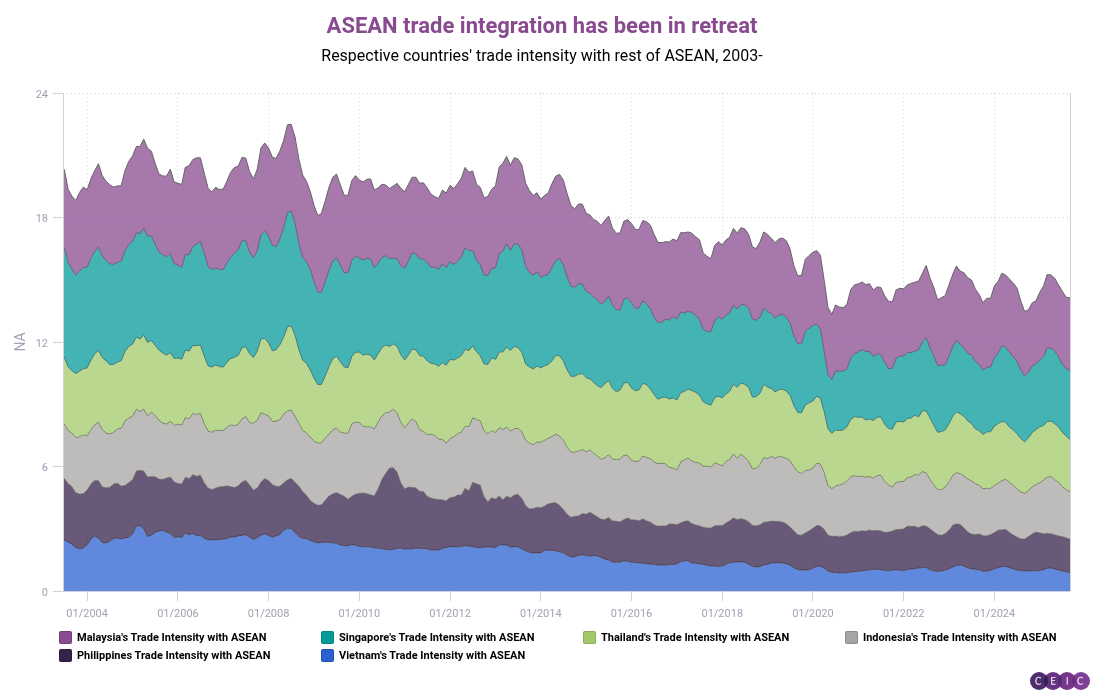
There are structural reasons that have prevented this from occurring so far and look likely to continue. Many ASEAN economies follow export-led growth models that directly pit them against one another in similar industries, limiting the scope for deeper intra-regional trade. At the same time, the region’s consumer base remains relatively weak. (Indonesia, ASEAN’s most populous country, is constrained by a weak job market, for instance.)
To assess trade integration, we've calculated an Export Intensity Index* to measure bilateral integration, i.e. whether one nation exports more or less than the global norm to a given destination country. Tracking this index over time also informs us as to whether a trade relationship is strengthening, stagnating or backsliding.
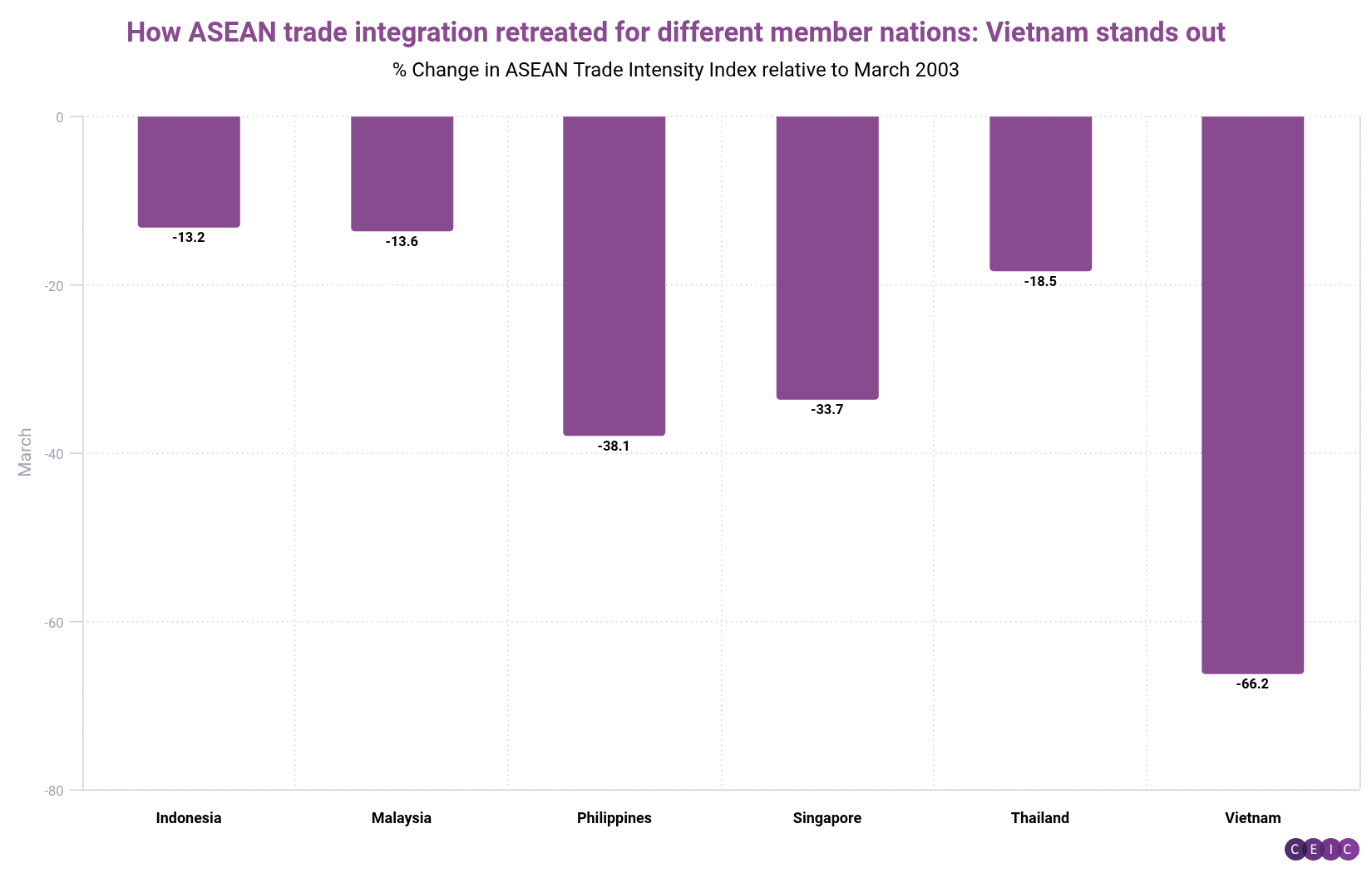
The results point to less trade integration, not more. Vietnam particularly stands out amid its rise to become a major exporter to the US.
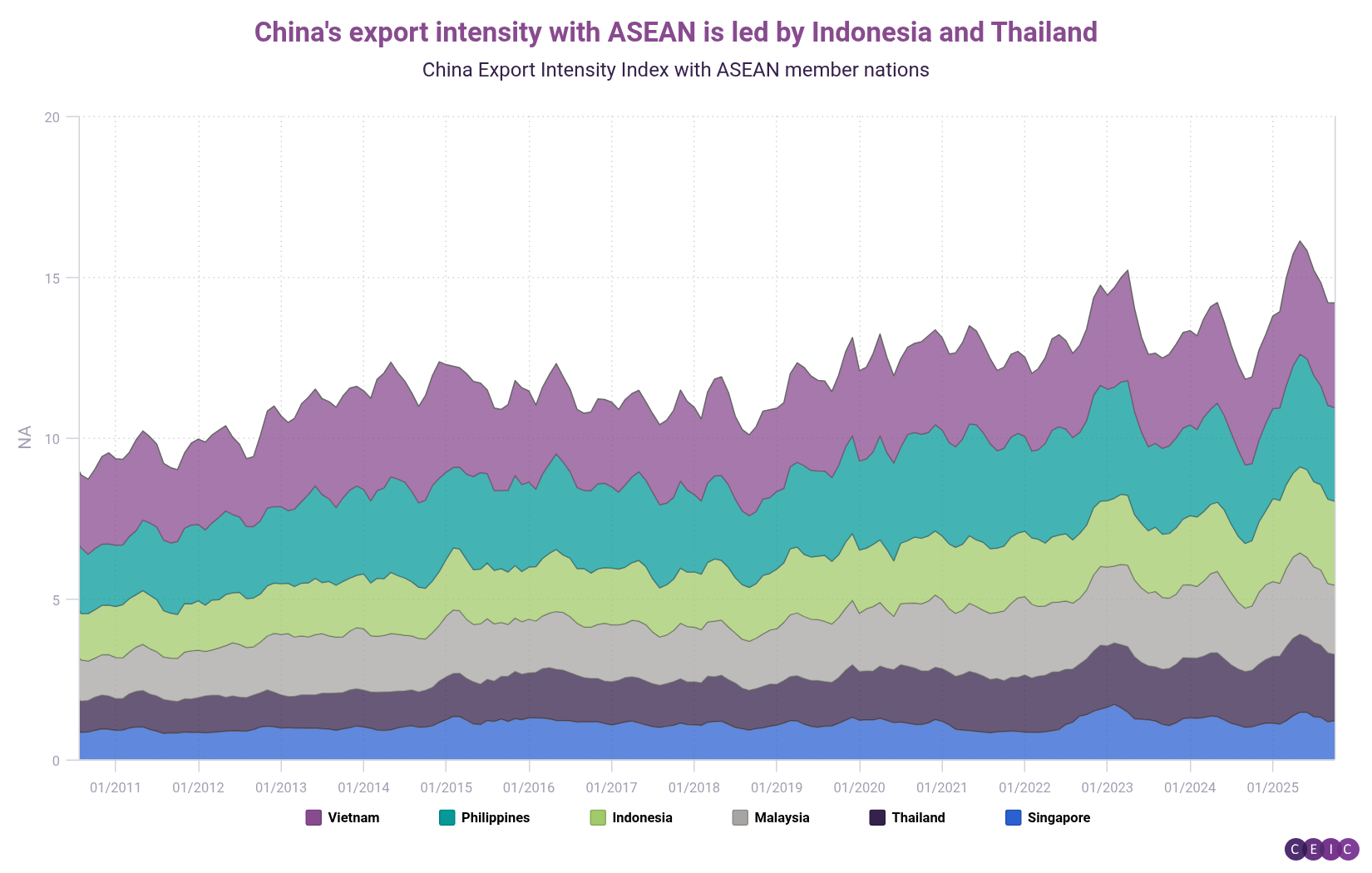
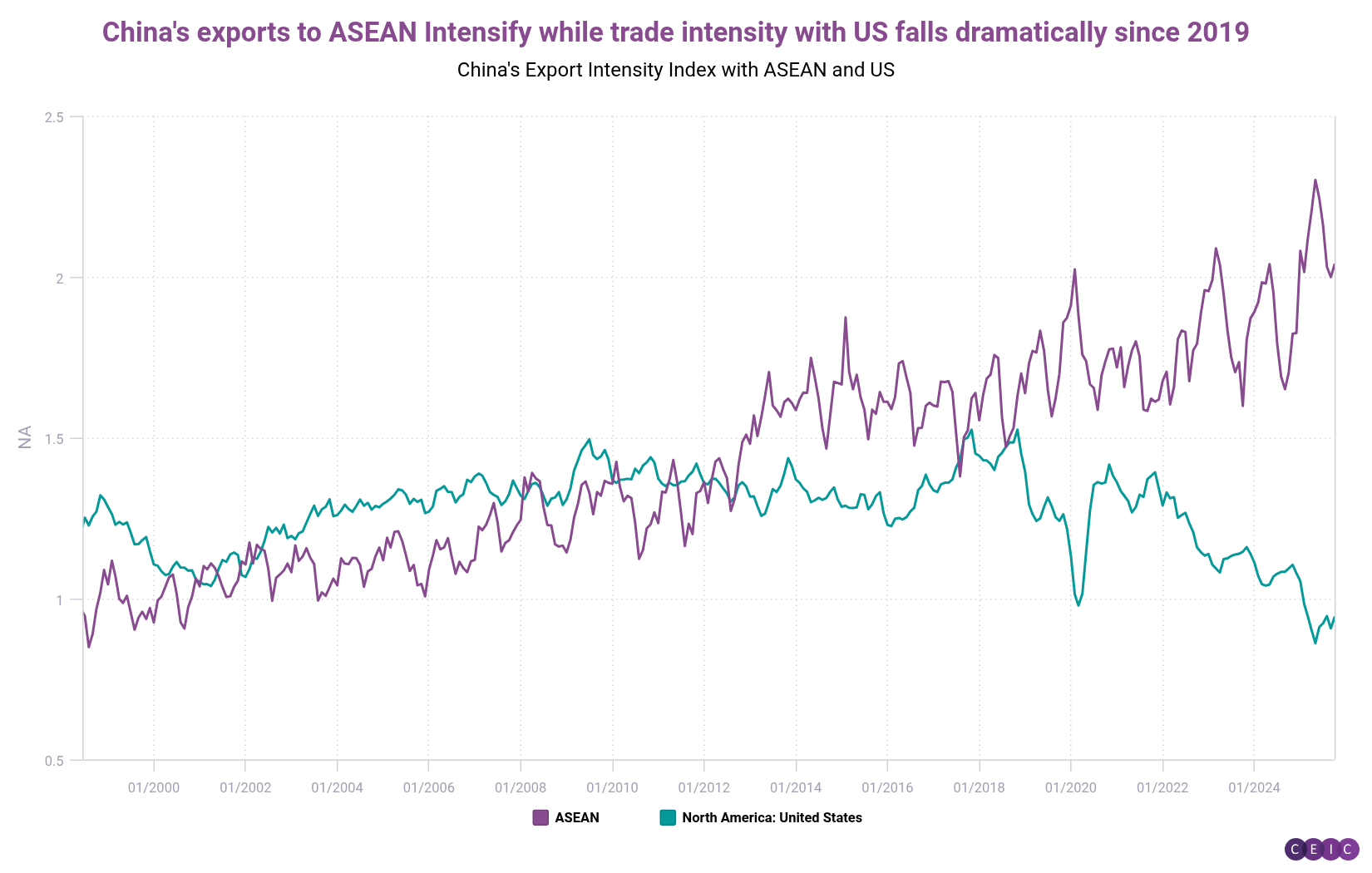
In contrast, ASEAN’s export intensity with the US has surged since the imposition of Donald Trump's tariffs -- showing the importance of the "connector economy" phenomenon and front-loading ahead of the tariffs' implementation -- and this increase has been broad-based across member states. Meanwhile, trade intensity with China has risen more modestly and is driven largely by Indonesia, which is increasingly intertwined with Asia's biggest economy on both the export and import sides.
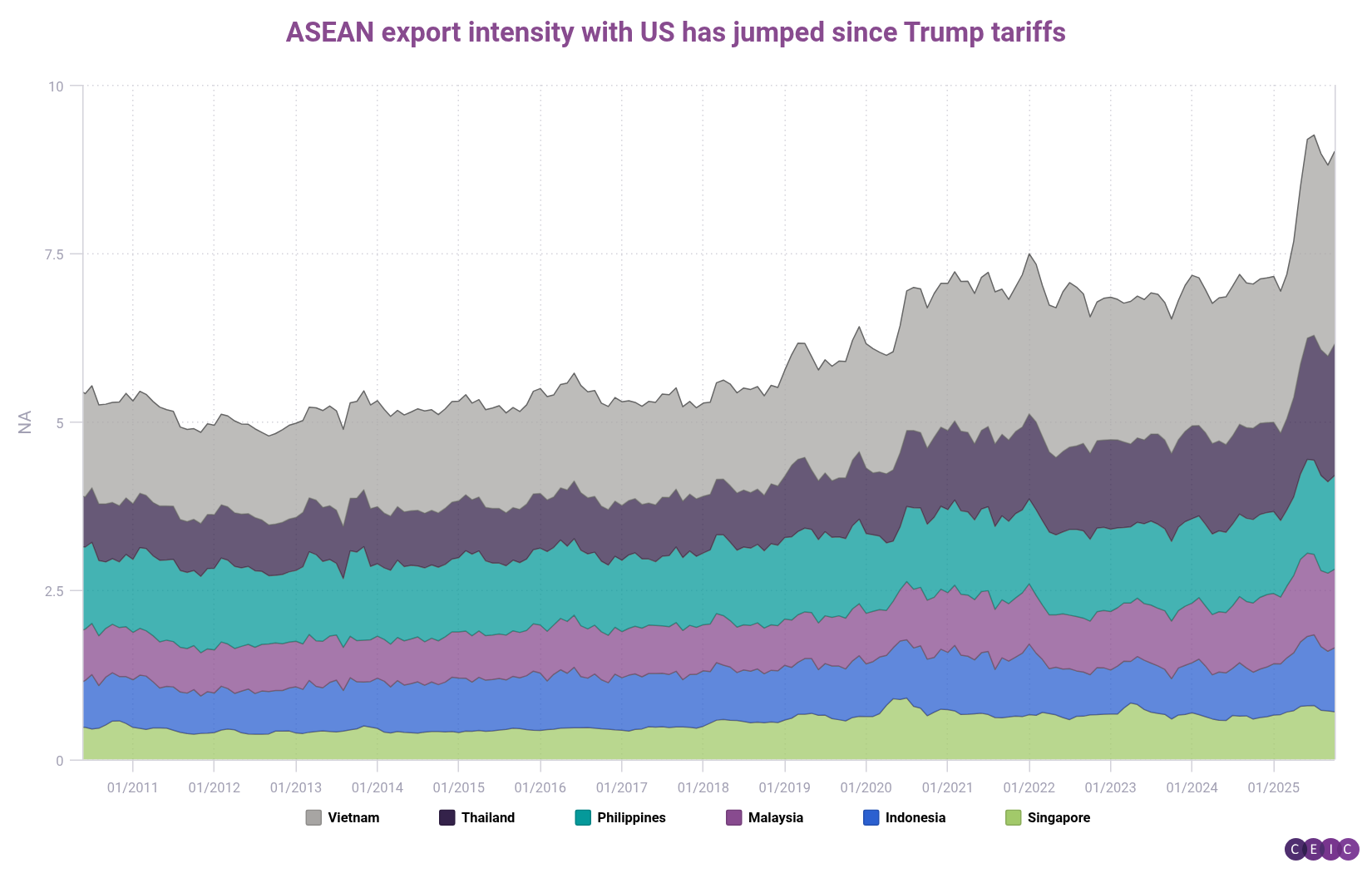
*Methodology for an Export Intensity Index: (Country I's Exports to Country J/ Country I's Total Exports) / (World Exports to Country J / World Exports)
If you are a CEIC user, access the story here.
If you are not a CEIC client, explore how we can assist you in generating alpha by registering for a trial of our product: https://hubs.la/Q02f5lQh0