CEICData.com © 2018 Copyright All Rights Reserved
.png?width=160&name=ceic-logo-Vector%20logo%20no%20tagline%20(002).png)

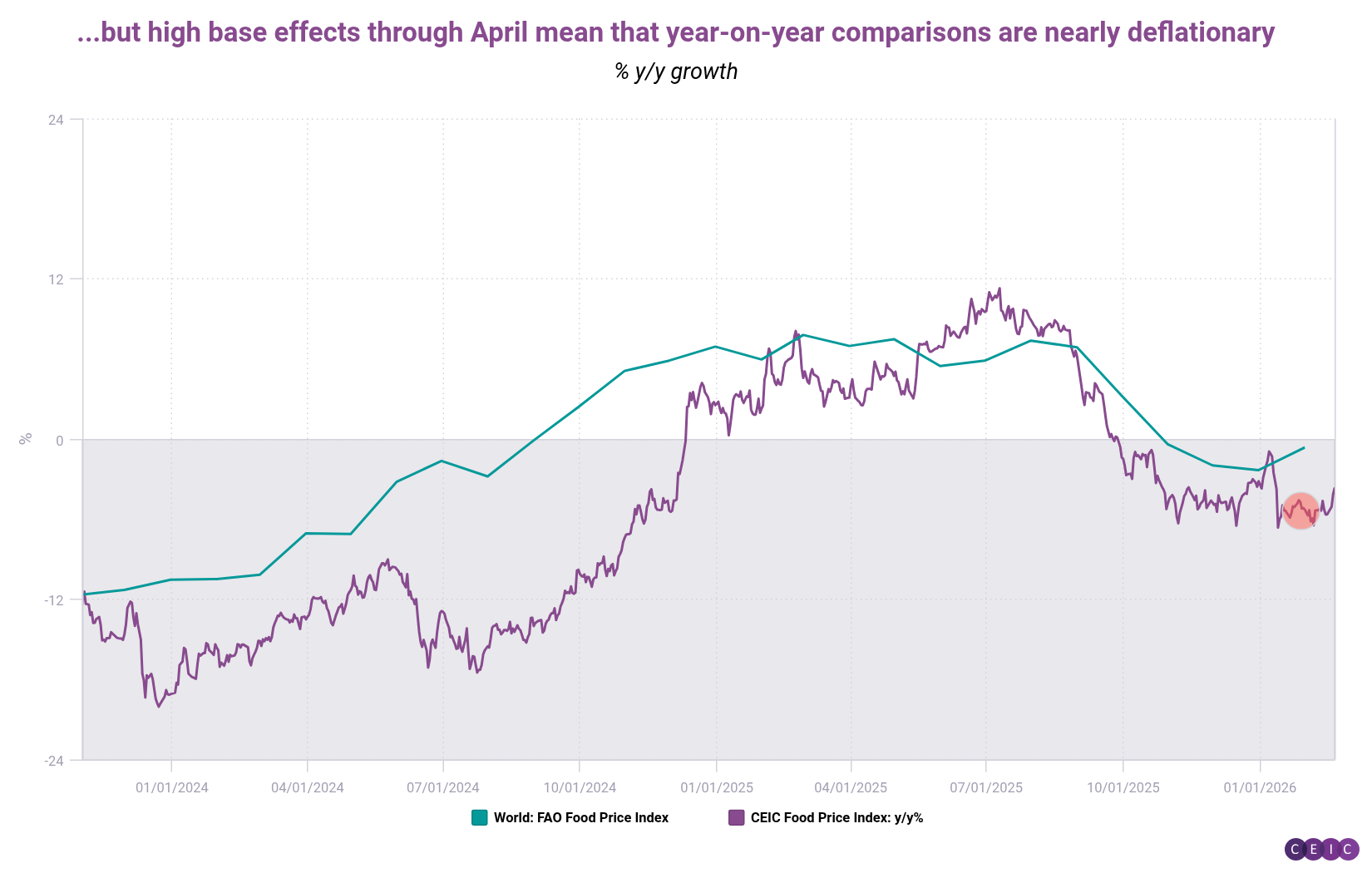
Is the world in for some welcome relief after the 2024-25 rebound in global food-price inflation, or is the situation merely flattered by comparisons with last year? Comparing CEIC's high-frequency index of global prices to a similar measure released by the United Nations' Food and Agriculture Organization (FAO) paints a mixed picture.
The FAO's measure has posted four consecutive months of decline (though the year-on-year contraction slowed to 0.6% for January).
CEIC's Food Commodity Price Index compiles high-frequency food-price sources and tracks the FAO's methodology. It's anticipating flat growth for the FAO's measure in February. Base effects are a factor, reflecting last year's surging prices for wheat and rice.
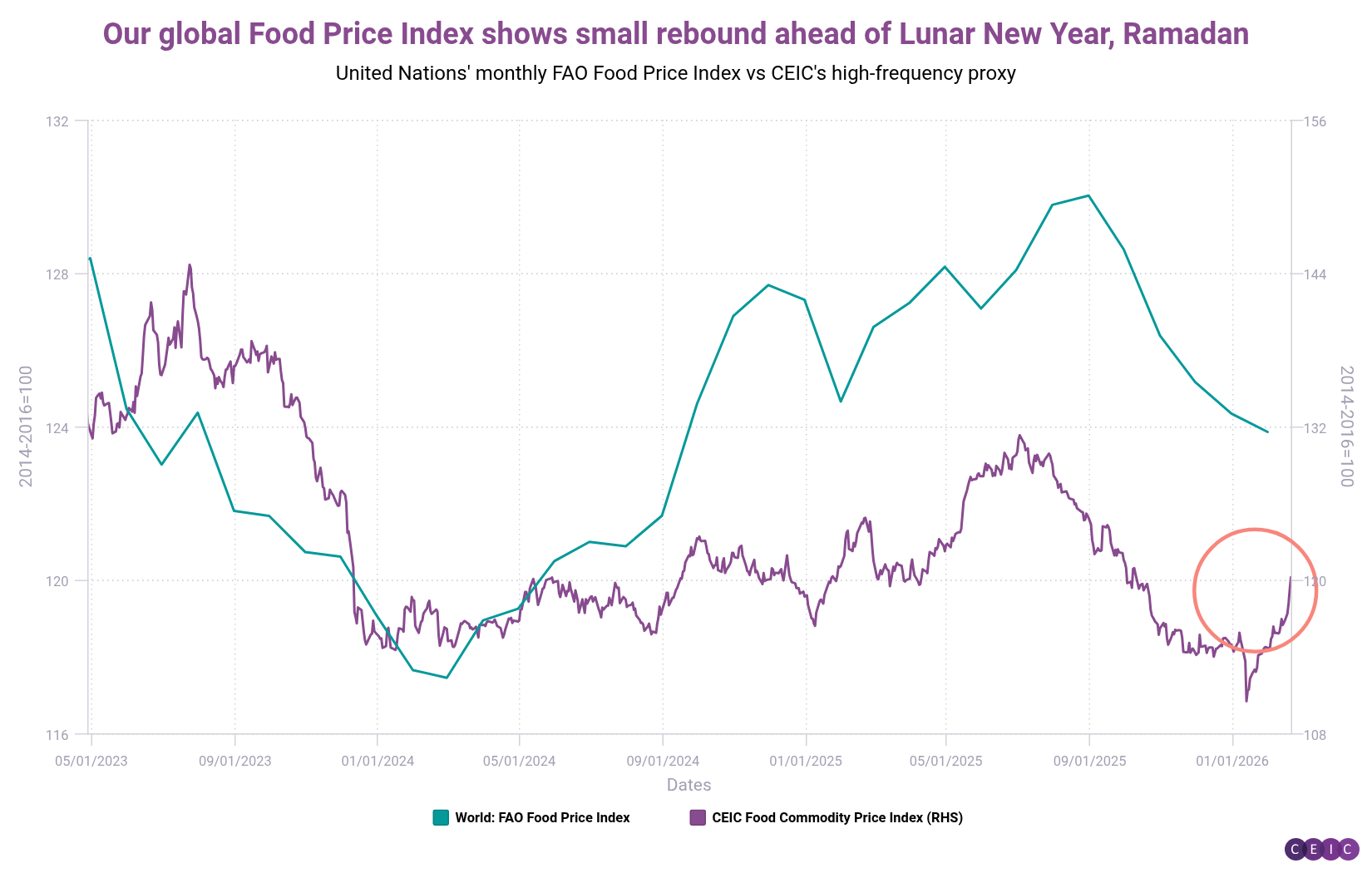
Our chart also shows a January lull and then rebound, likely linked to the global impact of Lunar New Year festival spending and upcoming Eid-ul-Fitr in March. (Ramadan tends to push prices higher due to supply disruptions and demand pressures for certain categories of food.)
Of the five categories covered by the FAO's index (cereals, dairy, meat, sugar, and oils & fats), it's notable that fruits and vegetables are absent due to the wide international variations for fresh produce.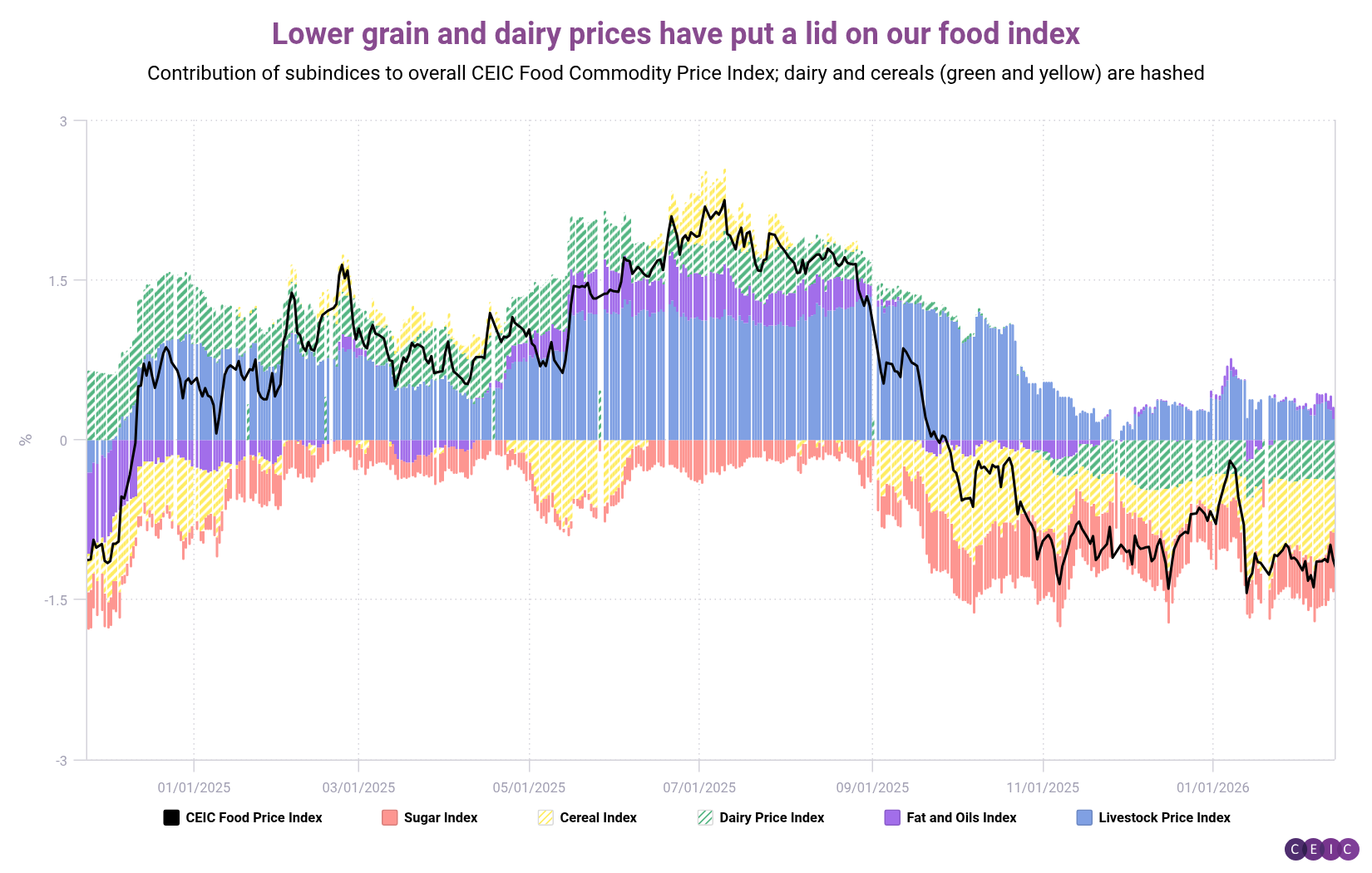
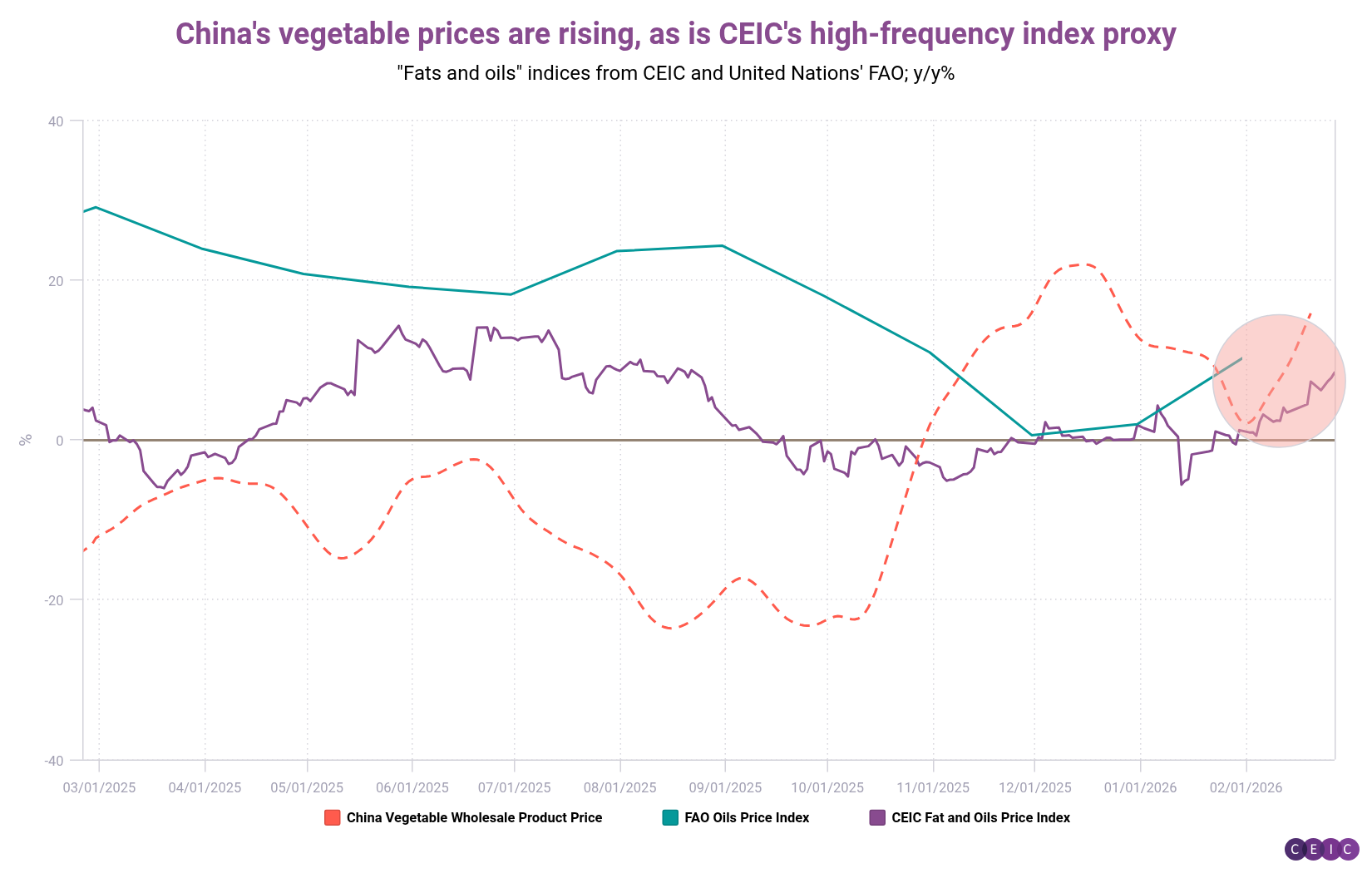
For insights on this category, we can turn to granular data from China, which compiles an index of wholesale vegetable prices; this has been picking up in February. For a higher-frequency proxy showing a similar upward trend, we can look at our fats & oils subindex (which indirectly mirrors trends in vegetable prices).
If you are a CEIC user, access the story here.
If you are not a CEIC client, explore how we can assist you in generating alpha by registering for a trial of our product: https://hubs.la/Q02f5lQh0