CEICData.com © 2018 Copyright All Rights Reserved
.png?width=160&name=ceic-logo-Vector%20logo%20no%20tagline%20(002).png)

One of the surprising consequences of the artificial-intelligence boom has been a global memory-chip shortage, which has benefited that industry's key players.
To feed the insatiable AI demand, memory-chip manufacturers have switched more capacity from their standard products (such as DDR4, DDR5 and NAND chips) to more profitable, cutting-edge categories, like HBM (high-bandwidth memory, used in AI accelerators and data-center graphics processing units).
DDR4 chips might not be at the cutting edge anymore, but they are still the workhorse for servers, personal computers and other consumer electronics. Their prices are rocketing.
We visualized the case of South Korea, home to DRAM (dynamic random access memory) giants Samsung and SK Hynix. The two companies control about 70% of the global market. The result has been a national export boom.
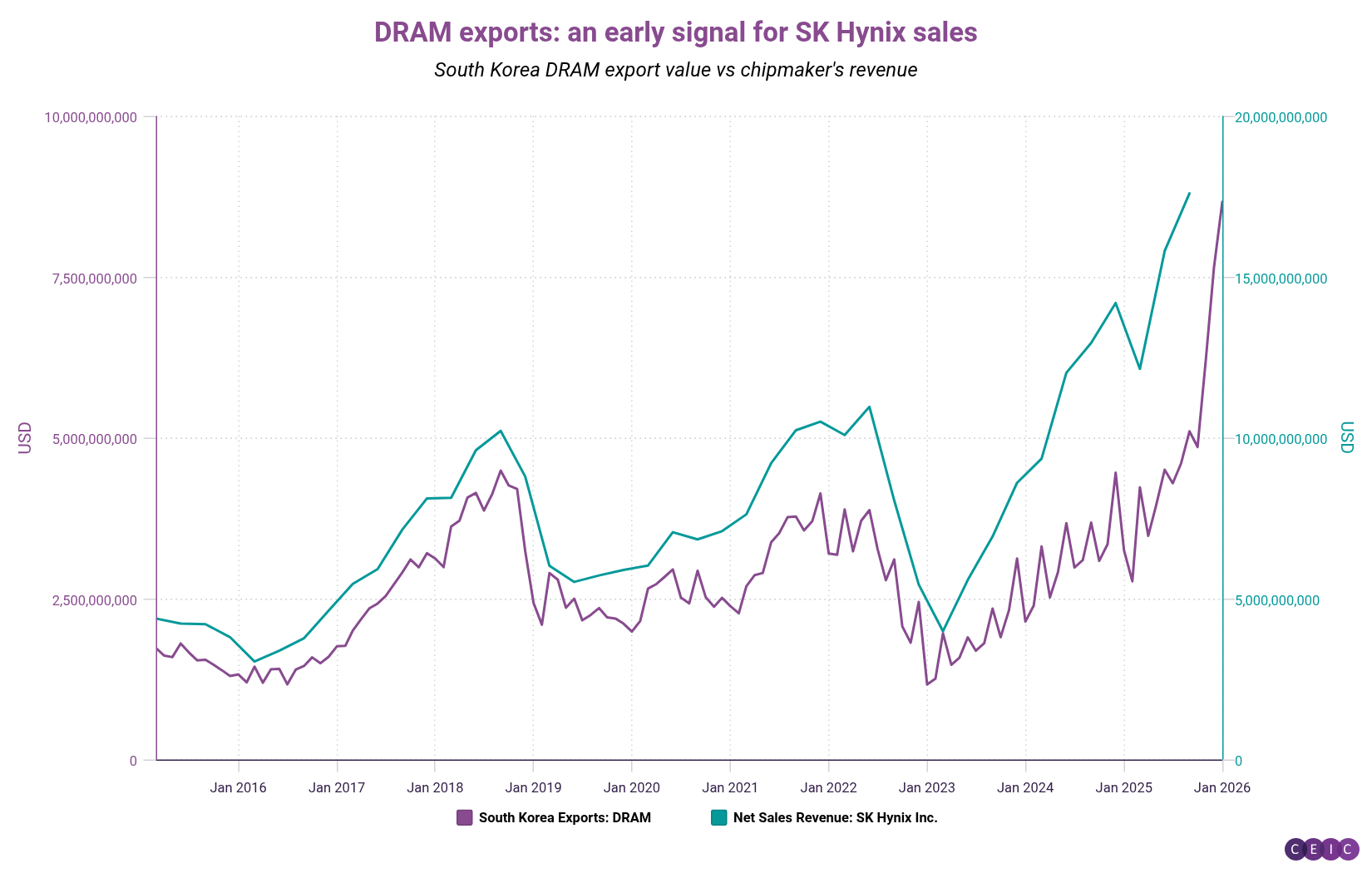
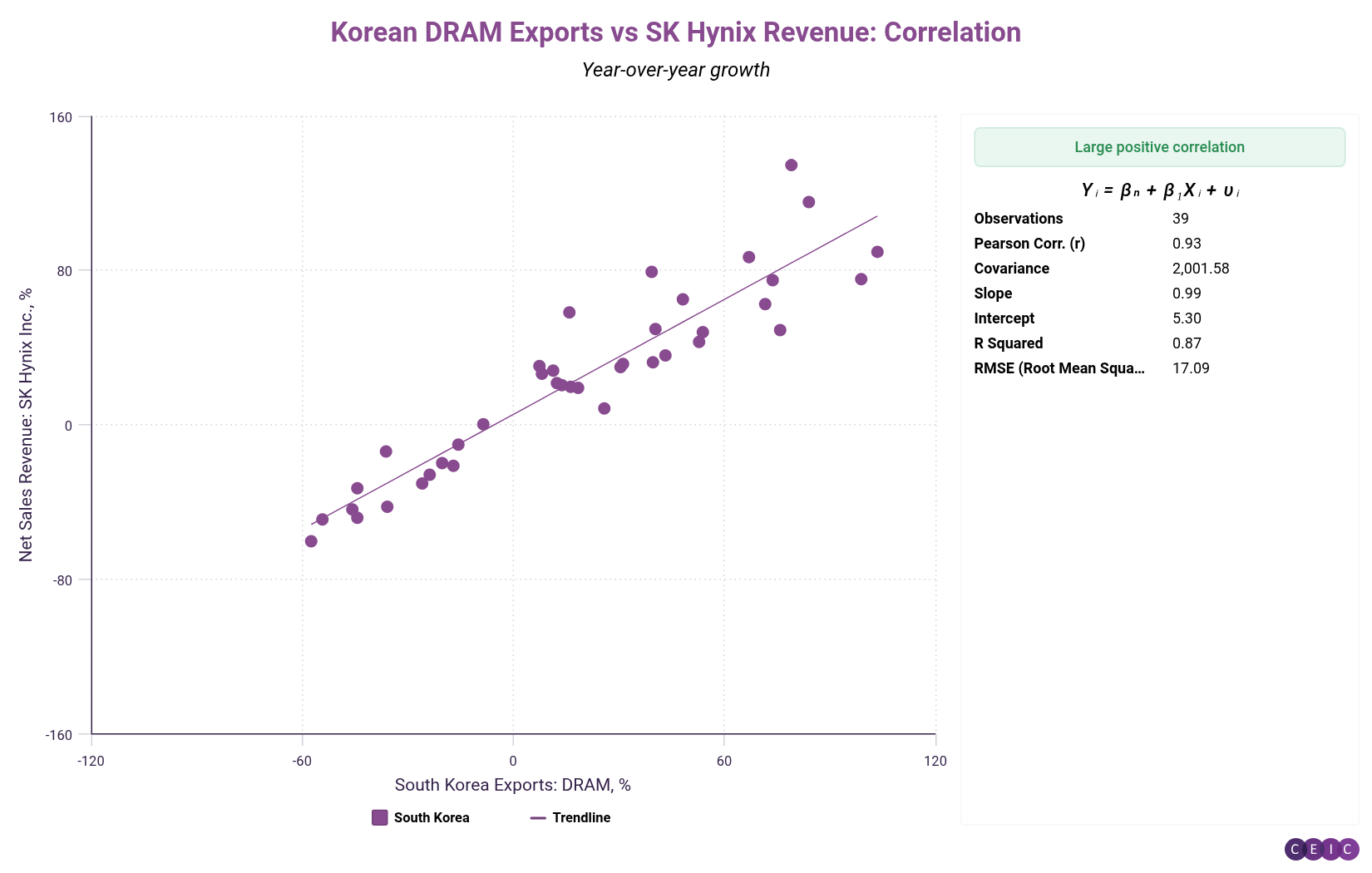
Semiconductor shipments, mainly driven by memory chips such as DRAM, hit records in late 2025. Rather than discontinue the DDR4, both Samsung and SK Hynix have decided to extend production into 2026 as the prices continue to stay higher than the newer DDR5. (We've visualized the link between SK Hynix's revenue and national figures on DRAM exports, a leading indicator.)
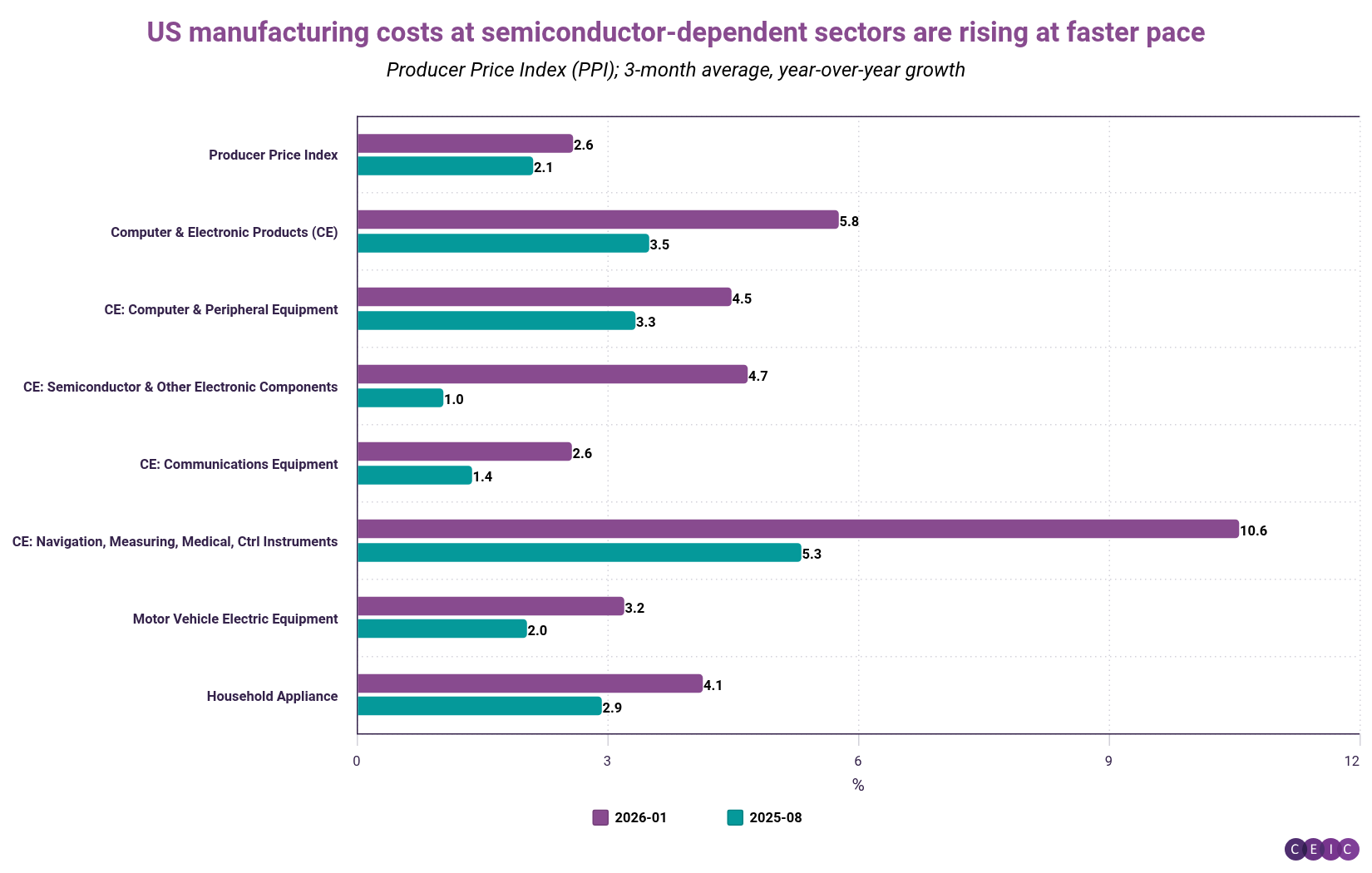
Will the supply crunch squeeze electronics manufacturers' profit and result in more expensive consumer goods? Certainly, chip-dependent US sectors such as computer equipment and electronics have faced much faster growth in producer costs when compared to overall inflation rates.
Dell and Hewlett-Packard have warned that memory-chip supply shortages threaten to increase the cost of goods ranging from phones to medical equipment and cars. The credit-default swap market appears to be pricing this phenomenon in; data from GFI shows rising credit risk since late 2025.

If you are a CEIC user, access the story here.
If you are not a CEIC client, explore how we can assist you in generating alpha by registering for a trial of our product: https://hubs.la/Q02f5lQh0